06 Dec 2017


Free Beacon: NavyCon attendees critique the Empire’s military failures.
The debriefing was as vicious as you’d expect it to be, the Navy commander methodic in his dissection of one of the greatest failures in military history. The massive loss of life and strategic capabilities were inevitable once the officers of history’s greatest military force allowed large sections of the region to “develop into a safe haven” for lawlessness and terrorism, “the perfect environment to allow a rebellion to grow.”
“Once maritime dominance is established, resistance from shore rarely stops,” says Cmdr. BJ Armstrong. “Without small ships to run intercept the blockade was simply a dismal failure.”
Armstrong, an academy instructor with a PhD in War Studies from King’s College, is not talking about the Middle East or Northern Africa of today or the sinking of the Bismarck in 1941. He’s focused on the loss of the Death Star and the Battle of Hoth, two “cautionary tales” that have much to teach the future officers of the American military. …
Defense News writer David Larter[‘s]… presentation focuses on the “Mistakes of the Empire” in Star Wars. In between his quips about the rebel alliance’s tactical resemblance to ISIS and Darth Vader’s failures as a leader—”force choke in private, praise in public”—are actual lessons about institution building and educating military commanders. Vader choking “Admiral Bozzell”—here someone interjects that it’s “Admiral Ozzel”—represents the “zero defect mentality” of leadership that cripples military leadership. He points to military command’s trigger finger in laying off errant captains who have caused public relations headaches.
“Is the Navy force choking people for simple mistakes and is that making leaders too cautious?” he says. “A healthy organization struggles with these issues and does so publicly.”
The Empire comes in for further scorching by Cmdr. Armstrong, who lays waste to the idea that it had any chance against Jedi rebels. One need only study naval architecture to grasp the point: The Empire’s “improper fleet architecture” left it unable to provide “constabulary duties” in peacetime, which allowed rebellion to fester. More than that such a system stifles leadership as ship captains are taken from a pool of those “at the ends of their careers” rather than young leaders.
Capt. Mark Vandroff, a long-time ship builder and commander of the Carderock Division of the Naval Surface Warfare Center, joins the dogpile heaping scorn on Palpatine. Vandroff disputes Armstrong’s simplistic reliance on constabulary forces, saying that building constabulary forces would “bankrupt” the Empire. But he also acknowledges the Empire’s miscalculation of the political realities of the galaxy and understanding of supply chain that ultimately undid the Death Star—even after an otherwise flawless acquisition and building operation.
“If your strategy doesn’t make sense it doesn’t matter what you buy,” he says.
RTWT
06 Dec 2017

Christopher Ingraham, in the WaPo Wonkblog:
The World’s spider population weighs 29 million tons — as much as 478 Titanics.
Spiders are quite literally all around us. A recent entomological survey of North Carolina homes turned up spiders in 100 percent of them, including 68 percent of bathrooms and more than three-quarters of bedrooms. There’s a good chance at least one spider is staring at you right now, sizing you up from a darkened corner of the room, eight eyes glistening in the shadows.
Spiders mostly eat insects, although some of the larger species have been known to snack on lizards, birds and even small mammals. Given their abundance and the voraciousness of their appetites, two European biologists recently wondered: If you were to tally up all the food eaten by the world’s entire spider population in a single year, how much would it be?
Martin Nyffeler and Klaus Birkhofer published their estimate in the journal the Science of Nature earlier this month, and the number they arrived at is frankly shocking: The world’s spiders consume somewhere between 400 million and 800 million tons of prey in any given year. That means that spiders eat at least as much meat as all 7 billion humans on the planet combined, who the authors note consume about 400 million tons of meat and fish each year.
Or, for a slightly more disturbing comparison: The total biomass of all adult humans on Earth is estimated to be 287 million tons. Even if you tack on another 70 million-ish tons to account for the weight of kids, it’s still not equal to the total amount of food eaten by spiders in a given year, exceeding the total weight of humanity.
In other words, spiders could eat all of us and still be hungry.
RTWT
06 Dec 2017

Smithsonian reports that the Icelandic translation of Dracula amounts to a different book, possibly better and more sexy.
The Icelandic version of Dracula is called Powers of Darkness, and it’s actually a different—some say better—version of the classic Bram Stoker tale.
Makt Myrkranna (the book’s name in Icelandic) was “translated†from the English only a few years after Dracula was published on May 26, 1897, skyrocketing to almost-instant fame. Next Friday is still celebrated as World Dracula Day by fans of the book, which has been continuously in print since its first publication, according to Dutch author and historian Hans Corneel de Roos for Lithub. …
The book’s Icelandic text was unknown to English-speaking aficionados of the Dark Prince until recently, de Roos writes, as no one had bothered to re-translate it back into English. Although Dracula scholars knew about the existence of Powers of Darkness as far back as 1986, they didn’t know it was actually a different story. Then, he writes, “literary researcher Richard Dalby reported on the 1901 Icelandic edition and on its preface, apparently written specifically for it by Stoker himself.â€
The preface was what got English-language scholars interested in the Icelandic book, but still, nobody thought to compare the actual text of Makt Myrkranna to the original Stoker novel, assuming, as Dalby wrote, that it was “merely an abridged translation of Dracula,†de Roos writes. Finally in 2014, de Roos writes that he went back to the original text of Powers of Darkness to verify something, and discovered that the Icelandic story diverged from the English original.
As de Roos worked on the translation, patterns emerged: many of the characters had different names, the text was shorter and had a different structure, and it was markedly sexier than the English version, he writes. It’s also, he writes, better: “Although Dracula received positive reviews in most newspapers of the day…the original novel can be tedious and meandering….Powers of Darkness, by contrast, is written in a concise, punchy style; each scene adds to the progress of the plot.â€
“The nature of the changes has led de Roos to argue that they could not have been the work of Valdimar alone,†according to Iceland Magazine. “Instead he has speculated that Valdimar and Stoker must have collaborated in some way. Stoker could, for example, have sent Valdimar an older version of his story.â€
RTWT
05 Dec 2017

The Oldest College Daily reports that hula dancing by unauthorized persons is a problem.
The Association of Native Americans at Yale this weekend condemned Shaka, an all-female Polynesian dance group, for appropriating Hawaiian and Tahitian culture and demanded that the group disband.
In a letter posted to its Facebook page Saturday afternoon, ANAAY condemned Shaka for “sexualizing and homogenizing Native [American] peoples, misrepresenting and erasing histories and political realities, and attempting to depoliticize inherently political culture and communities under colonial subjugation.â€
RTWT
If shimmying in a grass skirt is “cultural appropriation,” how come spouting Marxist BS isn’t?
04 Dec 2017

Hussar, the black Taigan (a sighthound breed from Kyrgysztan) puppy (now getting pretty big) was born July 21, making him a bit over 4 months old.
Uhlan, the older dog, is an 8-year-old Tazy (a sighthound breed from Kazakhstan).
It took Uhlan 7 weeks to begin even to tolerate the puppy, but he will now play with him. Of course, like everyone else, Uhlan finds keeping up with the urge to play of a hyper puppy exhausting.
Karen’s photos here.
04 Dec 2017

Puzhong Yao.
Puzhong Yao was born in China, but has studied and worked at some of the most elite institutions in the West, and he still finds the mindset of the Western elite strange.
[L]ike the Evangelical Christians, my life was changed by a book. Specifically, Robert Rubin’s autobiography In an Uncertain World (Random House, 2003). Robert Rubin was Goldman Sachs’s senior partner and subsequently secretary of the Treasury. Only later did I learn that certain people in the United States revere him as something of a god.
I first bought the book because I was puzzled by the title, especially coming from a man who had achieved so much. I had always thought that things happen for reasons. My parents taught me that good people get rewarded while evil gets punished. My teachers at school taught me that if you work hard, you will succeed, and if you never try, you will surely fail. When I picked up the book, I was studying math at Cambridge University and, as I looked back at the standardized tests and intense study that had defined my life until then, I could see no uncertainty.
But since reading Rubin’s book, I have come to see the world differently. Robert Rubin never intended to become the senior partner of Goldman Sachs: a few years into his career, he even handed in his resignation. Just as in Rubin’s career, I find that maybe randomness is not merely the noise but the dominant factor. And those reasons we assign to historical events are often just ex post rationalizations. As rising generations are taught the rationalizations, they conclude that things always happen for a reason. Meanwhile, I keep wondering: is there someone, sitting in a comfortable chair somewhere, flipping a coin from time to time, deciding what happens in the world? …
I don’t claim to be a modern-day Alexis de Tocqueville, nor do I have much in common with this famous observer of American life. He grew up in Paris, a city renowned for its culture and architecture. I grew up in Shijiazhuang, a city renowned for being the headquarters of the company that produced toxic infant formula. He was a child of aristocrats; I am the child of modest workers.
Nevertheless, I hope my candid observations can provide some insights into the elite institutions of the West. Certain beliefs are as ubiquitous among the people I went to school with as smog was in Shijiazhuang. The doctrines that shape the worldviews and cultural assumptions at elite Western institutions like Cambridge, Stanford, and Goldman Sachs have become almost religious. Nevertheless, I hope that the perspective of a candid Chinese atheist can be of some instruction to them. …
It was the summer of 2000. I was 15, and I had just finished my high school entrance exam in China. I had made considerable improvements from where I started in first grade, when I had the second- worst grades in the class and had to sit at a desk perpendicular to the blackboard so that the teacher could keep a close eye on me. I had managed to become an average student in an average school. My parents by then had reached the conclusion that I was not going anywhere promising in China and were ready to send me abroad for high school. Contrary to all expectations, however, I got the best mark in my class and my school. The exam scores were so good that I ranked within the top ten among more than 100,000 students in the whole city. My teacher and I both assumed the score was wrong when we first heard it.
As a consequence, I got into the best class in the best school in my city, and thus began the most painful year of my life. My newfound confidence was quickly crushed when I saw how talented my new classmates were. In the first class, our math teacher announced that she would start from chapter four of the textbook, as she assumed, correctly, that most of us were familiar with the first three chapters and would find it boring to go through them again. Most of the class had been participating in various competitions in middle school and had become familiar with a large part of the high school syllabus already. Furthermore, they had also grown to know each other from those years of competitions together. And here I was, someone who didn’t know anything or anyone, surrounded by people who knew more to begin with, who were much smarter, and who worked just as hard as I did. What chance did I have?
During that year, I tried very hard to catch up: I gave up everything else and even moved somewhere close to the school to save time on the commute, but to no avail. Over time, going to school and competing while knowing I was sure to lose became torture. Yet I had to do it every day. At the end-of-year exam, I scored second from the bottom of the class—the same place where I began in first grade. But this time it was much harder to accept, after the glory I had enjoyed just one year earlier and the huge amount of effort I had put into studying this year. Finally, I threw in the towel, and asked my parents to send me abroad. Anywhere else on this earth would surely be better.
So I came to the UK in 2001, when I was 16 years old. Much to my surprise, I found the UK’s exam-focused educational system very similar to the one in China. What is more, in both countries, going to the “right schools†and getting the “right job†are seen as very important by a large group of eager parents. As a result, scoring well on exams and doing well in school interviews—or even the play session for the nursery or pre-prep school—become the most important things in the world. Even at the university level, the undergraduate degree from the University of Cambridge depends on nothing else but an exam at the end of the last year.
On the other hand, although the UK’s university system is considered superior to China’s, with a population that is only one-twentieth the size of my native country, competition, while tough, is less intimidating. For example, about one in ten applicants gets into Oxbridge in the UK, and Stanford and Harvard accept about one in twenty-five applicants. But in Hebei province in China, where I am from, only one in fifteen hundred applicants gets into Peking or Qinghua University.
Still, I found it hard to believe how much easier everything became. I scored first nationwide in the GCSE (high school) math exam, and my photo was printed in a national newspaper. I was admitted into Trinity College, University of Cambridge, once the home of Sir Isaac Newton, Francis Bacon, and Prince Charles. …
Warren Buffett has said that the moment one was born in the United States or another Western country, that person has essentially won a lottery. If someone is born a U.S. citizen, he or she enjoys a huge advantage in almost every aspect of life, including expected wealth, education, health care, environment, safety, etc., when compared to someone born in developing countries. For someone foreign to “purchase†these privileges, the price tag at the moment is $1 million dollars (the rough value of the EB-5 investment visa). Even at this price level, the demand from certain countries routinely exceeds the annual allocated quota, resulting in long waiting times. In that sense, American citizens were born millionaires!
Yet one wonders how long such luck will last. This brings me back to the title of Rubin’s book, his “uncertain world.†In such a world, the vast majority things are outside our control, determined by God or luck. After we have given our best and once the final card is drawn, we should neither become too excited by what we have achieved nor too depressed by what we failed to achieve. We should simply acknowledge the result and move on. Maybe this is the key to a happy life.
On the other hand, it seems odd that this should be the principal lesson of a Western education. In Communist China, I was taught that hard work would bring success. In the land of the American dream, I learned that success comes through good luck, the right slogans, and monitoring your own—and others’—emotions.
RTWT
03 Dec 2017

Uptown rats are genetically different from Downtown rats, and you can even easily differentiate West Village rats from East Village rats. I can only suppose that most Upper West Side rats are probably liberal and Jewish. The Atlantic:
Manhattan’s rats are genetically most similar to those from Western Europe, especially Great Britain and France. They most likely came on ships in the mid-18th century, when New York was still a British colony. [Fordhan University grad student Matthew] Combs was surprised to find Manhattan’s rats so homogenous in origin. New York has been the center of so much trade and immigration, yet the descendants of these Western European rats have held on.
When Combs looked closer, distinct rat subpopulations emerged. Manhattan has two genetically distinguishable groups of rats: the uptown rats and the downtown rats, separated by the geographic barrier that is midtown. It’s not that midtown is rat-free—such a notion is inconceivable—but the commercial district lacks the household trash (aka food) and backyards (aka shelter) that rats like. Since rats tend to move only a few blocks in their lifetimes, the uptown rats and downtown rats don’t mix much.
When the researchers drilled down even deeper, they found that different neighborhoods have their own distinct rats. “If you gave us a rat, we could tell whether it came from the West Village or the East Village,†says Combs. “They’re actually unique little rat neighborhoods.†And the boundaries of rat neighborhoods can fit surprisingly well with human ones.
Combs and a team of undergraduate students spent their summers trapping rats—beginning in Inwood at the north tip of Manhattan and working their way south. They got permission from the New York City Department of Parks and Recreation, which gave them access to big green spaces like Central Park as well as medians and triangles and little gardens that dot the city. And they asked local residents. “More often than not, they were very, very happy to show us exactly where they had rats.†says Combs. A crowdsourced map of rat sightings also proved very helpful.
Rats, although abundant, are not easily fooled into traps. They’re wary of new objects. To entice them, the bait was a potent combination of peanut butter, bacon, and oats. And the team placed their traps near places where rats had clearly crawled. They looked for rat holes, droppings, chew marks on trash cans, and sebum marks—aka the grease tracks rats leave when they traverse the same path to the garbage over and over again.
For the DNA analysis, Combs cut off an inch or so of the rats’ tails. (Over 200 of these tails are still saved in vials in a lab freezer.) The team also took tissue samples for other researchers interested in studying how rats spread diseases through the urban environment. And some of the rats they skinned and stuffed for the collections of the Yale University Peabody Museum of Natural History, where they will join stuffed rats from 100 years ago.
RTWT
03 Dec 2017

View of the University of Leicester excavations at Ebbsfleet in 2016 showing Pegwell Bay and the cliffs at Ramsgate.
Telegraph:
The first Roman invasion of Britain by Julius Caesar in 55BC is a historical fact, with vivid accounts passed down by Tacitus, Cicero and Caesar himself.
Yet, despite a huge landing force of legionaries from 800 ships, no archaeological evidence for the attack or any physical remains of encampments have ever been found.
But now a chance excavation carried out ahead of a road building project in Kent has uncovered what is thought to be the first solid proof for the invasion.
Archaeologists from the University of Leicester and Kent County Council have found a defensive ditch and javelin spear at Ebbsfleet, a hamlet on the Isle of Thanet.
RTWT
03 Dec 2017
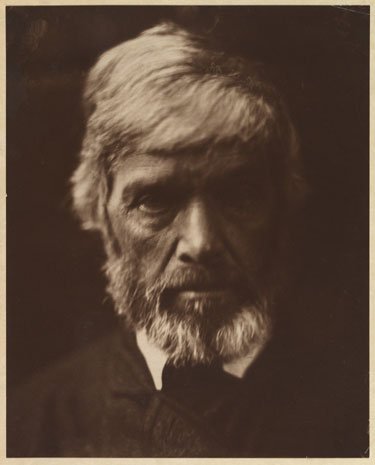
Thomas Carlyle 1795-1881
LATTER-DAY PAMPHLETS.by Thomas Carlyle NO. I. THE PRESENT TIME. [February 1, 1850.]:
I say, it is the everlasting privilege of the foolish to be governed by the wise; to be guided in the right path by those who know it better than they. This is the first “right of man;†compared with which all other rights are as nothing,—mere superfluities, corollaries which will follow of their own accord out of this; if they be not contradictions to this, and less than nothing! To the wise it is not a privilege; far other indeed. Doubtless, as bringing preservation to their country, it implies preservation of themselves withal; but intrinsically it is the harshest duty a wise man, if he be indeed wise, has laid to his hand. A duty which he would fain enough shirk; which accordingly, in these sad times of doubt and cowardly sloth, he has long everywhere been endeavoring to reduce to its minimum, and has in fact in most cases nearly escaped altogether. It is an ungoverned world; a world which we flatter ourselves will henceforth need no governing. On the dust of our heroic ancestors we too sit ballot-boxing, saying to one another, It is well, it is well! By inheritance of their noble struggles, we have been permitted to sit slothful so long. By noble toil, not by shallow laughter and vain talk, they made this English Existence from a savage forest into an arable inhabitable field for us; and we, idly dreaming it would grow spontaneous crops forever,—find it now in a too questionable state; peremptorily requiring real labor and agriculture again. Real “agriculture†is not pleasant; much pleasanter to reap and winnow (with ballot-box or otherwise) than to plough!
Who would govern that can get along without governing? He that is fittest for it, is of all men the unwillingest unless constrained. By multifarious devices we have been endeavoring to dispense with governing; and by very superficial speculations, of laissez-faire, supply-and-demand, &c. &c. to persuade ourselves that it is best so. The Real Captain, unless it be some Captain of mechanical Industry hired by Mammon, where is he in these days? Most likely, in silence, in sad isolation somewhere, in remote obscurity; trying if, in an evil ungoverned time, he cannot at least govern himself. The Real Captain undiscoverable; the Phantasm Captain everywhere very conspicuous:—it is thought Phantasm Captains, aided by ballot-boxes, are the true method, after all. They are much the pleasantest for the time being! And so no Dux or Duke of any sort, in any province of our affairs, now leads: the Duke’s Bailiff leads, what little leading is required for getting in the rents; and the Duke merely rides in the state-coach. It is everywhere so: and now at last we see a world all rushing towards strange consummations, because it is and has long been so!
 
I do not suppose any reader of mine, or many persons in England at all, have much faith in Fraternity, Equality and the Revolutionary Millenniums preached by the French Prophets in this age: but there are many movements here too which tend inevitably in the like direction; and good men, who would stand aghast at Red Republic and its adjuncts, seem to me travelling at full speed towards that or a similar goal! Certainly the notion everywhere prevails among us too, and preaches itself abroad in every dialect, uncontradicted anywhere so far as I can hear, That the grand panacea for social woes is what we call “enfranchisement,†“emancipation;†or, translated into practical language, the cutting asunder of human relations, wherever they are found grievous, as is like to be pretty universally the case at the rate we have been going for some generations past. Let us all be “free†of one another; we shall then be happy. Free, without bond or connection except that of cash-payment; fair day’s wages for the fair day’s work; bargained for by voluntary contract, and law of supply-and-demand: this is thought to be the true solution of all difficulties and injustices that have occurred between man and man.
 
To rectify the relation that exists between two men, is there no method, then, but that of ending it? The old relation has become unsuitable, obsolete, perhaps unjust; it imperatively requires to be amended; and the remedy is, Abolish it, let there henceforth be no relation at all. From the “Sacrament of Marriage†downwards, human beings used to be manifoldly related, one to another, and each to all; and there was no relation among human beings, just or unjust, that had not its grievances and difficulties, its necessities on both sides to bear and forbear. But henceforth, be it known, we have changed all that, by favor of Heaven: “the voluntary principle†has come up, which will itself do the business for us; and now let a new Sacrament, that of Divorce, which we call emancipation, and spout of on our platforms, be universally the order of the day!—Have men considered whither all this is tending, and what it certainly enough betokens? Cut every human relation which has anywhere grown uneasy sheer asunder; reduce whatsoever was compulsory to voluntary, whatsoever was permanent among us to the condition of nomadic:—in other words, loosen by assiduous wedges in every joint, the whole fabric of social existence, stone from stone: till at last, all now being loose enough, it can, as we already see in most countries, be overset by sudden outburst of revolutionary rage; and, lying as mere mountains of anarchic rubbish, solicit you to sing Fraternity, &c., over it, and to rejoice in the new remarkable era of human progress we have arrived at.
via The Framed Maelstrom.
Links
More or Less Sound Blogs
A Mind Aroused
Aaron’s cc
ABFreedom
Ace of Spades HQ
Albion’s Seedlings
Alphecca
American Conservative, The (Buchananite Paleocons)
American Nihilist Underground Society
Amused Cynic
An Antique Dealer’s Blog
Andrew Cusack
Ankle Biting pundits
Anti-Idiotarian Rottweiler
Art of the Blog
Assistant Village Idiot
Assistant Village Idiot
Augean Stables
Austin Bay Blog
Becker-Posner Blog
Begging to Differ
Bidinotto Bog, The
Big Lizards.net
Black and Right
BlameBush!
Blue Crab Boulevard
Brainster
Brussels Journal, The
Brutally Honest
Captain’s Journal, The
Carnage And culture
Cato at Liberty
Cato Unbound
Cave of the Curmudgeon
Chaos in Motion
Chequer-Board of Nights and Days, A
Chicago Boyz
Claremont Institute
Clarity & Resolve
Clayton Cramer’s Blog
Cobb–Curious,Skeptical,Analytical
Cold Fury
Colonel Robert Neville Always Dresses For Dinner
Conblogeration
Confederate Yankee
Conspiracy to Keep You Poor and Stupid
Corner – National Review Online
CounterIntelligence Center
Coyote Blog
Crosspatch Chronicle
Cubachi
CultureGrrl
Daily Pundit
Daisy Cutter
Dalrock
Damnum Absque Injuria
Dangerous Times
David Bellavia
David Frum
David Thompson
Dean’s World
Death By 1000 Papercuts
Democracy Reform
Dennis the Peasant
Diminished Expectations
Dinocrat.com
Don Surber
Doug Ross
Dust in the Light
Eject! Eject! Eject!
Enchiridion Militis
Error Theory
ex-Liberal in Hollywood
Faster, Please (Michael Ledeen)
FKIN
Flit(tm)
Flopping Aces
Forward Movement (Jules Crittenden)
Fraters Libertas
Front Porch Republic
Future Uncertain, The
Gates of Vienna
Gateway Pundit
Gays Defending Marriage
Greg R. Lawson's Blog
Grouchy Old Cripple
Hog on Ice
Horsefeathers
Hugh Hewitt
Ideas
IMAO
In Mala Fide
In the Bullpen
INDC Journal
Interested-Participant
Irish Pennants
Isegoria
Jack Lewis
Jawa Report, The
JayReding.Com
Jeremayakovka
Jeremy Lott
Jon Swift
Just One Minute
Ken McCracken
Kim du Toit
Kobayashi Maru
Law of the Bad Premise
Left Exposed
Likelihood of Success
Lileks
Lone Pony
Make Haste Slowly (Trad)
Man Without Qualities
Mark Levin
Mike Stopa
Modern Art Notes
Mr. Blonde’s Garage
Musings of the Geek with a .45
Nation of Riflemen, A
New Majority (David Frum) -Neocon Sellout Blog
Nickie Goombah
No End But Victory
No Left Turns
Obsidian Order
Oh, That Liberal Media!
One Cosmos
One Hand Clapping
Only Republican in San Francisco, The
Other Things Amanzi
Outside the Beltway
Palmetto Pundit
Patterico’s Pontifications
Pileus
Point Five
PoliPundit.com
Political Horizons
Political Teen, The
PostLiberal Blog, The
ProfessorBainbridge.Com
Prospero; the Home of the Generative Thought Experiment
Protein Wisdom
QandO
Radio Blogger
Rage Against the Kakistocracy
Rantingprofs
Reason Online – Hit and Run
RedState.org
Republican Dan
Revolutionary War Veteran’s Association Weblog
Revolver Guy
Riding Sun
Right Reason
Right Wings News
Rightwing Nuthouse
Roger L. Simon
Room 12A
Samizdata.net
SayUncle
Scylla & Charybdis
Secular Right
Shot in the Dark
Shrinkwrapped
Solid Surfer, The
Soxblog
stikNstein
Stop Obama
Stop the ACLU
Strange Women Lying in Ponds
Sultan Knish
Sweetness & Light
Taki’s Top Drawer
Tech Central Station
The Buck Stops Here
Three Rounds Brisk
TigerHawk
Tim Chapman Blog
TKS
Tom Delay
Tongue Tied
Transterrestrial Musings
Unqualified Offerinds
Unqualified Reservations (Mencius Moldbug)
Vanishing American
VariFrank
Victor Davis Hanson
View from the Right
ViewPointJournal.Com
Vince aut Morire
Vodka Pundit
War and Piece
Watcher of Weasels
Weapons of Mass Destruction
Western Confucian
What Would Charles Martel Do?
Will Wilkinson
Winds of Change
Wizbang
Xavier Thoughts (Pawn Shop Guns!)
YARGB – Flares into Darkness
Blogs From the Philippines
Pinoy Stupid
Blogs From Israel
Zionist Conspiracy
Blogs From Russia
Mat Rodina
Blogs From Japan
Gaijin Mama
Blogs From Germany
Observing Hermann
/div>
Feeds
|