Anthony Esolen, at National Review, wonders aloud whether higher education in today’s America is even possible.
The frieze beneath the rotunda of the state house at Providence, the city where my college is located, proclaims, in the words of Tacitus, the happiness of the times when a man “may think what he will and speak what he thinks.†This may still be true of men sitting at a diner or a bar, drinking beer and arguing about politics. Rational argument and freedom of thought, like the exercise of religion, has retreated into the realm of the private. You may still think what you will, so long as you keep it to yourself. You may not think or speak freely in our political assemblies, our newspapers, and our colleges.
Here the reader may supply plenty of anecdotes about professors, insufficiently “liberal,†who have been driven from their jobs or burdened with legal troubles because they violated the new iron etiquette that governs the public sphere. My favorite, if such it may be called, involved an instructor of composition at the University of Winnipeg who remarked, near the end of a semester, that the most important work that most women do will be to raise their children well. For that remark — which would have struck sensible people alive three cultural minutes ago, both men and women, as a bland truism — the instructor was relieved of his duties forthwith, barred from his office, and forbidden even to administer his final exam.
People who say that such events are rare and therefore not to be taken too seriously are either fools or liars. A thousand public lynchings are expensive and tiresome. Two or three will intimidate your enemies very nicely and save you the sweat and the struggle against your conscience. That is especially true if the victim is powerful and visible, as was Lawrence Summers, the president of Harvard who opined that the difference between the numbers of men and women pursuing the natural sciences at the highest level might be due rather to predilection and intellectual inclination than to sexism. Again we are dealing with a bland truism; but the long knives came out, and Summers was dispatched. …
In such a world, it is insufficient to say that higher education suffers. Except in the most technical of disciplines, and perhaps even in those, the very possibility of higher education comes to an abrupt halt. If a professor must negotiate an emotional and verbal and political mine field before he opens his mouth, then he is no professor any longer. He is a servile functionary, no matter his title and no matter how well he is paid. He instructs his students not in freedom but in his own servility. That many of the students demand this servility of him and of themselves makes their capitulation all the worse.
The colleges have not abandoned moral considerations utterly. Relativism is an unstable equilibrium — imagine a pyramid upside down, placed delicately upon its apex. It might make you break out into a cold sweat to stand in its shade. The question is not whether some moral vision will prevail, but which moral vision. The colleges are thus committed to a moral inversion. High and noble virtues, especially those that require moral courage, are mocked: gallantry in wartime, sexual purity, scrupulous honesty and plain dealing, piety, and the willingness to subject your thoughts, experiences, and most treasured beliefs to the searching scrutiny of reason. What is valued then? Debauchery, perversion, contempt for your supposedly benighted ancestors, lazy agnosticism, easy and costless pacifism, political maneuvering, and an enforcement of a new orthodoxy that in denying rational analysis seeks to render itself immune to criticism. You sink yourself in debt to discover that your sons and daughters have been severed from their faith, their morals, and their reason. Whorehouses and mental wards would be much cheaper. They might well be healthier, too.
Mene Ukueberuwa, in the New Republic, blames all this on the rise of the Administrator.
This crisis of confidence at colleges—driven by conflict-shy administrators and self-effacing professors—has come to a head in the culture of protest that has developed on American campuses. Once again, political polarization is only one part of the story. Today’s college students are certainly more liberal and more ideologically uniform than their counterparts of the mid-twentieth century. But the focus on the little things that we see in campus protests—as in the movement to suppress insensitive Halloween costumes at Yale in 2015—shows the extent to which the political fervor is being driven by the absence of bigger, richer ideas to seize students’ attention. The New York Times columnist Ross Douthat made this case in a column during the same outburst of protests, which swept through dozens of campuses that fall. “The protesters at Yale and Missouri,†he pointed out, are “dealing with a university system that’s genuinely corrupt, and that’s long relied on rote appeals to the activists’ own left-wing pieties to cloak its utter lack of higher purpose.†In other words, if hollowing out collegiate culture of all of its challenging substance really was just a ploy to dodge controversy and keep the money coming in, then it looks like the strategy has decidedly backfired. …
The person screaming at the police is called Rebecca Goyette, and this person of uncertain gender is demanding that they assault a Canadian comedian named Gavin McInnes, whom I had never heard of. McInnes denies being a Nazi-Holocaust Denier &c. here.
Goyotte’s claim to be a professor provoked skepticism, and investigation quickly found no asociation at all with New York University. Goyette’s own vitae, however, claims this person to have been from 2011 to the present: an Adjunct Professor in the Art Department at Montclair State University and from 2007 to the present, a Museum Educator for the Museum of Modern Art.
What sort of art? The Rebecca Goyette web-site explains:
Rebecca Goyette creates persona-based works that poke holes in Puritanical sexual mores. Working in a wide variety of media, her extensive artillery features figurative drawing, video, performance, and handmade sculptural elements made from fabric, clay and found materials used in a ritual fashion. Many know her as Lobsta Girl, and Goyette has filmed her interspecies pornos detailing the sex lives of lobsters internationally. Originally, Goyette adopted the sexually aggressive female lobster as a primary character she performed live to promote female agency. Another alter ego to Goyette is the ghost of her direct ancestor, Rebecca Nurse hanged as a Salem witch, who is re-imagined cycling through repetitive power dynamics in fits and foibles in the “New World.”
Situated within a largely queer, fantasy paradigm, her work is able to embrace a fruitful multiplicity of sexual desire and engage a panoply of non normative gender roles. As Judith Butler has articulated, in fantasy gender boundaries are transgressed with ease, there is no “single position within a fantasy; the identification is distributed among various elements of the scene.â€
For Goyette, sex is one gateway into the rich territory of psychology and human interaction, into the remotest ranges of the subconscious mind. Her schematic Lobsta Porn video series explores sexual fantasy scenarios with people playacting the magical sex lives of lobsters. Female species lobsters, for instance, approach and corner the strongest males, squirt them with aphrodisiac drugs out of their foreheads, and get inside their lobsta man-caves where they molt their shells in order to have sex. The males have two “dicks” that can impale the vulnerable lady flesh, meaning the female’s entire body sans shell functions as a threshold of sexual potentiality. By developing complex characters based partially in the real (scientific fact, Puritan history, herstory, the annals of witchcraft, Goddess worship and the paranormal) and partially in fiction – Goyette is reality seamstress par excellence. With climactic wit she recounts the psychosexual dramas of time immemorial.
Goyette is as shameless about her characters’ voracious sexual appetite as she is about connecting the female subject to nature and an animalistic lost Eden of sorts. Her videos function as titillating vignettes of a bawdry heroine in hot pursuit of total Love. Uncovering the truth of the mercurial nature of desire as she seeks blissful and eternal union with the “Other,†Goyette peppers her colorful imaginary worlds with complicated personal memories and whenever possible, willing participants in the flesh. Working with a gender fluid, multiracial cast of personae as collaborators and accomplices, her live action performances and performance videos feature human sexuality unleashed. Goyette’s work is a perfect illustration of how, as expressed by theorist Elizabeth Cowie desire “is most truly itself when it is most ‘other’ to social norms.â€
Ornately adorned in the absurd skins of her hand-sewn costumes, Goyette’s characters wreak havoc with traditional sexual mores in a playland where there are no experts and no actors. Their performative gestures and actions shine light on the myriad of curiosities lurking in truly intimate encounters – raw, vulnerable and at times, otherworldly.
For the contemporary Left, the road to privileged political insight and definitive moral superiority runs through Lobster porn.
John Nolte is perfectly correct: “Liberals eventually ruin everything.” Last night’s Superbowl featured a series of political propaganda advertising spots.
Coke and Airbnb competed in the nausea-inducing sweepstakes with ads extolling the beauties of “diversity.”
84 Lumber, whose first ad, featuring a Mexican mother and daughter dismayed at confronting Trump’s Wall, was declined by Fox as “too controversial,” ran a minute-and-a-half spot titled “The Journey Begins,” showing the same mother and daughter starting out hopefully and passing through desert, river, and mountains in the direction of El Norte, presumably in search of the land of the generous welfare check.
Audi, as Jack Baruth explicated at length, served up a lesson on the natural superiority of the community of fashion, cloaked as a lecture on Feminism.
All in all, the amount of political virtue-signalling from big, ugly fat cat corporations was simply appalling. Yesterday was one of those days where you wondered if the citizens of Hitler’s Germany were as much bombarded with get-in-line, Gleichschaltung prop as we are.
Liberal “diversity” is such a crock. I’m old enough to remember 1950s America very well. People, like myself, living outside the big cities and the South, never ran into people of other races at all, but we still had plenty of diversity. Go watch one of those old war movies in which the soon-to-be-embattled platoon is shown to be made up of the farmboy from Kansas, the guy with the thick Brooklyn accent, the strong Polack, the ready-with-his-fists Irishman, and the intellectual Jew. My own small town had a population pretty much only made up of turn-of-the-last-century Roman Catholic immigrants, and we still had more than enough diversity to fuel all the mutual dislike anybody needs.
In the old days, newly arrived immigrants came to America, lived in enclaves of their own, and took the worst jobs. Today, some Hindu or Mussulman hops of the plane from Bombay and sends his offspring to Harvard or Yale. The first generation in the country does not line up to work with a pick and shovel in the coal mines, to lay track for the railroads, or to do the heavy lifting in the mill. That first generation can be found teaching the US Constitution (from a left-wing point of view) at Yale Law School (Akhil Amar) or telling Americans what to think about Foreign Policy on CNN (Fareed Zakaria).
A retired doctor from a remote town has discovered his father had a collection worth millions and he could sell it. The doctor went to a Paris auction house and showed them 14 ink drawings. One 7 1/2-inch by 5-inch piece of paper with a sketch on each side was interesting. The auction house’s expert on old master paintings realized the drawing might be from the 16th century. Three months and three art experts later, the sketch has been authenticated as the work of Leonardo da Vinci, drawn about 1482-85. The handwriting, inscription, and the subject are all related to a known drawing of St. Sebastian by da Vinci. The good news for the owner is the sketch is estimated at about $15.8 million. The bad news is that the French government has put an export ban on the art work because it is “a national treasure.†The owner would like to offer it to an international market where it could sell for much more. The French government has 30 months to buy the sketch at market value.
Classic Virginia. Delegate Matt C. Farris (R-Campbell) debates HB 1900, an anti-hunting bill which would impose a $100 fine per dog in cases in which hunting dogs stray onto a property where they are unwelcome. A Virginia fox hunt might go out with several dozen hounds, so you can imagine what a case of accidental trespass by a pack might cost.
Jack Baruth, at The Truth About Cars, explains the real message of Audi’s Superbowl commercial.
At first blush, the spot seems to be nothing but the usual corporate slacktivism, a feel-good fluff-vertorial making a “brave stand†in support of an issue that was decided long ago. I’m reminded of Joaquin Phoenix’s brilliant portrayal of Commodus in Gladiator, arriving in full armor as soon as he can do so without any risk. “Father, have I missed the battle?†Well, Audi, you’ve missed the war; if there’s a place in the United States where women are actually paid significantly less for doing the same job as men, it’s not evident from what I’m reading.
After watching the one-minute advertisement carefully, however, I understood feminism, or equal pay, is the last thing Audi wants you to take away from it. The message is far subtler, and more powerful, than the dull recitation of the pseudo-progressive catechism droning on in the background. This spot is visual — and as you’ll see below, you can’t understand it until you watch it and see what it’s really telling you. …
I think you’ve figured out what the real message of this Audi advertisement is, but just in case you’ve been napping I will spell it out for you: Money and breeding always beat poor white trash. Those other kids in the race, from the overweight boys to the hick who actually had an American flag helmet to the stripper-glitter girl? They never had a chance. They’re losers and they always will be, just like their loser parents. Audi is the choice of the winners in today’s economy, the smooth talkers who say all the right things in all the right meetings and are promoted up the chain because they are tall (yes, that makes a difference) and handsome without being overly masculine or threatening-looking.
At the end of this race, it’s left to the Morlocks to clean the place up and pack the derby cars into their trashy pickup trucks, while the beautiful people stride off into the California sun, the natural and carefree winners of life’s lottery. Audi is explicitly suggesting that choosing their product will identify you as one of the chosen few. I find it personally offensive. As an owner of one of the first 2009-model-year Audi S5s to set tire on American soil, yet also as an ugly, ill-favored child who endured a scrappy Midwestern upbringing, I find it much easier to identify with the angry-faced fat kids in their home-built specials or the boy with the Captain America helmet.
At the end, what does this ad do? It just reinforces our natural biases. Poor is bad, rich is good, and most importantly, rich people deserve their fortune because they are inherently better than the rest of us. You might not like that message, but it’s been selling cars for a very long time. If Audi wanted to try some authentic activism, they might consider showing us an African-American man or woman who overcame a tough upbringing to become an actual customer, or perhaps a differently-abled person who’s achieved enough to buy himself an S8 as a reward for his hard work. But that’s not terribly aspirational, is it? Who wants to be those people? And, by the same token, who wouldn’t want to be that handsome father lifting his beautiful daughter out of someone else’s winning race car?
John Caldwell Calhoun (1782-1850), Yale Class of 1804, 7th Vice President of the United States 1825-1832.
Peter Salovey’s hand-picked committee of Social Justice Warriors has deliberated and, what do you know? They decided that John C. Calhoun should be singled out among all nine slave-owner and slavery defender namesakes of three quarters of the original twelve Yale residential colleges for elimination.
A University task force has recommended that Calhoun College be renamed, according to Yale officials with knowledge of the group’s report.
The recommendation from the task force, which was charged with applying the University’s newly created principles on renaming to the Calhoun debate, positions the Yale Corporation to rename the college when it meets the weekend of Feb. 10 and 11.
University President Peter Salovey formed the Calhoun task force in December, after the Committee to Establish Principles on Renaming released its report. The task force consisted of two faculty members, history professor John Gaddis and English and African American Studies professor Jacqueline Goldsby GRD ’98, and one alumnus, G. Leonard Baker ’64. Both Gaddis and Goldsby signed a faculty petition last spring calling for the renaming of Calhoun, named after slavery proponent John C. Calhoun, class of 1804.
On Jan. 13, the task force submitted its recommendation — which came in the form of a report running less than 10 pages — to Salovey, who will present it to the Corporation at the February meeting.
Last month, Salovey told the News that he did not plan to release the recommendation until after that meeting. Salovey was not involved in the task force’s deliberations, although he did have some input on the final draft of the report.
“The task force did their work independently, and their analysis and recommendations are their own,†Salovey said in January. “They gave me the courtesy of letting me see a next-to-final draft of their report, and make some comments. But my comments to them were really only about sort of clarifying the way their findings were expressed.â€
If the Corporation accepts the task force’s recommendation, the University trustees would be voting to reverse their decision last April to keep Calhoun’s name. The April renaming decision incited months of student and faculty backlash, and helped unite Yale activists and New Haven community members in a growing “change the name†movement.
Last August, primarily in response to faculty criticism of the decision to keep the name of Calhoun, Salovey charged the CEPR with outlining broad guidelines for all renaming disputes at the University, starting with Calhoun. The committee released its 24-page report on Dec. 2, calling on administrators to consider historical context as they determine whether the legacies of controversial namesakes like Calhoun justify renaming campus buildings.
Vice President for Communications Eileen O’Connor declined to comment on the nature of the task force’s recommendation, but said the Corporation will decide the Calhoun issue at its meeting later this month.
“We have a process, we’re following the process, and we’ll take all the information into account when we make a decision in the best interests of the University,†O’Connor said.
Why stop there? Roger Kimball asked last August in the WSJ:
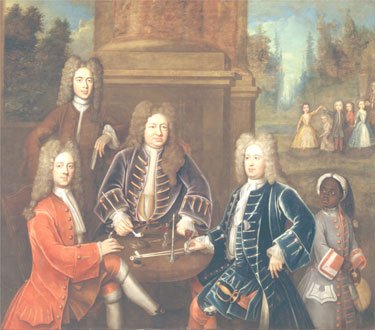
I have unhappy news for Mr. Salovey. In the great racism sweepstakes, John Calhoun was an amateur. Far more egregious was Elihu Yale, the philanthropist whose benefactions helped found the university. As an administrator in India, he was deeply involved in the slave trade. He always made sure that ships leaving his jurisdiction for Europe carried at least 10 slaves. I propose that the committee on renaming table the issue of Calhoun College and concentrate on the far more flagrant name “Yale.â€