Category Archive 'Barack Obama'
04 Feb 2015

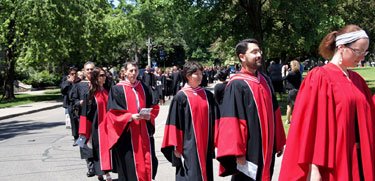
Megan McArdle notes that Barack Obama’s Free Community College scheme is really just one more example of the pseudo-intelligentsia’s typical attempt to make the world better by making everybody more like themselves.
I would argue instead that what’s elitist is our current fixation on college. It starts from the supposition that being good at school is some sort of great personal virtue, so that any suggestion that many people aren’t good at school must mean that those people are not equal and valuable members of society. And that supposition is triple-distilled balderdash.
My grandparents had perhaps ten adult books in their house, most of which were either Bibles or biographies of presidents. I don’t think there’s anything to be ashamed of in not regarding reading as great recreation. Bookishness has added greatly to society. So has the ability to run a business well, which my grandfather did for many years, employing dozens, maybe hundreds, of people over his lifetime. So has community service, which both my parents did with great distinction, and being kind and decent and generous. I don’t need to hide the fact that neither of my grandparents much cared for books or school, because I don’t think that made them some sort of lesser class of person. Pretending that everyone has the potential to be like the tiny class of educated people who run policy in this country is not egalitarianism; it is the secret snobbery of a mandarin class who really do think that being good at school made them more worthy and important than everyone else. …
Higher education is becoming the ginseng of the policy world: a sort of all-purpose snake oil for solving any problem you’d care to name, as long as we consume enough of it. Education is a very good thing, but it is not the only good thing. An indiscriminate focus on pushing more people into the system is no cure for society’s ills–and indeed, often functions as a substitute for helping the people who are struggling in the current system.
What if people in the policy elite stopped assuming that the ideal was to make everyone more like them, and started thinking about making society more hospitable to those who aren’t? My grandfather graduated into a world where a man with a high-school diploma could reasonably hope to own his own business, or become someone else’s highly valued employee, a successful pillar of a supportive community. His grandchildren graduated into a world where a college diploma was almost the bare necessity to get any kind of a decent job. Why aren’t we at least asking ourselves if there’s something we can do to create more opportunity for people without diplomas, instead of asking how many more years we can keep everyone in school? Why do all of our proposed solutions essentially ratify the structure that excludes so many people, instead of questioning it?
I have some ideas about what those policies might look like: broad deregulation, especially at the state and local level, to ease things for business creators and make it easier to get various sorts of jobs that are currently protected by licensing requirements; more co-op and apprenticeship programs; wage subsidies for entry-level workers, and perhaps a broad system of government internships that could help people gain experience outside of the classroom. I’m sure that there are many more I haven’t named. But we won’t find them as long as the only politically interesting solution is ever more years in school.
Read the whole thing.
24 Jan 2015
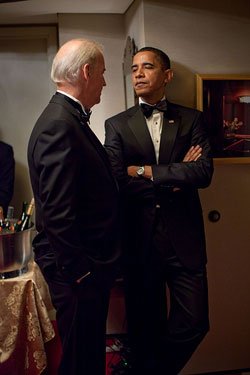
Michael Walsh finds the arrogance of Barack Obama’s SOTU address perfectly consistent with the personality of the man who wrote an autobiography after graduating from law school, and who concluded that his fortuitous elevation to the US Senate demonstrated his qualification for the presidency.
It’s easy to despise Barack Hussein Obama, perhaps the least qualified man ever to accede to the Oval Office. The empty resume, the imaginary biographies, the laziness, the arrogance, the profligacy with the public treasury, the weakness, the cowardice and the cringing servility when dealing with America’s enemies abroad: his six years as president of the United States — a presidency we will all look back upon someday with wonder, shame and national embarrassment — have been as disastrous and harmful as some of us predicted at the time. The man is a disgrace.
And yet…
There is one thing, and one thing only, to like about him. And that is his complete and utter contempt for his domestic political enemies and the high-handedness with which he treats them. And why shouldn’t he? As the beneficiary of the Being There presidency, he must retire to the family quarters of the White House each night laughing his head off at the electorate and yet at the same time being utterly convinced of his own rightness. After all, he won, didn’t he? Twice! If he’s so dumb… how come he’s president?
As Yuval Levin noted in a post over at NRO after the State of the Union speech, Obama acts as if the electorate had not just delivered his party a crushing rebuke in an election in which he said quite clearly that while he may not have been on the ballot, his policies most certainly were. (Not that he cares about what happens to the Democrats after he retires to a live of Secret Service-protected, taxpayer-supported, think-tank enriched utter indolence.) But he appears to be living in a fantasy land of his own device, one in which he, Barry, remains beloved by the masses who didn’t bother to show up at the polls.
The most striking thing about President Obama’s State of the Union address was how thoroughly and consciously it was disconnected from the political moment. The president addressed the Congress he will face for the remainder of his term, which is the most Republican Congress since 1929, but he didn’t really speak to that Congress or to the electorate that sent it. He made no mention of the recent congressional election and offered no reason to think its results would change his approach to his own job.
Instead, he began by pointing to economic gains that suggest that, six years after the end of the last recession, we may finally see the sort of growth that could merit being called a recovery. He then proceeded to propose a set of policies — giving the federal government far more power over community colleges, cutting taxes for families with two working parents but not for those with a stay-at-home parent, levying new mandates on employers — designed to draw contrasts with Republicans rather than to close distances or to be enacted. Then he painted a rosy picture of international affairs on an Earth-like planet that plainly is not this one. And finally he hearkened back to the promise of his 2004 Democratic Convention speech, which he knows everyone recalls fondly on cold nights, and said it wasn’t too late for Americans to prove ourselves worthy of that speech and its maker, if only we would behave a little less like congressional Republicans.
In short, so far, so nuts.
Read the whole thing.
15 Jan 2015

Chris Cilizza, at the Washington Post, marvels at the devastation wrought on democrats in the last election. Nationalizing healthcare and endlessly expanding government at the cost of the economy has come at a price.
Everyone knows by now that 2010 and 2014 were very good to the Republican Party. What they don’t understand (or understand well enough) is just how good. Yes, Republicans now control the Senate and have their largest majority in the House since World War II. But it’s downballot (way downballot) where the depth of the Republican victories over the past three elections truly reveal themselves — and where the impact will be felt over the long term.
In the past three elections, Republicans have gained 913 state legislative seats, according to calculations made by Larry Sabato at the University of Virginia. Here are Sabato’s figures in chart form — and with historical comparisons — via GOP lobbyist Bruce Mehlman.
Now, there are more 7,000 state legislative seats in the country, according to the National Conference of State Legislatures, which makes that 913 number slightly less eye-popping. Still, the Democratic losses between 2010 and 2014 amount to 12 percent of all state legislative seats nationwide.
As NCSL notes, Republicans now control more than 4,100 seats — their highest number since 1920. [Emphasis added] After taking over 11 legislative chambers from Democrats in 2014, Republicans now control 30 state legislatures completely — and have full control of state government (state legislature and governorship) in 23 states.

Warren Harding is smiling in Heaven.
12 Jan 2015

The New York Daily News and Gateway Pundit both comment upon just how conspicuous was the absence of major representatives of the Obama Administration at the Paris march against Islamic terrorism.
It was an international rally against terror.
Over 50 world leaders were in attendance.
But no Obama.
The Obama administration sent three representatives to Michael Brown’s funeral in Ferguson, Missouri.
But only the Ambassador to France made the historic anti-terror march in Paris today.
Attorney General Eric Holder was in Paris but was not seen at the march.
But when you elect a president educated at a madrassa as a child, who thinks the ululations of the muezzin are a pretty sound, who has celebrated the end of the Muslim holy month of Ramadan with an Iftar dinner each year he has been in the White House, who told the United Nations in 2012 that “the future must not belong to those who slander the prophet of Islam,” and who has worn since at least 1981 a ring with “There is no God but Allah” inscribed in Arabic, would you really expect him to fly to Paris to march in this parade?
——————————-
Twitter hashtag: ReasonsObamaMissedFranceRally
23 Dec 2014

Over at Ricochet, Stephen Miller reports on the most illustrious American victim of racial profiling: Barack Obama’s non-existent son.
In an upcoming People magazine interview, Barack and Michelle Obama sit down and discuss life as the First Oppressed Couple of the United States. Hoping to shed light and relate to recent events in Ferguson, Missouri, and New York City, Barack reached into the upstairs White House bedroom of his mind and called upon his famous imaginary son to make an appearance:
The small irritations or indignities that we experience are nothing compared to what a previous generation experienced,†President Obama said. “It’s one thing for me to be mistaken for a waiter at a gala. It’s another thing for my son to be mistaken for a robber and to be handcuffed, or worse, if he happens to be walking down the street and is dressed the way teenagers dress
…
Once again, Barack Obama’s imaginary son has found himself unfairly in trouble with the law. If you recall, his imaginary son was also shot by an imaginary neighborhood watch guard in the same style as Trayvon Martin. But Obama’s imaginary son is plucky and resilient and has lived a hard life in the hood so he keeps bouncing back.
In his life, Obama’s imaginary son has been shot at, concussed out of football, and racially profiled. Yet he keeps picking himself up and carrying on. Obama’s imaginary son should be an example to us all. No matter what kind of imaginary circumstances we find ourselves in, we can continue on with our imaginary lives. …
President Obama, however, also should look inward and ask why his imaginary son continues to put himself in these situations. Perhaps it is also his own failings as an imaginary parent. Maybe his imaginary son is trying to rebel against the pressures that come with being the first imaginary son of the United States. Perhaps the President can get him some better-fitting clothes and tell him to stay in school instead of having constant run-ins with imaginary police. …
The President of the United States seems more comfortable citing the struggles of his imaginary son than the privileged successes of his real daughters. In truth, Obama’s son would have attended private schools in Chicago, just like his daughters. He would then be attending Sidwell Private School in DC, just like his real daughters. Obama’s imaginary son would get his pick of any college in the world, just like his real daughters. His imaginary son would then go on to any career he chose, in medicine, law, Hollywood, or Wall Street, just like his real daughters. But that doesn’t fit the divisive racial narrative — so his son lives the hard-knock life.
Read the whole thing.
02 Dec 2014
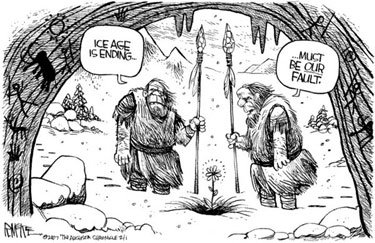
Victor Davis Hanson describes Global Warming as one example of the intellectual bankruptcy of liberalism.
Take also global warming — for Secretary of State John Kerry, the world’s greatest challenge.Once the planet did not heat up in the last 18 years, and once the ice of the polar caps did not melt away, global warming begat climate change. The new nomenclature was a clever effort to link all occasional weather extremities to some underlying and fundamental climate disruption. Brilliant though the strategy was — the opposites of cold/hot, drought/deluges, and calm/storms could now all be used as proof of permanent climate change — global warming finally was hoist on its own petard: If it caused everything, then it caused nothing.
So, in the end, what was global warming? It seems to have grown up largely as a late-20th-century critique of global market capitalism by elites who had done so well by it that they had won the luxury of caricaturing the very source of their privilege. Global warming proved a near secular religion that filled a deep psychological longing for some sort of transcendent meaning among mostly secular Western grandees. In reality, the global-warming creed had scant effect on the lifestyles of the high priests who promulgated it. Al Gore did not cut back on his jet-fueled and lucrative proselytizing. Obama did not become the first president who, on principle, traveled with a reduced and green entourage. Solyndra did not run a model transparent company as proof of the nobility of the cause. As in the case of illegal immigration, the losers from the global-warming fad are the working and middle classes, who do not have the capital to be unharmed by the restrictions on cheap, carbon-based fuels.
Read the whole thing.
24 Nov 2014
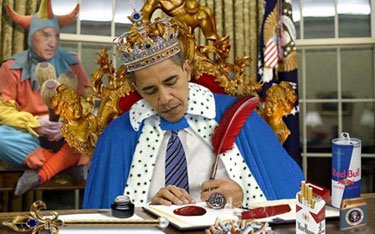
Walter Russell Mead has intelligent things to say about immigration and American history and predicts that Barack Obama’s shameless ploy to capture Hispanics as a permanent democrat constituency is based on flawed and grossly oversimplified thinking. All this, he contends, is going to backfire on democrats and Barack Obama is carving out a place for himself in presidential history below Jimmy Carter’s.
President Obama’s new initiative is unlikely to succeed politically—in part because Democrats are overconfident that rising Hispanic immigration will deliver them a permanent, left-leaning majority.
Frank Fukuyama, no howling partisan, has tagged President Obama’s decision to circumvent Congress on immigration as a “bad call,†and while the President’s limited offer of a three-year temporary work authorization for people in the country illegally was not the worst or the most radical step he could have taken, Frank is right. This was the wrong step at the wrong time. At the very minimum, the President should have given the new Congress ninety days to act before going it alone. Failing to do so isn’t just a slap in the face of his Republican opponents; it is a slap in the face of the voters who no longer trust the President and his party on the big issues of national life.
If the new Congress proved unable or unwilling to act, the President’s step would have had at least an element of political legitimacy to it. As it is, this half-hearted, hobbled amnesty will likely join President Obama’s flawed health care law as a toxic legacy that will haunt the Democratic Party for years to come. Just as the President’s poor reputation was a millstone around the neck of many Democratic candidates in 2014, future Democratic candidates are going to run away from Obama’s memory, and their opponents will work to tag them with the heavy burden of a presidency that most Americans will want to forget. As a political brand, the name “Barack Obama†now risks drifting into Jimmy Carter territory and becoming a label that blights the prospects of the Democratic party and its candidates for years.
Moreover, as with the health care law, the President’s immigration policy doesn’t solve the underlying problems it addresses and makes the task of real reform more difficult.
21 Nov 2014
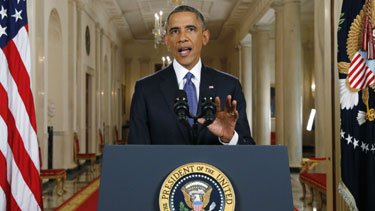
Barack Obama piously quoted Scripture and posed as a great idealist going out on a limb to do the right thing for poor Hispanic immigrants but, in reality, he was playing ruthless partisan politics, setting aside due process and overreaching his own authority in order to set a trap for Republicans and permanently lock in the Hispanic vote for democrats.
Something needs to be done to bring American immigration policy into line with America’s economic needs, and something needs to be done to regularize the status of people living here and doing most of the country’s worst-paying and most disagreeable jobs, but before that can be done, we need to win the national debate and properly form a consensus.
What Barack Obama just did was the precise opposite of building a consensus. He divided the country further and inflamed passions over an issue on which the country is not thinking rationally and in which we were already excessively divided. And he did it cynically for political gain.
Peter Suderman makes the same point at Reason:
[U]nilateral executive action could poison support for broader, more stable reform. There’s no question that the immediate political consequence would be to further outrage Republicans, and turn a party that has long had a mix of views about the virtues of expanding immigration into one dominated by opposition. In fact, this seems to be part of what the administration wants—to provoke Republicans into a frothing rage, in hopes that they will do something politically stupid as a result. (They might oblige.)
But the backlash might not just be the immediate consequence, and it might not just be limited to the congressional GOP and its core supporters; unilateral action might result in a deepened long-term opposition to greater immigration as well.
One only need to look at the political dynamic in the years since the passage of Obamacare, another ambitious policy passed with no opposition party support and a wary public. Democrats hoped it would provide a path to political victory, but the actual result was a deep and enduring public opposition that has cost Democrats in multiple elections.
Similar to Obamacare, about 48 percent of the public disapproves of Obama’s proposed action, while just 38 percent say they support the move. And similar to Obamacare, the president’s actions are making some Democrats nervous too. And just as before, supporters are arguing that opposition will blow over quickly.
I wouldn’t bet on it. Unprecedented, unpopular, large-scale, unilateral policy changes are nearly certain to produce a backlash—against the president, against his party, and against the ideas at the heart of the policy change itself.
To me, this is the most significant risk of Obama’s plan—that it will create a backlash, not only amongst congressional Republicans, but within the public at large, a backlash that makes it more difficult to achieve a stable, legal, and politically viable system of expanded and simplified immigration, one that is not dependent on a sympathetic executive or enforcement discretion, but that is codified in law and agreed upon by enough of the country’s residents and legislators.
This is not to simply condemn Obama’s plan, but instead to warn enthusiastic supporters that the choice to act at this time, in this way, without legislative backing or public support, might be satisfying in the moment, but also stands a real chance of closing off opportunities for a better, more lasting solution at some point in the future. Consensus is hard, and sometimes it seems impossible, but in politics, it’s also important.
10 Nov 2014

Everybody is reading Noam Scheiber’s piece in the New Republic on Valerie Jarrett.
Even at this late date in the Obama presidency, there is no surer way to elicit paranoid whispers or armchair psychoanalysis from Democrats than to mention the name Valerie Jarrett.
Party operatives, administration officials—they are shocked by her sheer longevity and marvel at her influence. When I asked a longtime source who left the Obama White House years ago for his impressions of Jarrett, he confessed that he was too fearful to speak with me, even off the record.
Even at this late date in the Obama presidency, there is no surer way to elicit paranoid whispers or armchair psychoanalysis from Democrats than to mention the name Valerie Jarrett.
This is not as irrational as it sounds. Obama has said he consults Jarrett on every major decision, something current and former aides corroborate. “Her role since she has been at the White House is one of the broadest and most expansive roles that I think has ever existed in the West Wing,†says Anita Dunn, Obama’s former communications director. Broader, even, than the role of running the West Wing. This summer, the call to send Attorney General Eric Holder on a risky visit to Ferguson, Missouri, was made by exactly three people: Holder himself, the president, and Jarrett, who were vacationing together on Martha’s Vineyard. When I asked Holder if Denis McDonough, the chief of staff, was part of the conversation, he thought for a moment and said, “He was not there.†(Holder hastened to add that “someone had spoken to him.â€)
Jarrett holds a key vote on Cabinet picks (she opposed Larry Summers at Treasury and was among the first Obama aides to come around on Hillary Clinton at State) and has an outsize say on ambassadorships and judgeships. She helps determine who gets invited to the First Lady’s Box for the State of the Union, who attends state dinners and bill-signing ceremonies, and who sits where at any of the above. She has placed friends and former employees in important positions across the administration—“you can be my person over there,†is a common refrain.
And Jarrett has been known to enjoy the perks of high office herself. When administration aides plan “bilats,†the term of art for meetings of two countries’ top officials, they realize that whatever size meeting they negotiate—nine by nine, eight by eight, etc.—our side will typically include one less foreign policy hand, because Jarrett has a standing seat at any table that includes the president.
Not surprisingly, all this influence has won Jarrett legions of detractors. They complain that she has too much control over who sees the president. That she skews his decision-making with her after-hours visits. That she is an incorrigible yes-woman. That she has, in effect, become the chief architect of his very prominent and occasionally suffocating bubble.
There is an element of truth to this critique. While aboard Air Force One at the end of the 2012 campaign, Jarrett turned to Obama and told him, “Mr. President, I don’t understand how you’re not getting eighty-five percent of the vote.†The other Obama aides in the cabin looked around in disbelief before concluding that she’d been earnest.
Still, Jarrett’s role is far more textured than this narrative would suggest. She has served as a teller of hard truths, urging Obama to clean up his initial remarks about Harvard Professor Henry Louis Gates’s arrest in 2009, which, she worried, sounded disrespectful to police. She is an all-wise interpreter of the president’s thoughts. When the White House began taking flak for its man-cave sensibilities, senior officials consulted Jarrett to figure out where Obama stood. “The White House counsel Greg Craig stopped by,†recalls a former Jarrett aide. “He was like, ‘Hey, is the president worried about this?’†(He was.) Jarrett even plays the role of advance dining scout for the Obamas, locating restaurants discreet and exacting enough to serve the first family. (Fiola Mare in Georgetown has become a standby.)
So adept is Jarrett at catering to the president’s needs that Michelle Obama has, at least on one occasion, chafed at the portrayal of their relationship. Late in the 2008 campaign, Vogue published a long profile of Jarrett titled “Barack’s Rock.†According to a senior campaign aide, Michelle sniffed about the magazine bestowing a title that she considered hers.
Jarrett’s job may be nothing less than to reflect the most authentic version of Barack Obama back at himself. “My speculation has always been, when you are any president or Democratic nominee, at the pinnacle of American political power, you are necessarily surrounded by layer and layer of bureaucracy,†says a former White House aide. “You’re completely disconnected. For someone to come to you and say, ‘I am going to be the person who is your connection to the real you’ … is very attractive.â€
And Jarrett is, in turn, our connection to the real Barack Obama. A decade after his ascent, there is still a basic unknowability about him, a puzzling gap between his talents and the public’s enthusiasm for his years in office. No wonder Jarrett inspires such fevered theorizing. She is the closest we have to a human decoder ring—the only person who can solve the mystery of why this president has left so many feeling so unfulfilled.
Read the whole thing.
Your are browsing
the Archives of Never Yet Melted in the 'Barack Obama' Category.
/div>
Feeds
|





