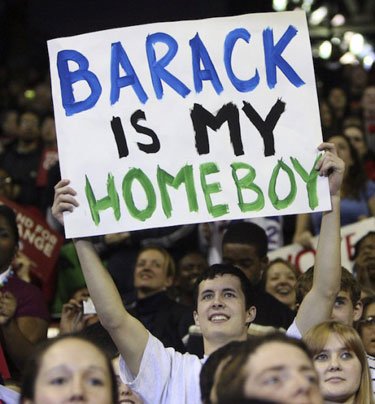
This kid, my nephew, will never admit to being a communist, it’s always this “moderate independent†crap. But his Facebook feed is full of Bernie Sandinista, if you know what I mean, and he recently tweeted some gibberish about riding the bus in Czechoslovakia and identifying as a “human being†instead of what he is, an American. He’s been a “student†at some Ivy League circlejerk for the better part of a decade. I think he’s 29, who the hell even cares? If he’s the future, this country’s digging its own grave and I’m glad I won’t be there when it finally kicks the bucket.
Derwin Aikens, Yale ’16, Environmental Studies, Pierson Freshman Counselor, Dukes Men, Whiffenpoofs, posted in Overheard at Yale on Facebook:
I’m so tired of having to prove to people how this was never a debate about free speech. People are angry. People are asking faculty members to be removed from positions of power. People are threatening others, spitting on others (allegedly), and yelling at others because many people fundamentally don’t understand. Many of those actions are unproductive and maybe even wrong, but it’s because people are angry and tired of not being heard. This was never a discussion of free speech. That should have never been brought to the table. Dean Howard’s email was asking students to be culturally sensitive, to be aware of how your costumes were affecting those around you. And for some reason Christakis was made uncomfortable. She tried to regain her comfort by making this a discussion about free speech, but that was never the issue. The IAC was never asking students to censor themselves. They were asking students to critically engage with their costume choices and be sensitive to the ways in which it impacted those around them. Students are mad because Christakis found something wrong with that and abused her power as Associate Master to publicly announce her discomfort and justified it using free speech. Thus we now have this debate of respect vs. free speech, but it was never about that. Students are angry not because of free speech, but because cultural sensitivity made Christakis UNCOMFORTABLE. And there in lies the problem.
We need to change the conversation to one that is productive. Because we need to address why cultural sensitivity made her and perhaps many others on campus uncomfortable. Because I’m so sick of the debate forcing people to prove that cultural sensitivity and respect is somehow directly infringing upon free speech. We shouldn’t have to prove that, because it isn’t true. If you don’t understand this, please please please come talk to me because I’m so sick of this free speech debate. It’s bullshit and a total and utter misinterpretation of students anger. Listen up and do better, Yale.
————————————–
Jencey Paz, Yale ’17, Psychology and Ecology & Evoluntionary Biology, Silliman Master’s Aide published an editorial titled “Hurt at Home” in the Yale Herald, but has obviously had it removed subsequently, after it was quoted with negative commentary on several on-line sites (example). Currently available via Google cache.
As a Silimander, I feel that my home is being threatened. Last week, Erika Christakis, the associate master of Silliman College, sent an email to the Silliman community that called an earlier entreaty for Yalies to be more sensitive about culturally appropriating Halloween costumes a threat to free speech. In the aftermath of the email, I saw my community divide. She did not just start a political discourse as she intended. She marginalized many students of color in what is supposed to be their home. But more disappointing than the original email has been the response of Christakis and her husband, Silliman Master Nicholas Christakis. They have failed to acknowledge the hurt and pain that such a large part of our community feel. They have again and again shown that they are committed to an ideal of free speech, not to the Silliman community.
Today, when a group of us, organized originally by the Black Student Alliance at Yale, spoke with Christakis in the Silliman Courtyard, his response once again disappointed many of us. When students tried to tell him about their painful personal experiences as students of color on campus, he responded by making more arguments for free speech. It’s unacceptable when the Master of your college is dismissive of your experiences. The Silliman Master’s role is not only to provide intellectual stimulation, but also to make Silliman a safe space that all students can come home to. His responsibility is to make it a place where your experiences are a valid concern to the administration and where you can feel free to talk with them about your pain without worrying that the conversation will turn into an argument every single time. We are supposed to feel encouraged to go to our Master and Associate Master with our concerns and feel that our opinions will be respected and heard.
But, in his ten weeks as a leader of the college, Master Christakis has not fostered this sense of community. He seems to lack the ability, quite frankly, to put aside his opinions long enough to listen to the very real hurt that the community feels. He doesn’t get it. And I don’t want to debate. I want to talk about my pain.
My dad is a really stubborn man. We debate all the time, and I understand the value of hearing differing opinions. But there have been times when I have come to my father crying, when I was emotionally upset, and he heard me regardless of whether or not he agreed with me. He taught me that there is a time for debate, and there is a time for just hearing and acknowledging someone’s pain.
I have had to watch my friends defend their right to this institution. This email and the subsequent reaction to it have interrupted their lives. I have friends who are not going to class, who are not doing their homework, who are losing sleep, who are skipping meals, and who are having breakdowns. I feel drained. And through it all, Christakis has shown that he does not consider us a priority.
Christakis attended the forum on Erika’s email at the Afro-American Cultural Center on Wed., Nov. 4, where students were vulnerable and shared deeply personal stories. After leaving the event early, Christakis tweeted an article on his personal account about the importance of free speech. Then, he retweeted his tweet using the Silliman Twitter handle. This is a clear and flagrant violation. No one should use the Silliman Twitter as a personal platform. The residential college Twitters are a place to share information relevant to everyone in the community; no one consented to having Christakis’ personal view published in a manner that indicated that the community was behind him. The event was indicative of a bigger issue: Christakis is using Silliman college as his intellectual sparring ground.
Further, Christakis has yet to truly acknowledge to the entire Silliman community that he has hurt people. The closest he has gotten to this is sending out an open invitation to brunch at his house to further discuss the issue. Essentially, it was an invitation to debate more. But we don’t want to debate more. We want to be able to go home at night in a place where we feel welcome and wanted.
Christakis’ actions have not been aimed at healing a divided community. Instead, they continue to frame the issue in an “us against them†split. Christakis needs to stop instigating more debate. He needs to stop trying to argue with people who are hurting, regardless of his personal opinions. Being the Master of Silliman is a position of power. To use it to marginalize so much of the student body is deplorable.
Today, when many of us, mostly students of color and Sillimanders, confronted Nicholas Christakis in the Silliman Courtyard, he said he was sorry that we were feeling pain. But is he really? I don’t think he understands what many Sillimanders are going through, nor has he tried.
Christakis hasn’t checked in on any of us. He hasn’t given us any indication that he is going to or wants to heal the community. If you know I’m in pain and you aren’t doing anything to try to help me, then how can you be sorry? Christakis is the Master of Silliman College, it is his job to take care of us, and he is failing.
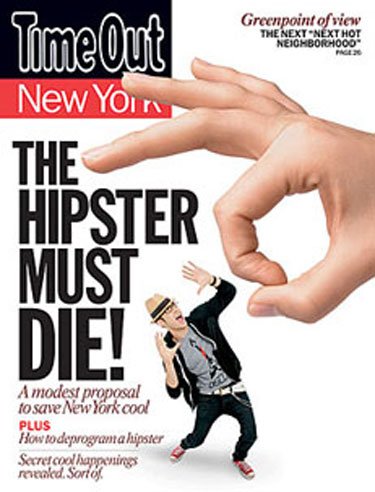
David Infante has some good news and some bad news. The good news is that the Hipster is dead. The bad news is that he has been replaced by another intensely annoying type of millennial wussy, what he refers to as “the “Yuccie” (pronounced “Yucky”), i.e., young urban creatives.
[T]he hipster has to be dead, killed by a contradicted identity. When everyone is rejecting the mainstream, no one is. When everyone is a hipster, no one is a hipster. Hell, saying “the hipster is dead†is, itself, pretty much dead, a late-aughts victim of thinkpiecery and primetime cable namechecks.
And anyway, “hipster†doesn’t line up culturally with who yuccies are. To use myself as an example again: I have no tattoos. My credit is good. Hell, I’ve got dental insurance. My basic, unwaxed mustache, like the rest of me, wouldn’t have rated in the heady days of hipsterism. Hipsters themselves might have scorned me as a yuppie. But that isn’t right, either. “Yuppie†conjures Sharper Image catalogs, clean condos and piles of new money pulled from the pre-recession stock market. It doesn’t capture the sense of creative entitlement that defines the yuccie.
Yuccies are the cultural offspring of yuppies and hipsters. We’re intent on being successful like yuppies and creative like hipsters. We define ourselves by our purchases, just like both cohorts, sure. But not by price or taste level; we identify by price and taste level: $80 sweatpants, $16 six-packs of craft beer, trips to Charleston, Austin and Portland. How much it costs (high or low) is immaterial if the material bought validates our intellect.
We’re a big part of the reason that 43% of every millennial food dollar is spent in restaurants, instead of at home. After all, what product is more fraught with the politics of money and creativity than dinner? It’s gotta be Instagrammed.
You cross the yuppie’s new money thirst for yachts and recognition with the hipster’s anti-ambition, smoke-laced individualism, sprinkle on a dose of millennial entitlement, and the yuccie is what you get.
We are what we hate
The Young Urban Creative. The yuccie. As far as trend-naming goes, this is on the punnier edge of the spectrum. Yuccies are yucky. Why?
Let’s use me as an example again. Almost by definition, yuccies possess enormous privilege. My professional drift towards a creative field (writing) is an implicit statement of privilege. Being a yuccie is synonymous with the sort of self-centered cynicism that can only exist in the absence of hardship. It’s the convenience of being unburdened by conviction; it’s the luxury of getting to pick your battles. In this context, cynicism is maybe the yuccie’s most defining trait.
To wit, of all the reasons I enjoy being a writer, the single driving force behind my career trajectory has been validation. I write for validation: of my peers, of my parents, of the followers who retweet me, even of the commenters who say cruel things in my general direction beneath every piece I’ve ever published.
Don’t get me wrong — I need the money, too, as much as any of my peers. But if I hadn’t insisted on majoring in English, writing professionally and “expressing myself,†I probably could have chosen a more lucrative path. But
I need to be told, repeatedly and at length, that I have valuable ideas. That my talent is singular. That I’m making a dent, the size and location of which is less important than fact that it’s shaped like me.
That’s the cynicism of privilege. That’s what yuccieism is. I’m not ashamed of it, and you shouldn’t be either if this sounds like you. But I’m not proud of it either. Like I said — it’s a bit yucky.
This week’s major viral hit is the video below documenting how an average-looking, not-especially-sexily-dressed woman receives 100 instances of street harassment in the course of a ten-hour stroll through New York City.
————————————
My millennial Facebook friends from Yale circles were righteously a-buzz over this one yesterday. One girl after another testifying that she, too, was constantly harassed by men. It is all about power, they agreed. I offered the consolatory reflection that none of them will have this problem any longer after just a couple of decades. But the girls did not particularly appreciate hearing that one.
It was not very long, however, before the thoroughly-conditioned youngsters, just like Hannah Rosin at Slate, identified a highly problematic subtext in the Hollaback! video: “the video also unintentionally makes another point, that harassers are mostly black and Latino, and hanging out on the streets in midday in clothes that suggest they are not on their lunch break. As Roxane Gay tweeted, ‘The racial politics of the video are f*cked up. Like, she didn’t walk through any white neighborhoods?’ â€
Today’s young people simply cannot tolerate viewing, hearing, or reading anything uncomplimentary to the groups they have been trained all their lives to regard as sacred. Their noses twitch, their hairs stand on end, their heads go up, and they reflexively cry: Racism!
Once the material is identified as racist, that is it. It is not only bad, it is ipso facto false, and must be dismissed out of hand. It doesn’t matter if the questionable content is perfectly true. It is still false because it is wrong, cosmically, absolutely, utterly WRONG. In the minds of today’s young, nothing is, nothing can possibly be so unutterably wrong as Racism. And Racism is not necessarily some kind of concrete theory of the characteristics and relative inherited inferiority of certain groups. Racism is merely saying anything whatsoever negative about certain groups.
————————————
The mandatory racial witch hunt having concluded, the Internet Community then turned its attention to poking fun at the Hollaback! Sexual Harassment video.
Funny or Die! gave us this (non-embeddable) 1:56 video of 10 Hours of Walking in NYC as a Man.
Comment by “Robert†on The Peril of Hipster Economics
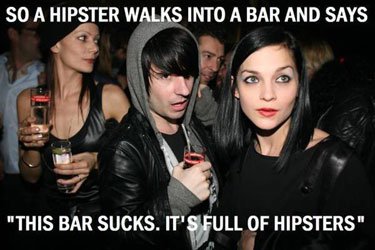
Hipster economics are standard economics because hipsters are everything the US economy has ever wished for in one convenient package. It’s a group consisting largely of young, upper-middle class people with very little conviction, who will spend large amounts of money to maintain their own comfort and the appearance of diversity and rebellion. They are activists as long as it’s easy, poor as long as it doesn’t involve dirt or hunger, and selfless as long as they don’t stand to lose anything. They represent the sanitizing of national issues so that they can be discussed without being addressed. And all you have to do to control them is use some reverse psychology. They’re not rebels, they’re not even malicious, because they’re not anything except a bunch of kids playing pretend. They’ll eventually grow up and become bankers, lawyers and politicians, just like their parents…
Lena Dunham, the Millennial generation’s most conspicuous gift to our culture, published (September 30) a collection of personal essays, Not That Kind of Girl, in which, Amazon claims, she “shares what she’s learned on her path to self-awareness.” Just think, all that!
This morning, on Facebook, Charlotte Allen (who writes frequently about contemporary etiquette and morality) was linking a posting in which she blows her top over Lena Dunham’s account of being “raped.”
I took some guy home when I was drunk and he didn’t use a condom.†But he was a Republican, so that made it rape!
Actually, in her own account, Lena gets triple high: booze, Xanax, and cocaine, before deciding to go home with a stranger.
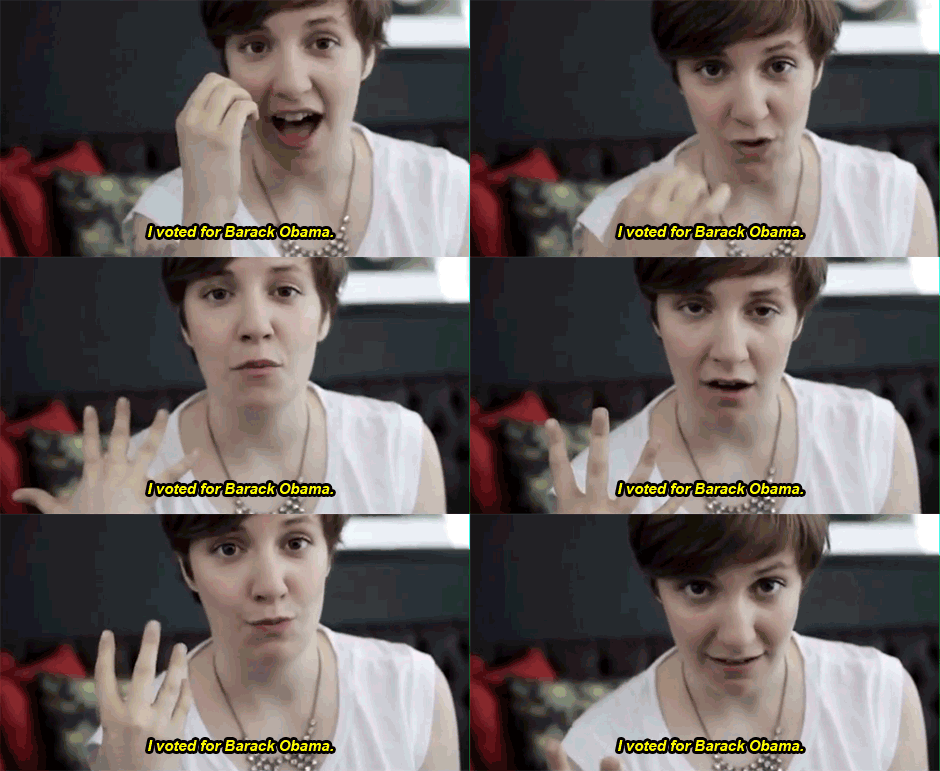
Miss Dunham, reflecting celebrity culture at large, makes a fetish of voting, and it is easy to see why: Voting is the most shallow gesture of citizenship there is, the issuance of a demand — a statement that “this is how the world should be,†as Miss Dunham puts it — imposing nothing in the way of reciprocal responsibility. Power without responsibility — Stanley Baldwin would not have been surprised that Miss Dunham and likeminded celebrities think of voting in terms of their sex lives. Miss Dunham, in an earlier endorsement of Barack Obama, compared voting in the presidential election to losing one’s virginity — you want it to be someone special. Understood that way, voting is nothing other than a reiteration of the original infantile demand: “I Want!â€
As a procedure for sorting out complex policy issues, voting is of distinctly limited value: If you wanted to know whether the compressive strength of a particular material were sufficient to support a bridge over Interstate 20, you would not go about solving that problem by bundling that question with 10,000 other equally precise and complex but largely unrelated questions, presenting the bundle of questions to the least-informed few million people you could identify, and then proceeding with whatever solution 50 percent +1 of them preferred. That would be a bad way to build a bridge — a homicidal way, in fact — and though it is a necessary instrument of accountability in a democratic republic, voting properly plays a very limited role. For instance, we have a Bill of Rights, which could with equal accuracy be called the List of Stuff You Idiots Can’t Be Trusted To Vote On. A majority of Americans don’t like free speech? Too bad, Harry Reid.
But for Miss Dunham et al., this isn’t a question of citizenship — it’s a therapeutic matter. Voting, she promises, will offer “a sense of accomplishment,†knowledge that one has done the right thing, even “joy.†But checking a box is the most trivial accomplishment imaginable; having done so is no guarantee that one has done the right thing, inasmuch as voters routinely make bad decisions for evil reasons; and one suspects that Miss Dunham means something different and less by “joy†than did, say, Beethoven or Walt Whitman. “I wore fishnets and a little black dress to vote,†she writes, “then walked around with a spring in my slinky step. It lasted for days. I can summon it when I’m blue. It’s more effective than exercise or ecstasy or cheesecake.†And that of course is the highest purpose of our ancient constitutional order: to provide adult children with pleasures exceeding those of cheesecake or empathogenic phenethylamines.
I am looking at Millenials from the POV of a member of one of the most pessimistic and ironic generations that has ever roamed the earth—Generation X—so when I hear Millenials being so damaged by “cyber-bullying†that it becomes a gateway to suicide—it’s difficult for me to process. And even my boyfriend agrees that Generation Wuss is overly sensitive, especially when dealing with criticism. When Generation Wuss creates something they have so many outlets to display it that it often goes out into the world unfettered, unedited, posted everywhere, and because of this freedom a lot of the content displayed is rushed and kind of shitty and that’s OK—it’s just the nature of the world now—but when Millennials are criticized for this content they seem to collapse into a shame spiral and the person criticizing them is automatically labeled a hater, a contrarian, a troll. And then you have to look at the generation that raised them, that coddled them in praise—gold medals for everyone, four stars for just showing up—and tried to shield them from the dark side of life, and in turn created a generation that appears to be super confident and positive about things but when the least bit of darkness enters into their realm they become paralyzed and unable to process it.