British hobbyists Reg Mead and Richard Miles searched for three decades on the basis of rumors of a farmer finding silver coins on his land before finding a massive hoard of 30,000-50,000 coins lying beneath a mound of clay under a hedge. The coins are believed to date from the first century B.C. and to have been struck by a tribe called the Coriosolitae who lived on the northern coast of modern-day Brittany. The theory is that the coins were buried to protect them from the Roman army advancing under the command of Julius Caesar.
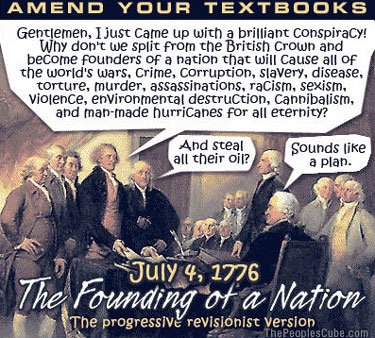
Walter Russell Mead imagines the Declaration of Independence as revised by today’s American community of fashion.
The unanimous Declaration of the Thirteen Post-Colonial, Multi-Racial Societes of North America
When in the Course of human events, it becomes necessary for one people to strengthen the political bands which have connected them with the Global Community, and to assume among the powers of the earth, the cooperative and deferential station which a careful review of the relevant peer reviewed literature suggests is most appropriate for long term win-win outcomes, a decent and rigorously equal respect to the opinions of woman- and man- and transkind requires that they should declare the causes which impel them to the ever deeper union.
We hold these views to be consistent with the evolving cultural consensus, that all humans are equally obliged to the performance of certain Duties, that among these are the Participation in the Struggle against Racism, Economic Injustice, Genetically Modified Organisms, Homophobia, Nationalism and the Excessive Emission of Carbon Dioxide and Other Greenhouse Gasses. That to secure the performance of these Duties, Governments are instituted among humans, deriving their just powers from the considered Opinions of the Educated Classes.
The Czech photographer Miroslav Tichy produced his own cameras from whatever parts he could find in the garbage. From that source came everything – from camera bodies to glass lenses. He was considered a mad hermit, but he did not care. Covertly, Miroslav Tichy wandered around the city in tatters and photographed women with his home-made camera. Years passed and he was “discovered” – the former tramp became a celebrity, and his pictures are now worth tens of thousands of euros and are exhibited in top galleries.
———————————————– One of Tichy’s home-made cameras.
———————————————– One of Tichy’s characteristic soft focus female images.
Miroslav Tichy… from the 1960s until 1985 took thousands of surreptitious pictures of women in his hometown of Kyjov in the Czech Republic, using homemade cameras constructed of cardboard tubes, tin cans and other at-hand materials. Most of his subjects were unaware they are being photographed. A few struck beauty-pageant poses when they sighted him, perhaps not realizing that the parody of a camera he carried was real.
His soft focus, fleeting glimpses of the women of Kyjov are skewed, spotted and badly printed — flawed by the limitations of his primitive equipment and a series of deliberate processing mistakes meant to add poetic imperfections.
Of his technical methods, Tichy has said, “First of all, you have to have a bad camera”, and, “If you want to be famous, you must do something more badly than anybody in the entire world.”
During the Communist regime in Czechoslovakia, Tichý was considered a dissident and badly treated by the government. His photographs remained largely unknown until an exhibition was held for him in 2004.
Marc A. Thiessen discusses the differences in result between democrat and Republican Supreme Court appointments and speculates on just why Republican appointments produce such ideologically unreliable results.
Chief Justice John G. Roberts Jr.’s decision to side with the court’s liberal bloc and uphold Obamacare raises an important question for conservatives: Why are Republicans so awful at picking Supreme Court justices? Democrats have been virtually flawless in appointing reliable liberals to the court. Yet Republicans, more often than not, appoint justices who vote with the other side on critical decisions.
Just compare the records over the last three decades. Democrats have appointed four justices — Ruth Bader Ginsberg, Stephen G. Breyer, Elena Kagan and Sonia Sotomayor. All have been consistent liberals on the bench. Republicans, by contrast, have picked seven justices. Of Ronald Reagan’s three appointees (Sandra Day O’Connor, Antonin Scalia and Anthony M. Kennedy) only Scalia has been a consistent conservative. George H.W. Bush appointed one solid conservative (Clarence Thomas) and one disastrous liberal (David Souter). With George W. Bush’s appointments of Samuel A. Alito Jr. and Roberts, conservatives thought finally they had broken the mold and put two rock-ribbed conservatives on the bench — until last week, that is, when Roberts broke with the conservatives and cast the deciding vote to uphold the largest expansion of federal power in decades.
So Democrats are four-for-four — a perfect record. Republicans are not even batting .500.
How long has it been since you heard somebody politely ask permission to do something (like light a cigarette) and heard the reply: “It’s a free country.” In my own experience, it’s been a long time.
Jerry has an excellent essay, reflecting on how far things have come, and just where America’s wound up.
This is not a nation where people are left alone anymore. This is a nation where they are hounded from the moment they are born until the moment they die by the arms of a regulatory state run by men and women weaned on Cleaver, Alinsky, Fourier, Marx, Wells and countless others. This is a nation where, accordingly, being left alone is the greatest of luxuries. …
ObamaCare is one of the final declarations that there is no opting out. Even if you don’t drive, own a home, own a business, own a dog, or do one of the infinite things that bring you into mandatory contact with the apparatus of your local, semi-local, trans-local, national or global government, you are committed to a task from maturity to death. Your mission is to obtain health insurance, and, in a system in which you become the ward of the government as soon as you taste air, it is the price that you pay for being alive.
In a free country, you are not obligated to do things simply for the privilege of breathing oxygen north of the Rio Grande and south of Niagara Falls. But this isn’t a free country anymore; this is a country in which you get things for free. And there is a big difference between those two things.
We are a nation in which everyone is entitled to everything, except the right to opt out of all the entitlements and the cost of paying for them. We may not have the Bill of Rights anymore, but we have a hell of a bill to settle and, every year, the deficits keep making it bigger and bigger. Our forefathers passed on to us a Bill of Rights, and we shall pass on to our descendants a Bill. A tremendous Bill which can be unrolled from the mountains to the prairies to the oceans white with foam… and all the way across the ocean to China.
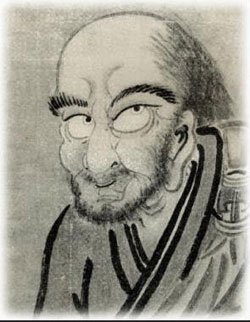
Chief Justice Roberts is kind of like Hakuin, the sort of Zen master who asks you if Obamacare is constitutional, and then whacks you with a shinai if you answer anything but “Moo!”
Chief Justice Roberts, in a manner provocative of keen curiosity, and apparently at the last minute, evolved a new (and extremely Zen) jurisprudential philosophy, urging Supreme Court justices to adopt an extremist philosophy, strangely combining restraint with activism, out of an exaggerated deference to the alleged superior expertise and mandate of Heaven possessed by elected legislators.
Apparently when an elected Congress proceeds to violate the Constitution, according to Mr. Roberts, the good Supreme Court justice will peer skyward, mutter “tsk, tsk” to himself, and proceed to pore closely over the Constitution to find some loophole which can be used to finagle the violative legislative measure into Constitutional legitimacy. He will then wave from afar to the inhabitants of the American Republic, and in his heart wish them the best in capturing total control of both other branches of government, so they can repeal the atrocity.
Protecting Americans from the consequences of their electoral choices, Mr. Roberts explicitly assured us, is not his job.
It is implicitly our job to protect ourselves from having our rights trampled and the Constitution made into a mockery by either winning landslide electoral victories totally repudiating the party currently in power, or possibly by launching a successful armed revolution. And good luck to us, because we certainly are not going to be receiving any help from Mr. Roberts.
Adolph Hitler concluded in 1945 that the German people were demonstrably unworthy of his genius and deserved to lose, and the Russians were really the master race. Mr. Roberts clearly shares this kind of shape-up or ship-out view of Constitutionalism in an electoral democracy. If you lose elections, don’t go crying to Chief Justice Roberts’ Supreme Court. The correct rule is not what the Constitution says, or what the framers had in mind, but the will of the voting electorate as interpreted by the ukases of the successful professional politicians.
Win elections, control Congress and the White House, says Chief Justice Roberts. “There is no ‘try.'”