Archive for May, 2013
16 May 2013


Tiger Again Coming To The Charge
The actual story referred to in the title of Lieut.-Colonel Frank Sheffield’s How I Killed the Tiger (1902) amounts to only 36-pages (including numerous, highly evocative, illustrations), but even the second edition is not easy to find and will cost you something in the neighborhood of $100.
But we happily live in the age of marvels, in which even such esoteric treasures are already scanned in and sitting there available in electronic form at the touch of a fingertip.
Col. Sheffield’s yarn is quite a story.
I would not myself want to take on a fully grown Bengal Tiger with an unreliable percussion fowling piece, even if I had a couple of General John Jacob’s explosive bullets in my pocket. But, if I had been so foolhardy as to do so and wound up once knocked down and mauled by a tiger, I’d like to hope that –like Col. Shefield–, faced with another charge, I’d still have “some kick in me” and stand there, Bowie knife in hand, “determined to make a hard fight for it.”
“How I Killed the Tiger” text
“How I Killed the Tiger” plates
Hat tip to Karen L. Myers.
16 May 2013

Hat tip to Karen L. Myers.
16 May 2013

With scandals popping everywhere around the Obama Administration, this BBC guide to euphemisms employed by politicians in the past is bound to come in handy. Joe Biden frequently seems “tired and emotional” and rumors abound that President Obama is the sort of fellow who “watches badgers.”
Hat tip to Walter Olson.
15 May 2013

Men who chose a transgressive and perverse lifestyle are not all onboard with the professionally-managed public relations campaign aimed at domesticizing and taking homosexuality mainstream. The novelist Brett Easton Ellis finds all this whitewashing and all the appeals to sentimentality “infantilizing and condescending.”
Was I the only gay man of a certain demo who experienced a flicker of annoyance in the way the media treated Jason Collins as some kind of baby panda who needed to be honored and praised and consoled and—yes—infantilized by his coming out on the cover of Sports Illustrated? Within the tyrannical homophobia of the sports world, that any man would come out as gay (let alone a black man) is not only an LGBT triumph but also a triumph for pranksters everywhere who thrilled to the idea that what should be considered just another neutral fact that is nobody’s business was instead a shock heard around the world, one that added another jolt of transparency to an increasingly transparent planet. It was an undeniable moment and also extremely cool. Jason Collins is the future. But the subsequent fawning over Collins simply stating he is gay still seemed to me, as another gay man, like a new kind of victimization. (George Stephanopoulos interviewed him so tenderly, it was as if he was talking to a six-year-old boy.) In another five years hopefully this won’t matter, but for now we’re trapped in the times we live in. The reign of The Gay Man as Magical Elf, who whenever he comes out appears before us as some kind of saintly E.T. whose sole purpose is to be put in the position of reminding us only about Tolerance and Our Own Prejudices and To Feel Good About Ourselves and to be a symbol instead of just being a gay dude, is—lamentably—still in media play.
The Gay Man as Magical Elf has been such a tricky part of gay self-patronization in the media that you would by now expect the chill members of the LGBT community to respond with cool indifference. The Sweet and Sexually Unthreatening and Super-Successful Gay is supposed to be destined to transform The Hets into noble gay-loving protectors—as long as the gay in question isn’t messy or sexual or difficult. The straight and gay sanctimoniousness that says everyone gay needs to be canonized when coming out still makes some of us who are already out feel like we’re on the sidelines. I’m all for coming out on one’s own terms, but heralding it as the most important news story of the week feels to me, as a gay man, well, kind of alienating. We are apart because of what we supposedly represent because of… our… boring… sexuality—oh man, do we have to go through this again? And it’s all about the upbeat press release, the kind of smiling mask assuring us everything is awesome. God help the gay man who comes out and doesn’t want to represent, who doesn’t want to teach, who doesn’t feel like part of the homogenized gay culture and rejects it. Where’s the gay dude who makes crude jokes about other gays in the media (as straight dudes do of each other constantly) or express their hopelessness in seeing Modern Family being rewarded for its depiction of gays, a show where a heterosexual plays the most simpering ka-ween on TV and Wins. Emmys. For. It? Why isn’t the gay dude I have always known and the gay dude I have always wanted to be not front and center in the media culture now? But being “real†and “human†(i.e. flawed) is not necessarily what The Gay Gatekeepers want straight culture to see.
Hat tip to James Coulter Harberson.
15 May 2013

Bruce Bawer responds to the arrested development that results in liberalism.
If I’m curious about the psychology of [members of the commentariat of the left who, after events like the Benghazi Embassy attack or the Boston bombing, hurry to defend Islam]. it’s reflexive. It’s mainstream. Among urban types who view themselves as liberal-minded and sophisticated, it’s considered de rigueur to think this way about things like this. Certainly you’re obliged to think this way if you want to count on getting published in major establishment newspapers and at websites like Salon.
It’s necessary to fight jihad. But it’s equally necessary to fight this weed that has grown up among us – this decadent, despicable readiness to deny the reality of jihad, to relativize it, to make excuses for it, to blame it on us, on America.
These decadent characters take these positions, of course, because they’ve been marinated in multiculturalism and, in particular, have absorbed the all-important lesson that the great danger of our time is not Islam but the criticism thereof. Yet what made multiculturalism attractive to these people in the first place is that it’s tailor-made for spoiled, narcissistic grown children who don’t want to have adult enemies – that is, the kind of enemies who represent a real danger to them or that they might ever really have to fight. It’s tailor-made for people who cherish the notion of themselves as sensitive and understanding toward “The Other,†and whose enemies of choice are, basically, parental substitutes – people who draw clear moral distinctions, who talk about the need for security, and who make unequivocal assertions about the superiority of American freedom to Islamic tyranny.
Fighting the mental affliction – the terminal puerility – of the O’Hehirs may be even harder than fighting jihad itself. How do you repair a culture in which mature moral judgment and adult civic responsibility have systematically been replaced by childish, self-aggrandizing displays of “sensitivity� How do you install a moral compass in a fully grown adult?
For that’s the problem, in essence: these people are missing certain working parts that are essential components of the civilized adult. First of all, they lack the imaginative capacity, and the sense of identification with their own country, to understand that the bombing in Boston wasn’t just an attack on the three people who died and the dozens others who were wounded, but was, in fact, an attack on them – and on their families and friends, their very lives, their children’s future. For all their mockery of America’s idea of itself as a “protected zone,†their supposed empathy for the jihadists is a luxury in which they’re able to indulge precisely because they think of themselves, consciously or not, as living in a “protected zone.†Like any baby in a crib, they feel safe, cocooned, impregnable – yet they don’t realize that the reason for this feeling of safety is that they’ve spent their lives in a country where the cops and the military have protected them from, well, people like the Tsarnaev brothers.
Like any child, they accept this protection as their due, their right. They take it for granted. But they don’t think of themselves as having any responsibility that accompanies this right – for example, a responsibility as citizens to the safety and well-being of the American people as a whole. No, as far as they can see, their only responsibility is to themselves. Indeed, if they can’t wrap their minds around the reality of the murderers’ dedication to the idea of jihad, and thus (in many cases) reject the possibility that it was indeed jihad that drove the Tsarnaevs to commit their heinous acts, it’s because they themselves don’t know what it means to be dedicated to anything outside of themselves – and to the preservation of their own self-image as sensitive, caring people who are too evolved to hate.
Yes, evolved. Yet of course, in reality, they’re the ones who are unevolved. Their relationship to adult moral responsibility is, again, that of small children.
Read the whole thing.
15 May 2013

A triple helping of scandals and five years of arrogance on the part of the president and administration are coming together to mark a turning point in relations between this administration and the Washington political establishment. The special protection that Barack Obama has enjoyed for five years may be coming to an end.
Politico:
The town is turning on President Obama — and this is very bad news for this White House.
Republicans have waited five years for the moment to put the screws to Obama — and they have one-third of all congressional committees on the case now. Establishment Democrats, never big fans of this president to begin with, are starting to speak out. And reporters are tripping over themselves to condemn lies, bullying and shadiness in the Obama administration.
Buy-in from all three D.C. stakeholders is an essential ingredient for a good old-fashioned Washington pile-on — so get ready for bad stories and public scolding to pile up.
Vernon Jordan, a close adviser to President Bill Clinton through his darkest days, told us: “It’s never all right if you’re the president. There is no smooth sailing. So now he has the turbulence, and this is the ultimate test of his leadership.†Jordan says Obama needs to do something dramatic on the IRS, and quick: “He needs to fire somebody. He needs action, not conversation.â€
Obama’s aloof mien and holier-than-thou rhetoric have left him with little reservoir of good will, even among Democrats. And the press, after years of being accused of being soft on Obama while being berated by West Wing aides on matters big and small, now has every incentive to be as ruthless as can be.
This White House’s instinctive petulance, arrogance and defensiveness have all worked to isolate Obama at a time when he most needs a support system. “It feel like they don’t know what they’re here to do,†a former senior Obama administration official said. “When there’s no narrative, stuff like this consumes you.â€
Republican outrage is predictable, maybe even manageable. Democratic outrage is not.
Read the whole thing.
14 May 2013

>Schloss Itter
Published last week: The Last Battle by Stephen Harding.
In the waning days of WWII, American forces liberated Schloss Itter, a luxury extension of the Dachau Concentration Camp, housing 14 French VIP prisoners, including former Prime Ministers Édouard Daladier and Paul Reynaud; Generals Maurice Gamelin and Maxime Weygand; Jean Borotra, formerFrench tennis champion; Colonel François de La Rocque, the leader of the right-wing Croix de Feu movement; André François-Poncet, diplomat; Michel Clemenceau, son of Georges Clemenceau, and Marie-Agnès de Gaulle, Resistance member and sister of General Charles de Gaulle.
As Andrew Roberts, at the Daily Beast, explains, the remarkable following events provide the perfect plot for a Hollywood war epic.
[O]n 5 May 1945—five days after Hitler’s suicide—three Sherman tanks from the 23rd Tank Battalion of the U.S. 12th Armored Division under the command of Capt. John C. ‘Jack’ Lee Jr., liberated an Austrian castle called Schloss Itter in the Tyrol, a special prison that housed various French VIPs, including the ex-prime ministers Paul Reynaud and Eduard Daladier and former commanders-in-chief Generals Maxime Weygand and Paul Gamelin, amongst several others. Yet when the units of the veteran 17th Waffen-SS Panzer Grenadier Division arrived to recapture the castle and execute the prisoners, Lee’s beleaguered and outnumbered men were joined by anti-Nazi German soldiers of the Wehrmacht, as well as some of the extremely feisty wives and girlfriends of the (needless-to-say hitherto bickering) French VIPs, and together they fought off some of the best crack troops of the Third Reich. Steven Spielberg, how did you miss this story?
The battle for the fairytale, 13th century Castle Itter was the only time in WWII that American and German troops joined forces in combat, and it was also the only time in American history that U.S. troops defended a medieval castle against sustained attack by enemy forces. To make it even more film worthy, two of the women imprisoned at Schloss Itter—Augusta Bruchlen, who was the mistress of the labour leader Leon Jouhaux, and Madame Weygand, the wife General Maxime Weygand—were there because they chose to stand by their men. They, along with Paul Reynaud’s mistress Christiane Mabire, were incredibly strong, capable, and determined women made for portrayal on the silver screen.
There are two primary heroes of this—as I must reiterate, entirely factual—story, both of them straight out of central casting. Jack Lee was the quintessential warrior: smart, aggressive, innovative—and, of course, a cigar-chewing, hard-drinking man who watched out for his troops and was willing to think way, way outside the box when the tactical situation demanded it, as it certainly did once the Waffen-SS started to assault the castle. The other was the much-decorated Wehrmacht officer Major Josef ‘Sepp’ Gangl, who died helping the Americans protect the VIPs. This is the first time that Gangl’s story has been told in English, though he is rightly honored in present-day Austria and Germany as a hero of the anti-Nazi resistance.
14 May 2013

Boldini painting of grande horizontale subsequently sold at auction for £1.78 million
The Daily Mail describes a Belle Époque Parisian apartment, locked up at the time of the WWII German advance on the French capital which has remained unopened for over 70 years.
Inside the Paris apartment untouched for 70 years: Treasure trove finally revealed after owner locked up and fled at outbreak of WWII.
Caked in dust and full of turn-of-the century treasures, this Paris apartment is like going back in time.
Having lain untouched for seven decades the abandoned home was discovered three years ago after its owner died aged 91.
The woman who owned the flat, a Mrs De Florian, had fled for the south of France before the outbreak of the Second World War.
She never returned and in the 70 years since, it looks like no-one had set foot inside.
The property was found near a church in the French capital’s 9th arrondissement, between Pigalle red light district and Opera.
Experts were tasked with drawing up an inventory of her possessions which included a painting by the 19th century Italian artist Giovanni Boldini.
One expert said it was like stumbling into the castle of Sleeping Beauty, where time had stood still since 1900. ‘There was a smell of old dust,’ said Olivier Choppin-Janvry, who made the discovery.
But he said his heart missed a beat when he caught sight of a stunning tableau of a woman in a pink muslin evening dress.
The painting was by Boldini and the subject a beautiful Frenchwoman who turned out to be the artist’s former muse and Mrs de Florian’s grandmother, Marthe de Florian, a beautiful French actress and socialite of the Belle Époque.
13 May 2013

Ilya Repnin, Detail, Бурлаки на Волге [Burlaks on the Volga], 1873, State Russian Museum, St. Petersburg
“The problem with utopia is that it can only ever by approached across a sea of blood and you never arrive.”
— Peter Hitchens
Via Insidewarp.
13 May 2013

Charles Hugh Smith discusses the popular liberal meme of widening inequality, and comes to the conclusion that inequality is widening alright, but the beneficiaries of this inequality are actually thoroughly and completely in cahoots with the leftwing administration which, on the one hand, makes political hay using class warfare rhetoric about inequality, while, simultaneously on the other hand, managing economic and central bank policy ruthlessly in pursuit of the interests of the financier sector at the expense of the general community.
Individuals are not powerless to change their circumstance. This is the basis of the American Dream (and also the Chinese Dream, Mexican Dream, Iraqi Dream, etc.) The question then becomes: how is the system “wired,” i.e. what are the obstacles, incentives and disincentives presented to individuals who are trying to better their circumstance?
It’s important to ask this question, and to be honest in our assessment of victimhood, oppression and individual responsibility.
The widening chasm refers to both the income chasm between the financier class (1/10th of 1%) and the 99.9%, and the chasm between the real economy and the official narrative of the economy. The essence of propaganda is to substitute an officially conjured narrative for independent critical thinking.
In the American propaganda narrative, the central state and bank are admirably supporting a “recovery” that though uneven in places is soundly on the path to widespread prosperity.
The primary support of this narrative is ginned-up statistics (bogus unemployment rate, etc.) and asset bubbles inflated by easy credit to the masses and unprecedented low-cost credit to the financier class. These are the basic tools of propaganda: choose a metric that you can control or game, and make that the measure of success.
In the Vietnam War, the body-count of enemy combatants was the metric chosen by the propaganda machine to measure success. Unsurprisingly, stacks of dead civilians were duly counted to boost morale and to mask the failure of the war’s managers.
Nowadays the unemployment rate is the new body-count: a metric that can be gamed to reflect an illusory success. Just erase tens of millions of people from the workforce, count every 4-hour a week job and dead-reckon a few million jobs were created outside the statistical universe (the Birth-Death Model of small business creation) and voila, the unemployment rate magically declines even as the economy and the job market stagnate.
The other metric of choice is the stock market, which has been inflated by central bank policies and identified as the gauge of recovery by a political class anxious to deflect inquiries into its systemic corruption and monumental policy failures.
The official narrative carefully leaves the kleptocracy, crony-capitalism and cartel rentier arrangements firmly in place. As noted above, those benefitting from the cartel-state neofeudalism defend their perquisites as “natural,” i.e. the result of meritocracy. This adds another layer of propaganda persuasion to the official narrative.
An independent, critical account of the American economy would soon raise questions about the structural causes of inequality by asking cui bono, to whose benefit is the system arranged?
If we can honestly say that the system’s primary source of inequality is a dynamic economy that rewards the top 10% who are best able to deploy skills and capital, then that suggests one set of potential remediations.
If however we find the system is unequal largely as a result of its cartel-state structure, then that suggests a political and financial reset is needed to clear the deadwood of corruption, malinvestment and state/central bank manipulation of statistics, finance and credit.
We had to destroy the economy to save it. Indeed.
Read the whole thing.
Via Tyler Durden.
13 May 2013
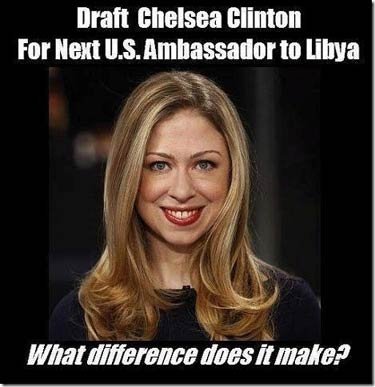
Hat tip to Karen L. Myers.
/div>

Feeds
|




