CNN couldn’t stop Donald Trump. Neither could Fox News.
Some of the nation’s most influential conservatives, from Glenn Beck to Bill Kristol, were powerless. Karl Rove and the Bush family had no effect. Scandal after scandal failed to put a chink in his armor.
And the 16 other GOP contenders, comprising some of the party’s brightest and budding stars, proved to be impotent.
But some observers say that one man may have had the power to prevent Donald Trump’s accession within the Republican Party: Matt Drudge.
“If Drudge had come out really negatively against Trump and had supported someone who would have played well with his reader base like Cruz, it would have been much harder for Trump to win,” BuzzFeed political reporter and editor Andrew Kaczynski told Business Insider, referring to Sen. Ted Cruz of Texas.
The news mogul, one of the most mysterious individuals in the media industry, operates entirely outside the New York City and Washington, D.C., apparatus. He is seemingly accountable to no one. He is rarely spotted in public and holds close company with only a few select people. Reporters tip him off to stories through email or instant messages but never expect a reply, knowing he is unlikely to write back.
Yet despite his reclusiveness, Drudge holds a firm grip on the conservative news cycle. As the founder and operator of the Drudge Report, he influences and often creates news narratives.
“In a sense, the Drudge Report acts both as a waterfall creating a ‘trickle down’ effect within the right-leaning (and sometimes mainstream media) as well as a gravitational force drawing stories to its preferred narrative,” conservative talk-radio host John Ziegler said.
The government is expected to announce a portmanteau or ‘package’ law after its Wednesday cabinet meet, in a bid to rush enabling legislation through parliament. President Erdoğan told his followers on Monday evening that the government is to undertake a major initiative. Guesses at what the new law might contain include the restoration of the death penalty, the easing of arms controls for persons resisting coups, lengthening of the period without trial (which at present conforms to the standards for an EU candidate), and perhaps event the reintroduction of martial law and states of emergency.
Turkey will have to move carefully on the death penalty issue, though President Erdoğan said yesterday that the issue was confined to the EU—Russia, China, and the USA all carry out executions. But there were warnings from the EU parliament today that the resumption of executions might also abrogate the 1996 customs union agreement. Any restriction on the working of the customs union would have dire effects on Turkish industry and investment.
The purge of members of the armed forces and other public servants continued on Tuesday, suggesting an administrative upheaval on a revolutionary scale in the coutry. One estimate says that 125 of Turkey’s 375 generals are now under arrest. The sweep has moved on into other areas. In the Ministry of Education, 15,200 teachers have been suspended from their posts on the grounds that they may have links with the Gülen movement and a further 21,000 in private teaching institutions have had their qualifications cancelled. In both state and private universities, all Deans, a total of 1577 academics, have been told to resign their posts.
In the Presidency of Religious Affairs, 492 imams have been suspended, including three muftis, the head imam of a province. 257 people have been dismissed in the Prime Ministry. No names or details have so far been published. 34 journalists have had their press cards cancelled and RTUK (the state radio and TV watchdog) has unanimously withdrawn the licenses of several minor news sites and TV channels. Benjamin Harvey of Bloomberg puts the number of persons either suspended or detained since Friday at 59,644 nationwide.
News reports of the sacking of the teachers hit the Turkish Lira in the money markets, causing it to fall straight from US$1=TL2.983 to US$1=TL3.04. At the start of the month, it stood at US1=$2.90.
The Department of Religious Affairs has announced that there are to be no religious facilities available for the burial of persons who took party in Friday’s putsch. It seems to be the first time such a sanction has been introduced. Former president Kenan Evren, leaders of the 1980 military coup, was buried with full honours despite having been tried and sentenced to jail while in his 90s. It is normally assumed that the Diyanet, like the Church of England in the UK, cannot refuse burial to anyone belonging to its religion. Refusal to bury also involves the Diyanet (or the government) making a presumption of guilt or innocence.
British newspapers are reporting, and in the absence of any official statement, Turkish ones are repeating the claim, that 25 sailors of the Turkish navy, fourteen vessels and two helicopters, have gone missing since the Friday night coup. However Numan KurtulmuÅŸ, deputy prime minister, has denied that any naval vessels or personnel are unaccounted for.
77% of respondents to a poll of readers by Daily Sabah, the pro-government newspaper, say that they believe that the United States or indirectly supported ‘the failed Gülenist coup attempt’ in Turkey.
The airforce planes which bombed several points in Ankara on Friday including the parliament and the outskirts of the presidential palace, took off from an airbase outside Diyarbakir. The southeastern regional capital has emerged as one of the main focal points of the coup with the Second Army Commander, Adem Huduti, as the most senior serving officer arrested afterwards. 142 military personnel are currently being helded including three colonels, 5 lieutenant colonels, 98 other officers, and 98 military judges and prosecutors. General Huduti by the way appears to be a Bosnian born in former Yugoslavia at Kosova.
In Istanbul the number of soldiers being held has now risen to 437. Several of the detainees turn out to be known for other things: the two pilots who shot down the Russian airforce Su24 in November have been arrested, so has the commander of Incirlik Airbase (he is believed to have tried to seek asylum from the US) and the airbase itself is being searched for further evidence of coup activity. President Erdoğan’s military aide de campe is also under arrest. If he really is guilty, this would raise questions about how he was unaware of the president’s whereabouts last Friday.
Postscript: There was a very loud explosion around 18hrs followed by a fire and a pall of smoke apparently rising from Altındağ, a lower middle class district of Ankara immediately north of Ulus. The reason for the fire and details of any casualties has so far not been revealed though it is suggested that it may have been caused by a single building in flames.
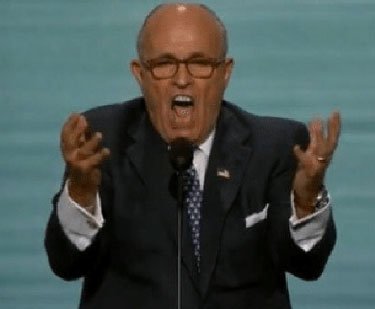
Last night, Rudolph Giuliani described a modest, altruistic, publicity-shunning Trump. Uh huh. Right. Let’s compare the reality, described in the New Yorker, by Trump’s ghost writer for “The Art of the Deal.”
No, Virginia, he never wrote anything himself.
“I put lipstick on a pig,†he said. “I feel a deep sense of remorse that I contributed to presenting Trump in a way that brought him wider attention and made him more appealing than he is.†He went on, “I genuinely believe that if Trump wins and gets the nuclear codes there is an excellent possibility it will lead to the end of civilization.â€
If he were writing “The Art of the Deal†today, Schwartz said, it would be a very different book with a very different title. Asked what he would call it, he answered, “The Sociopath.†…
Schwartz thought that “The Art of the Deal†would be an easy project. The book’s structure would be simple: he’d chronicle half a dozen or so of Trump’s biggest real-estate deals, dispense some bromides about how to succeed in business, and fill in Trump’s life story. For research, he planned to interview Trump on a series of Saturday mornings. The first session didn’t go as planned, however. After Trump gave him a tour of his marble-and-gilt apartment atop Trump Tower—which, to Schwartz, looked unlived-in, like the lobby of a hotel—they began to talk. But the discussion was soon hobbled by what Schwartz regards as one of Trump’s most essential characteristics: “He has no attention span.â€
In those days, Schwartz recalls, Trump was generally affable with reporters, offering short, amusingly immodest quotes on demand. Trump had been forthcoming with him during the New York interview, but it hadn’t required much time or deep reflection. For the book, though, Trump needed to provide him with sustained, thoughtful recollections. He asked Trump to describe his childhood in detail. After sitting for only a few minutes in his suit and tie, Trump became impatient and irritable. He looked fidgety, Schwartz recalls, “like a kindergartner who can’t sit still in a classroom.†Even when Schwartz pressed him, Trump seemed to remember almost nothing of his youth, and made it clear that he was bored. Far more quickly than Schwartz had expected, Trump ended the meeting.
Week after week, the pattern repeated itself. Schwartz tried to limit the sessions to smaller increments of time, but Trump’s contributions remained oddly truncated and superficial.
“Trump has been written about a thousand ways from Sunday, but this fundamental aspect of who he is doesn’t seem to be fully understood,†Schwartz told me. “It’s implicit in a lot of what people write, but it’s never explicit—or, at least, I haven’t seen it. And that is that it’s impossible to keep him focussed on any topic, other than his own self-aggrandizement, for more than a few minutes, and even then . . . †Schwartz trailed off, shaking his head in amazement. He regards Trump’s inability to concentrate as alarming in a Presidential candidate. “If he had to be briefed on a crisis in the Situation Room, it’s impossible to imagine him paying attention over a long period of time,†he said. …
But Schwartz believes that Trump’s short attention span has left him with “a stunning level of superficial knowledge and plain ignorance.†He said, “That’s why he so prefers TV as his first news source—information comes in easily digestible sound bites.†He added, “I seriously doubt that Trump has ever read a book straight through in his adult life.†During the eighteen months that he observed Trump, Schwartz said, he never saw a book on Trump’s desk, or elsewhere in his office, or in his apartment.
Other journalists have noticed Trump’s apparent lack of interest in reading. In May, Megyn Kelly, of Fox News, asked him to name his favorite book, other than the Bible or “The Art of the Deal.†Trump picked the 1929 novel “All Quiet on the Western Front.†Evidently suspecting that many years had elapsed since he’d read it, Kelly asked Trump to talk about the most recent book he’d read. “I read passages, I read areas, I’ll read chapters—I don’t have the time,†Trump said. …
Schwartz has heard some argue that there must be a more thoughtful and nuanced version of Donald Trump that he is keeping in reserve for after the campaign. “There isn’t,†Schwartz insists. “There is no private Trump.†…
Schwartz describes the process of trying to make Trump’s voice palatable in the book. It was kind of “a trick,†he writes, to mimic Trump’s blunt, staccato, no-apologies delivery while making him seem almost boyishly appealing. One strategy was to make it appear that Trump was just having fun at the office. “I try not to take any of what’s happened too seriously,†Trump says in the book. “The real excitement is playing the game.â€
In his journal, Schwartz wrote, “Trump stands for many of the things I abhor: his willingness to run over people, the gaudy, tacky, gigantic obsessions, the absolute lack of interest in anything beyond power and money.†Looking back at the text now, Schwartz says, “I created a character far more winning than Trump actually is.†The first line of the book is an example. “I don’t do it for the money,†Trump declares. “I’ve got enough, much more than I’ll ever need. I do it to do it. Deals are my art form. Other people paint beautifully on canvas or write wonderful poetry. I like making deals, preferably big deals. That’s how I get my kicks.†Schwartz now laughs at this depiction of Trump as a devoted artisan. “Of course he’s in it for the money,†he said. “One of the most deep and basic needs he has is to prove that ‘I’m richer than you.’ †As for the idea that making deals is a form of poetry, Schwartz says, “He was incapable of saying something like that—it wouldn’t even be in his vocabulary.†He saw Trump as driven not by a pure love of dealmaking but by an insatiable hunger for “money, praise, and celebrity.†Often, after spending the day with Trump, and watching him pile one hugely expensive project atop the next, like a circus performer spinning plates, Schwartz would go home and tell his wife, “He’s a living black hole!â€
Schwartz reminded himself that he was being paid to tell Trump’s story, not his own, but the more he worked on the project the more disturbing he found it. In his journal, he describes the hours he spent with Trump as “draining†and “deadening.†Schwartz told me that Trump’s need for attention is “completely compulsive,†and that his bid for the Presidency is part of a continuum. “He’s managed to keep increasing the dose for forty years,†Schwartz said. After he’d spent decades as a tabloid titan, “the only thing left was running for President. If he could run for emperor of the world, he would.â€
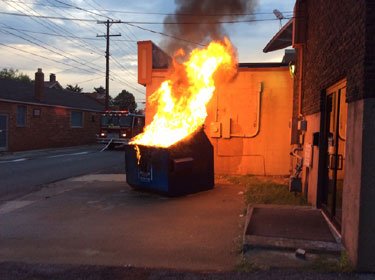
The Hay Ride called it a dumpster fire, rather than a convention.
Arkansas Congressman Steve Womack as presiding officer just called voice votes his own way, and rammed through Convention Rules denying eleven states on the record as asking for a roll call vote due process. The convention floor erupted in anger, and the Iowa and Colorado delegations walked out.
I sought to be recognized to raise a point of parliamentary inquiry and was immediately drowned out by people I would refer to as brownshirts in my surroundings. … You just saw the second most important item of business rushed through in a split second with no opportunity for debate, no opportunity for questions, no opportunity for points of order and no roll call vote although nine states under the rules requested a roll call vote, demanded a roll call vote, and should have been accorded that. So this was pretty shocking and shameful, I’ve seen a lot of, but this is not a meeting of the Republican National Committee. This is a meeting of brownshirts.
Totalitarianism was accompanied by unusual informality and carefully-assumed folksiness.
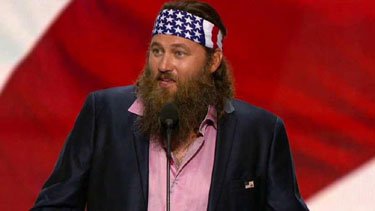
The informal speakers started off with Duck Dynasty’s hirsute Willie Robertson, wearing a patriotic American flag headband (!), with an open-collared pink polo shirt.
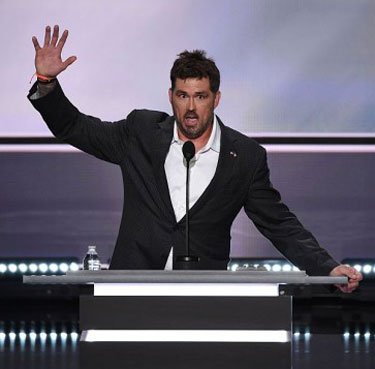
Marcus Luttrell survived Afghanistan, but apparently no necktie he owned did. He, too, addressed the convention with his collar wide open.
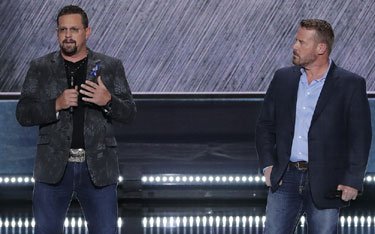
Former CIA Security Contractors from Benghazi John Tiegan and Mark Geist set some kind of new record for convention informality: neither wore a necktie, both addressed the convention wearing blue jeans, Tiegan’s jacket was patterned in some newfangled oil-stained camo and failed to cover a gold-and-silver belt buckle the size of a paperback book. Where are these guys’ former Marine Corps Drill Instructors when you need them?
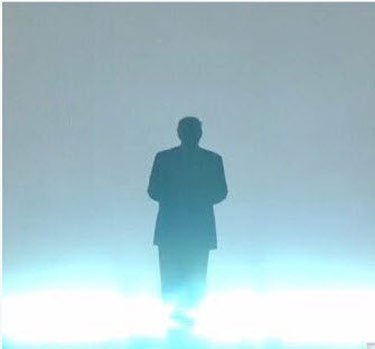
The band later segued abruptly from “Brown-Eyed Girl” to “We Are the Champions” as Trump himself appeared suddenly silhouetted in smoke (having apparently arrived from his office in the Infernal Regions) to introduce his heavily-accented Croatian wife, Melania (who is, surprisingly, actually supporting him).
Melania proceeded to deliver a not-very-interesting speech, plagiarized in part, it turned out, from Michelle Obama (!).
Rudolph Giuliani, however, demonstrated that he, at least, really can deliver a barn-burner of a speech, in which he praised Donald Trump’s big heart and portrayed The Donald as a publicity-averse do-gooder. You could hear jaws dropping all over America.
I suppose the partisan rhetoric and hokum wasn’t that much worse than that at any other convention, but over everything hung the air of astonishment and the gloomy recognition that these people, this Republican Party, this GOP establishment had so readily, and so completely, sold out to an unprincipled, unethical demagogue peddling a bunch of unconservative snake-oil largely in complete contradiction to everything the Republican Party has theoretically stood for since 1980 at least, if not 1964.
I guess it all proves that those low-information Alt-Right peckerwoods were right, and we Movement Conservative intellectuals were wrong: the GOP establishment really is comprised of a bunch of total whores and opportunists.
I’m changing my voter registration to Independent today.
Pamela Constable is a Washington Post correspondent and a typical traitor-to-her-class Baby Boomer, who grew up in WASP-y, privileged Connecticut only to rebel against her parents’ values and become a Social Justice Warrior Holier-Than-Thou. Now, rather late in the game, she is beginning to understand that her parents sacrificed and struggled without complaint to obtain for her the privileged life-style she so despised, and she is beginning to see that the old-fashioned WASP virtues of hard work, good manners, emotional restraint, and good taste have quite a lot to be said for them.
My childhood was a cocoon of tennis and piano lessons, but once I reached my teens, disturbing news began filtering in from the world beyond. An alumna of my elementary school gave an impassioned speech about her summer registering black voters in the South. At boarding school, a current-events teacher introduced me to McCarthyism and apartheid, and I watched the funeral of Martin Luther King Jr. Filled with righteous indignation, I memorized Bob Dylan songs about poverty and injustice and vowed to become a crusading journalist. Above my study carrel, I taped the famous journalistic directive to “comfort the afflicted and afflict the comfortable.â€
The most convenient target I could afflict was my parents, who seemed more worried about their daughter turning into a hippie than about a world full of rampant wrongs. I wrote them earnest letters railing against capitalism, country clubs and colonial exploitation. I accused them of being snobs and racists and scoffed at their preoccupation with appearance. If they were hurt or offended, they never let it show, in part because I kept getting A’s and dutifully stood through numerous fittings for my debutante dress.
I hardly saw my parents during my four years at Brown, a tumultuous time that included the bombing of Cambodia and the resignation of Richard Nixon. Soon after graduation I was gone, immersed in big-city newspaper work. I spent a decade writing about alcoholics and juvenile delinquents and slumlords. Eventually my reporting took me even farther afield, to impoverished or war-torn countries such as Haiti and Chile, India and Afghanistan. It was an adventuresome and stimulating career, but it was also a kind of private atonement for having grown up amid such privilege. I rarely told anyone where I was from.
Over time, my relations with my parents settled into a long-distance detente that was affectionate but formal. We sent each other thank-you notes and avoided talking about politics. Yet even though I had run as far from Connecticut as I could, every time I called from another war zone or refugee camp, they always asked eagerly, “When might we see you again?†The guest room was always waiting, with a few ancient stuffed animals on the pillow.
Still, it was only after witnessing the desperation and cruelty of life in much of the world that I began to reexamine my prejudices against the cloister I had fled. In some countries, I saw how powerful forces could keep people trapped in poverty for life; in others, how neighbors could slaughter each other in spasms of hate. I met child brides and torture victims, religious fanatics and armed rebels. I explored societies shattered by civil war, upended by revolution, and strangled by taboo and tradition.
Visiting home between assignments, I found myself noticing and appreciating things I had always taken for granted — the tamed greenery and smooth streets, the absence of fear and abundance of choice, the code of good manners and civilized discussion. I also began to learn things about my parents I had never known and to realize that I had judged them unfairly. I had confused their social discomfort with condescension and their conservatism with callousness.
Jeffrey Tucker explains that the Trump Nationalist agenda is just another version of Socialism, and that the world has seen the rise of precisely this kind of nationalist socialism before.
The rise of Fascism and Nazism was not a reaction against the socialist trends of the preceding period,†wrote Hayek, “but a necessary outcome of those tendencies.†In Hayek’s reading, the dynamic works like this. The socialists build the state machinery, but their plans fail. A crisis arrives. The population seeks answers. Politicians claiming to be anti-socialist step up with new authoritarian plans that purport to reverse the problem. Their populist appeal taps into the lowest political instincts (nativism, racism, religious bigotry, and so on) and promises a new order of things under better, more efficient rule.
Hayek’s thesis is very similar to Mises’: that the greatest threat in the world today comes from a version of socialism — a rightist socialism — cobbled together in the name of fighting authoritarianism abroad and countering leftism at home. The road to serfdom, in Hayek’s view, is paved by a blind pursuit of unified nationhood and central planning in the name of national greatness. Or, to use today’s language, “making America great again.â€
Donald Trump, Bernie Sanders and Hillary Clinton agree on a lot, especially on the need to protect and enlarge state power. None of them accepts any principled limits on what the state may rightfully do to the individual. Even on big issues where one might think they disagree — healthcare, immigration, and control of lands by the federal government — their positions are more alike than different. …
Most of these candidates’ supporters don’t see it that way, of course. They imagine themselves to be rebels fighting power itself, however they want to define it: Wall Street, the party establishment, the paid-off politicians, the bureaucracy, the billionaires, the foreigners, the special interests, and so on.
But notice that neither Trump, Sanders, nor Clinton attacks government authority as such. Instead they aspire to use it and grow it for their purposes. “The conflict between the Fascist or National-Socialist and the older socialist parties must indeed very largely be regarded as the kind of conflict which is bound to arise between rival socialist factions,†Hayek wrote. “There was no difference between them about the question of it being the will of the state which should assign to each person his proper place in society.â€
As the campaign progress over 2015, the close relationship between right and left socialisms became more obvious. On the surface, Bernie Sanders and Donald Trump represent opposite extremes. But in their celebration of the nation state as the people’s salvation — their burning calls to overthrow the existing elites and replace them with a more intense form of top-down rule — they are morally indistinguishable, and equally un-American.
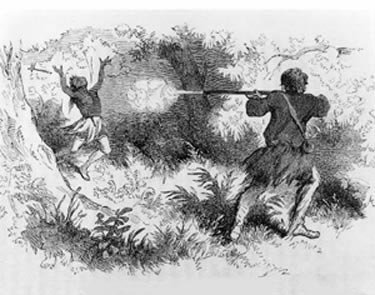
Never Yet Melted’s logo comes from a 19th century Life of Frontiersman & Indian Fighter Lewis Wetzel, depicting Wetzel shooting one of three Indians attempting to kill him. Wetzel was able to reload on the run and killed all three of his pursuers. The image was chosen as a rustic American homage to the images of irrationality and barbarism defeated by civilized Western intelligence originally displayed on the Parthenon in Athens and on the Great Altar of Zeus and Athena in Pergamon.
Never Yet Melted has been around a while now, but remains (the complimentary term is) a boutique blog, inevitably limited in readership due to the idiosyncratic opinions, eccentricities, and often esoteric interests of its solitary editor and proprietor.
Surprisingly, today NYM has been named (for the first time ever) to one of those lists of THE FIFTY TOP BLOGS RIGHT NOW by The Daley Gator.
We’re in some good company on his list, though he has obviously overlooked a number of far more prominent and important conservative blogs than this one.
Thomas Lifson notes current levels of intimidation and ideological indoctrination in this country, without even once mentioning an event at one of our elite universities(!).
Political correctness has attained a level of institutional power today in the United States that it can justifiably be compared with the totalitarian brainwashing efforts seen in Mao Tse-tung’s Great Proletarian Cultural Revolution (also known as “fundamental transformation”). The salient social mechanisms shared by the two efforts at thought reform are pubic shame and self-criticism.
Consider the case of Louis Graham, editor of the Memphis Commercial Appeal, the city’s venerable daily newspaper. He had the temerity to publish an accurate headline.
The fact that Menards thinks they can sell 8″diameter/9 inch high logs for $9.99….
Or that I saw some hipster in fake work boots loading 4 into his cart.
Or 1) that these are unsplit and so large in diameter that you will have to have a fire already going well with a good bed of coals before there is any possibility of getting any of them lit. They are too short for a fireplace and they all need to be split.
and
2) They are all birch (!). Get one of these logs lit finally, and poof! it will be gone in a ridiculously short interval of time.
Not only are these pieces of alleged firewood ridiculously priced, they are useless as firewood.
Commenter Hammond Aikes knows more about these than I did. I thought they were just logs. But “Bonfire Log” is a brand name. They are actually chemically-treated artificial logs, which will light readily and burn 1 1/2 hours in the Regular size, 2 1/2 hours in the Jumbo.
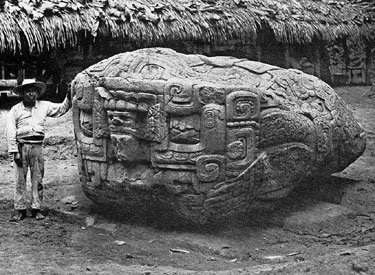
Zoomorph B photographed at Quiriguá, Guatamala in 1902. This monument was dedicated in 780 by K’ak’ Tiliw Chan Yopaat, and is a multi-ton boulder sculpted into a half-crocodile half-mountain beast. The hieroglyphic text on this monument consists entirely of full-figure glyphs. Traces of red pigment have been found on the zoomorph, which is 4 metres (13 ft) long. A dedication cache was found buried in a pit under Zoomorph B, including seven flint blades between 14 and 46 cm (5.5 and 18.1 in) in length.