Archive for July, 2018
16 Jul 2018


Professional victim Yassmin Abdel-Magied.
In Tablet, Claire Lehmann discusses the sudden rise to powerful influence of cultural taboos forbidding criticism of recognized victim groups and the ability of members of such groups to wall off cultural items and artifacts from access by outsiders.
Perhaps the most famous American case occurred in the fall of 2015, when Co-Master of Yale Silliman College Erika Christakis responded with an email of her own to an admonitory pre-Halloween email from the Intercultural Affairs Council — a group of administrators from the cultural centers, Chaplain’s Office and other campus organizations — sent to the undergraduate student body warning against wearing Halloween costumes which could be interpreted as belittling or offensive: no sombreros, no blackface, no turbans, arguing in favor of freedom of undergraduate expression. The campus exploded with protests. University officials, including Christakis’s Co-Master husband, were confronted by screaming, hysterical mobs and, despite Yale’s famous Woodward Report affirming Freedom of Speech and some two-faced expressions of support from Yale President Salovey, both Christakis left on “temporary” sabbaticals never ever to return. A modest and polite demurral to an implicit ban on cultural appropriation sufficed to get two prominent Yale administrators and professors run clean out of town.
In 2016, a flare-up exploded over author Lionel Shriver’s speech at the Brisbane Writers Festival—where she infamously wore a sombrero hat while delivering her speech about freedom in fiction writing. …
In 2013, GQ listed The Human Stain as one of the best books of the 21st century. Arguably, such a book could not be written today, and would almost certainly cause a firestorm if published. That’s a pretty sharp turnaround in sensibility in a very short period of time.
The context surrounding the drama at the Brisbane Writers Festival is important for understanding why it happened. Abdel-Magied migrated to Australia at the age of two and, from a relatively young age, entered the public sphere as a “model minority.†She was an articulate activist and an accomplished student (becoming an engineer and memoir writer) who appeared capable of promoting a modern, sophisticated image of an urban Muslim-Australian. For her activism, she was showered with awards and publicly funded appointments, and given international trips for the express purpose of promoting Australia abroad. Yet for all her accomplishments, accolades, money, and travel opportunities—or perhaps in exchange for them—the young woman was stuck with the felt identity of a victim. This apparent feeling of victimhood was so strong that she interpreted arguments for creative license in art to be “lay[ing] the foundation for genocide.â€
Many people—both then and now—find it hard to understand how such complaints can come from a place of good faith. Activists like Abdel-Magied seem unwilling to empathize with those who may genuinely want to show appreciation for cultures which are not their own, or writers who genuinely want to empathize with those who are different or marginalized, or simply to reach beyond a single layer or caste of the multicultural societies in which they live, an ambition for which writers and thinkers have historically been applauded.
What also seems odd is that activists like Abdel-Magied rarely appear to attempt to persuade others to engage with the foreign cultures they are purportedly defending in more sensitive or better-informed ways. Rather, their complaints have a hectoring, absolutist quality, focusing on the disrespect and lack of deference that white people have shown them. Listening to these complaints, it is difficult to come away with the view that they are about anything other than exercises in power. While being an effective social-media activist, Abdel-Magied is not a particularly good writer, which means identity-as-victim is therefore valuable currency at a writers festival. If literature is not reducible to identity, and representation is not a group property, then her own claim to literary significance would be a dubious one.
It is by considering the power dynamics at play that the logic of cultural appropriation starts to become clear. In a culture that increasingly rewards victimhood with status, in the form of op-ed space, speaking events, awards, book deals, general deference, and critical approbation, identity has become a very valuable form of currency. It makes sense that people will lie, cheat, and steal in order to get some. Expressing offense over a white person wearing a sombrero hat might seem ridiculous on its face—but for those who live inside these sententiously moralistic bubbles, it may be both a felt injury and a rational strategic choice.
Complaints about cultural appropriation are not really complaints, they are demands. When Abdel-Magied walked out on Shriver, it was not because of her insensitivity, it was because of her defiance: her refusal to kowtow to the orthodoxies written up by her moral betters, from which Abdel-Magied’s own claims to significance and social status are derived.
In their newly released book, The Rise of Victimhood Culture: Microaggressions, Safe Spaces, and the New Culture Wars, the moral sociologists Bradley Campbell and Jason Manning describe the three main moral cultures that exist today, which they give the shorthand labels of dignity, honor, and victimhood. A dignity culture, which has been the dominant moral culture of Western middle classes for some time, has a set of moral values that promotes the idea of moral equality and was crystallized in Martin Luther King Jr.’s vision that people ought to be judged according to the content of their character, not the color of their skin.
Victimhood culture departs from dignity culture in several important ways. Moral worth is in large part defined by the color of one’s skin, or at least one’s membership in a fixed identity group: i.e., women, people of color, LGBTIQ, Muslims, or indigenous peoples. Such groups are sacred, and a lack of deference to them is seen as a sign of deviance. The reverse is true for those who belong to groups that are considered historical oppressors: whites, males, straight people, Zionists. Anyone belonging to an “oppressor†group is stained by their privilege, or “whiteness,†and is cast onto the moral scrapheap.
In a recent interview in the online magazine which I edit, Quillette, I asked Campbell and Manning what they thought about cultural appropriation. They explained that they found such complaints baffling, like everybody else, but that they also “illustrate victimhood culture quite well.†One of the key components of victimhood culture is its projection of collective guilt, social offenses between individuals are no longer about the actual people involved, they are about “one social group harming another.â€
RTWT
15 Jul 2018

In Hedgehog Review, Matthew B. Crawford explains precisely why “Diversity” is essential to the contemporary meritocratic Haute Bourgeois community of fashion.
[B]ourgeois society is fundamentally competitive. One has to enact one’s social value anew each day. …
The competition inherent in bourgeois society is responsible for its unprecedented ability to create wealth. But there is a problem. Furet writes that “the idea of the universality and equality of man, which [bourgeois society] claims as its foundation and is its primary innovation, is constantly negated by the inequality of property and wealth produced by the competition of its members. Its development belies its principle, and its dynamic undercuts its legitimacy. The bourgeoisie did not invent the division of society into classes, but by cloaking that division in an ideology that renders it illegitimate, they tinged it with suffering.â€
The suffering is not confined to those who find themselves on the bottom. Furet is especially perceptive on the psychological effect of this contradiction on those who rise to the top: a kind of bourgeois self-hatred. He suggests that this sentiment is the secret source of the revolutionary passion (and in milder form, we might add, of liberal guilt).
The ongoing ferment on campus reveals the university as the site where the paradox of bourgeois society is most acute. As gatekeeper to the upper middle class, the elite university has as its primary social function the sorting of the population. (And it seeks rents commensurate with occupying such a choice position.) It detects existing inequalities, exacerbates them, and certifies them. And whatever else it does, it serves as a finishing school where the select learn to recognize one another, forging a class consciousness that has lately hardened into a de facto caste system. But for that very reason, by the logic Furet identifies, it is also the place where the sentiment that every inequality is illegitimate must be performed most strenuously.
In times of broadly shared upward mobility, this contradiction was perhaps less keenly felt. But for reasons that are only now coming to be broadly understood, once the Cold War ended, the economy increasingly took on the shape of a winner-take-all competition. The self-applied, legitimizing balm of campus progressivism became more necessary than ever.
But simply becoming more noisy about equality wouldn’t do the trick. Some conceptual innovation was needed, one that would shift the terms in such a way as to ease the contradiction. Enter “diversity.â€
This concept claims descent from a lineage of shining democratic moments in the struggle for equal rights that we rightly celebrate: John Locke’s A Letter Concerning Toleration, Martin Luther King’s “Letter from Birmingham Jail,†the statesmanship by which Nelson Mandela averted civil war in South Africa. But the family resemblance turns out to be superficial when one grasps the function “diversity†serves as a principle of administration in today’s political economy.
As Michael Lind has written, “Neoliberalism—the hegemonic ideology of the transatlantic elite—pretends that class has disappeared in societies that are purely meritocratic, with the exception of barriers to individual upward mobility that still exist because of racism, misogyny, and homophobia.†Marking out the corresponding classes of persons for special solicitude is thus key to sustaining the democratic legitimacy of our major institutions. Or, rather, the point is to shift the basis of that legitimacy away from democratic considerations toward “moral†ones. These have the advantage that they can be managed through the control of language, which has become a central feature of institutional life.
The concept of diversity first germinated in the corporate world, and was quickly seized upon by academia in the 1990s. It arrived just in the nick of time. The previous two decades had seen the traditional mission of the university undermined, if not abandoned, under pressure from a highly politicized turn in the humanities that made its case in epistemic terms, essentially debunking the very idea of knowledge. The role that the upper-tier university soon discovered for itself, upon the collapse of ideals of liberal learning, was no longer that of training citizens for humane self-government, but rather that of supplying a cadre to staff the corporations, the NGOs, and the foundations. That is, the main function of elite schools is to supply the personnel required to run things in an economy that has become more managerial than entrepreneurial.
The institutional desideratum—the political antipode to hated “privilegeâ€â€”is no longer equality, but diversity. This greatly eases the contradiction Furet identified, shielding the system from democratic pressure. It also protects the self-conception of our meritocrats as agents of historical progress. As was the case with the Soviet nomenklatura, and the leading Jacobins as well, it is precisely our elite that searches out instances of lingering privilege, now understood as obstacles to fulfillment of the moral imperative of diversity. Under this dispensation, the figure of the “straight white male†(abstracted from class distinctions) has been made to do a lot of symbolic work, the heavy lifting of legitimation (in his own hapless way, as sacrificial goat). We eventually reached a point where this was more weight than our electoral system could take, as the election of 2016 revealed. Whether one regards that event as a catastrophe or as a rupture that promises the possibility of glasnost, its immediate effect has been panic in every precinct where the new class accommodations have been functioning smoothly, and a doubling down on the moralizing that previously secured them against popular anger. We’ll see how that goes.
The term shibboleth is interesting. Its definitions include “a peculiarity of pronunciation, behavior, mode of dress, etc., that distinguishes a particular class or set of persons†and “a common saying or belief with little current meaning or truth.†It is a random Hebrew word that acquired its present meaning when it was used by the Gileadites as a test to identify members of an enemy tribe, the Ephraimites, as they attempted to flee across the Jordan River. Ephraimites could not pronounce the sound sh (Judges 12:4–6). I think it is fair to say that one’s ability to pronounce the word diversity with a straight face, indeed with sincerity made scrupulously evident, serves as a shibboleth in this original sense. It answers the question of whether one wants to continue as a member in good standing of those institutions that secure one’s position in the upper middle class.
RTWT
15 Jul 2018

(from the Danville Morning News)
Narratively:
On a damp Thursday morning in May 1938, hundreds of workers from Western Pennsylvania oil fields, given the day off to look for a missing girl, walked through the Allegheny Forest at arms’ length. They traversed the tangled underbrush alongside police with bloodhounds, World War I veterans, Cornplanter Indians, coal miners, and assorted others who’d responded to the local mayor’s call for 1,000 volunteers. They killed rattlesnakes and were careful not to drop a foot down into one of the hundreds of oil wells dug during the area’s petroleum boom in the 1870s.
But by nightfall, the “haggard, sleep-robbed faces of scores of men,†as the Bradford Era newspaper described them, told onlookers the grim truth: another day had passed without finding the little red-haired four-year-old, Marjorie West.
Eighty years ago today, Marjorie vanished while at a Mother’s Day picnic in the forest with her family. To this day she is the subject of one of the oldest unsolved cases recorded by the National Center for Missing and Exploited Children. Her search was one of the largest for a child since the Lindbergh Baby kidnapping six years earlier. Residents of Western Pennsylvania and Marjorie’s surviving relatives still hold out hope she’s alive. If she is, she may yet celebrate her 85th birthday next month.
RTWT
15 Jul 2018

1901 view of Hanging Rock, later known as Profile Rock or Indian Head, along Route 42 beside old Canal north of Catawissa along the road to Bloomsburg, Columbia County, Pennsylvania. My native region’s smaller version of New Hampshire’s Great Stone Face. This ancient postcard was obviously made from a photograph taken a minute or two earlier than the photo from Shorpy’s directly below. Note that just beyond the Canal is the North Branch of the Susquehanna River. (Click on image for larger version, then click once more to enlarge again.)
————————-

Shorpy’s today is running another, just minutes later, image I had not previously ever seen. This is not a post card, but the full size photograph that they made a postcard from. The train is gone and the wagon is much closer to the camera.
————————-

Early postcard view from opposite angle with canalboat. (The canal was still in use!) This one might even be earlier than 1901.
————————-

Another 1900-ish postcard view.
————————-

1920s, possibly early ’30s, telephone poles are gone and the road is paved.
————————-

Late 1950s, the road is a lot wider.
————————-

Contemporary, color photo.
————————-

14 Jul 2018

The Atlantic quotes Professor Stephen L. Carter warning that those who favor the creation of new laws should always consider in the process the violence inherent in enforcing them.
Law professors and lawyers instinctively shy away from considering the problem of law’s violence. Every law is violent. We try not to think about this, but we should. On the first day of law school, I tell my Contracts students never to argue for invoking the power of law except in a cause for which they are willing to kill. They are suitably astonished, and often annoyed. But I point out that even a breach of contract requires a judicial remedy; and if the breacher will not pay damages, the sheriff will sequester his house and goods; and if he resists the forced sale of his property, the sheriff might have to shoot him.
This is by no means an argument against having laws.
It is an argument for a degree of humility as we choose which of the many things we may not like to make illegal. Behind every exercise of law stands the sheriff – or the SWAT team – or if necessary the National Guard. Is this an exaggeration? Ask the family of Eric Garner, who died as a result of a decision to crack down on the sale of untaxed cigarettes. That’s the crime for which he was being arrested. Yes, yes, the police were the proximate cause of his death, but the crackdown was a political decree.
The statute or regulation we like best carries the same risk that some violator will die at the hands of a law enforcement officer who will go too far. And whether that officer acts out of overzealousness, recklessness, or simply the need to make a fast choice to do the job right, the violence inherent in law will be on display. This seems to me the fundamental problem that none of us who do law for a living want to face.
But all of us should.
RTWT
13 Jul 2018

Business Insider points out that Trump may just be getting started on remodeling the Supreme Court.
Trump now stands to secure two justices in the first half of his first term. Presidents Barack Obama and George W. Bush appointed two justices each during their eight years in office.
Supreme Court justices, who serve for life after a presidential appointment and Senate confirmation, represent one of the longer-lasting marks a president can leave on the country, as the justices often serve for decades.
But Trump reportedly thinks he can get an additional two justices in.
In October, the news website Axios cited an anonymous source detailing private predictions by Trump that Justices Ruth Bader Ginsburg and Sonia Sotomayor would retire during his term.
“What does she weigh? 60 pounds?” Trump asked of the now-85-year-old Ginsburg, a source told Axios. The same report indicated Trump said Sotomayor, over 20 years younger than Ginsburg, was also in trouble because of “her health.”
“No good. Diabetes,” Trump reportedly said.
Sotomayor had a health scare in January with paramedics treating her for low blood sugar, but she quickly returned to work. Sotomayor says she’s vigilant about her Type 1 diabetes, which she’s had since childhood.
During the 2016 campaign, Trump often said he or his Democratic opponent, Hillary Clinton, could end up appointing five justices. …
Ginsburg and Sotomayor are liberal justices, so replacing both Kennedy and either of them with conservatives could change the court’s makeup for decades, possibly reversing decisions like Roe v. Wade.
RTWT
13 Jul 2018

Peter Thonneman wittily reviews David Stuttard’s new Nemesis: Alcibiades and the Fall of Athens.
Of all personality traits, charisma is the hardest to appreciate at second hand. We read Cicero’s letters and can instantly tell that he was vain, insecure and ferociously clever; we read scraps of Samuel Johnson’s conversation in Boswell’s biography and know at once that he was magnificent, lovable and desperately unhappy. But as to what it was like to have Lord Byron turn the full force of his attention onto you – well, we have no conceivable way of knowing. We just have to trust his contemporaries that it felt like ‘the opening of the gate of heaven’.
This causes problems for a biographer of Alcibiades. On the face of it, the man was utterly insufferable. Born in around 450 BC into one of the oldest and richest families of ancient Athens, Alcibiades was the only Old Etonian (as it were) to play a leading role in the late-fifth-century radical democracy. The account of his childhood in Plutarch’s Life of Alcibiades suggests a bad case of antisocial personality disorder: biting during wrestling, mutilating dogs, punching his future father-in-law in the face for a dare. His later political career makes Boris Johnson seem like a man of firm and unbending principle. Exiled from Athens in 415 BC over some particularly odious Bullingdon Club antics, Alcibiades promptly sold his services to Sparta (where he seduced the king’s wife) before double-crossing both sides and wheedling his way into the court of a Persian satrap.
But Alcibiades, like Byron, clearly had that indefinable something. One catches a glimpse of it in the unforgettable last scene of Plato’s Symposium, when he crashes into the room, blind drunk, flirting with everything on legs, shouting about his love for Socrates. Thucydides captures it in his report of Alcibiades’s speech whipping up the Athenian assembly to vote for the disastrous Sicilian expedition of 415 BC – an extraordinary stew of egotistic bragging (about how successful his racehorses are), mendacious demagoguery and brilliantly acute strategic thinking. The unwashed Athenian masses, not usually prone to atavistic toff-grovelling, absolutely adored him: when Alcibiades finally returned to Athens in 407 BC after eight years of exile, sailing coolly into Piraeus on a ship with purple sails, they welcomed him back with paroxysms of joy.
Behind the Peloponnese-sized ego, Alcibiades was a general of spectacular genius – when he could be bothered. In 410 BC, shortly after his controversial reinstatement as admiral of the Athenian navy (on the back of a bogus promise of Persian support), he wiped out the entire Spartan fleet at the Battle of Cyzicus; two years later, through sheer chutzpah, he captured the city of Selymbria near Byzantium with only fifty soldiers, and without striking a blow. When things went wrong – as in 406 BC, after a disastrous campaigning season in the eastern Aegean – he showed an infuriating ability to wriggle out of trouble. His final years (406–404 BC) were spent once again in exile from Athens, holed up in a private castle on the Gallipoli peninsula. The circumstances of his death are still shrouded in mystery. One story tells that he died in the remote mountains of central Turkey at the hands of the brothers of a Phrygian noblewoman whom he had decided to seduce. This is, I fear, all too believable.
RTWT
11 Jul 2018

George Will explains what Socialism in America would look like if Alexandria Ocasio-Cortez came into power.
[I]f America had a socialist government today, what would it be like?
Socialism favors the thorough permeation of economic life by “social” (aka political) considerations, so it embraces protectionism — government telling consumers what they can buy, in what quantities and at what prices. (A socialist American government might even set quotas and prices for foreign washing machines.)
Socialism favors maximizing government’s role supplementing, even largely supplanting, the market — voluntary private transactions — in the allocation of wealth by implementing redistributionist programs. (Today America’s sky is dark with dollars flying hither and yon at government’s direction: Transfer payments distribute 14% of GDP, two-thirds of the federal budget, up from a little more than one-quarter in 1960. In the half-century 1963-2013, transfer payments were the fastest-growing category of personal income. By 2010, American governments were transferring $2.2 trillion in government money, goods and services.)
Socialism favors vigorous government interventions in the allocation of capital, directing it to uses that far-sighted government knows, and the slow-witted market does not realize, constitute the wave of the future. So, an American socialist government might tell, say, Carrier Corp. and Harley-Davidson that the government knows better than they do where they should invest shareholders’ assets.
Socialism requires — actually, socialism is — industrial policy, whereby government picks winners and losers in conformity with the government’s vision of how the future ought to be rationally planned. What could go wrong? (Imagine, weirdly, a president practicing compassionate socialism by ordering his energy secretary to prop up yesterday’s coal industry against the market menace of fracking — cheap oil and natural gas.)
Socialism, which fancies itself applied social science, requires a bureaucracy of largely autonomous experts unconstrained by a marginalized — ideally, a paralyzed — Congress. So, an American socialist government would rule less by laws than by regulations written in administrative agencies staffed by experts insulated from meddling by elected legislators. (Utah Sen. Mike Lee’s office displays two piles of paper. One, a few inches high, contains the laws Congress passed in a recent year. The other, about 8 feet tall, contains regulations churned out that year by the administrative state’s agencies.)
Socialism favors vast scope for ad hoc executive actions unbound by constraining laws that stifle executive nimbleness and creativity. (Imagine an aggrieved president telling, say, Harley-Davidson: “I’ve” — first-person singular pronoun — “done so much for you.”)
Today’s American socialists say that our government has become the handmaiden of rapacious factions and entrenched elites, and that there should be much more government. They are half-right. To be fair, they also say that after America gets “on the right side of history” (an updated version of after “the last king is strangled with the entrails of the last priest”), government will be truly disinterested, manipulated by no rent-seeking factions, serving only justice. That is, government will be altogether different than it is, or ever has been. Seriously.
RTWT
10 Jul 2018
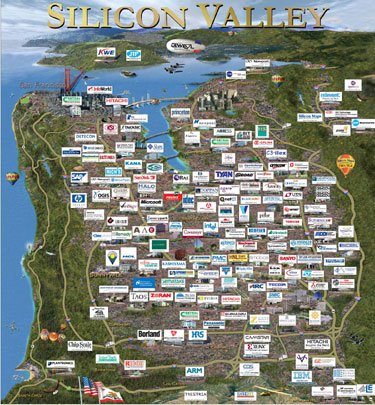
Antonio GarcÃa MartÃnez analyses the California dystopia where everyone talks and votes left, but lives in an unequal (and rather squalid) society that makes Norman England look like the land of Equality.
California is the future of the United States, goes the oft-cited cliché. What the US is doing now, Europe will be doing in five years, goes another. Given those truthy maxims, let’s examine the socioeconomics of the “City by the Bay†as a harbinger of what’s to come.
Data shows that technology and services make up a large fraction of citywide employment. It also shows that unemployment and housing prices follow the tech industry’s boom-and-bust cycle. Amid the current boom, a family of four earning $117,400 now qualifies as low-income in San Francisco. Some readers laughed when I wrote in a memoir about working at Facebook that my six-figure compensation made me “barely middle class.†As it turns out, I wasn’t far off. With that credential, consider this rumination on bougie life inside the San Francisco bubble, which seems consistent with the data and the experience of other local techies.
San Francisco residents seem to be divided into four broad classes, or perhaps even castes:
The Inner Party of venture capitalists and successful entrepreneurs who run the tech machine that is the engine of the city’s economy.
The Outer Party of skilled technicians, operations people, and marketers that keep the trains belonging to the Inner Party running on time. They are paid well, but they’re still essentially living middle-class lives—or what lives the middle class used to have.
The Service Class in the “gig economy.†In the past, computers filled hard-for-humans gaps in a human value chain. Now humans fill hard-for-software gaps in a software value chain. These are the jobs that AI hasn’t managed to eliminate yet, where humans are expendable cogs in an automated machine: Uber drivers, Instacart shoppers, TaskRabbit manual labor, etc.
Lastly, there’s the Untouchable class of the homeless, drug addicted, and/or criminal. These people live at the ever-growing margins: the tent cities and areas of hopeless urban blight. The Inner Party doesn’t even see them, the Outer Party ignores them, and the Service Class eyes them warily; after all, they could end up there.
Mobility among the castes seems minimal. An Outer Party member could reach the Inner Party by chancing into an early job at a lottery-ticket company (such as Facebook or Google) or by becoming a successful entrepreneur. But that’s rare; most of the Outer Party prefers working for the Inner Party, gradually accumulating equity through stock grants and appreciating real estate.
The Service Class will likely never be able to drive/shop/handyman enough to rise to the Outer Party, at least not without additional training or skills. They’re mostly avoiding the descent to Untouchable status, while dealing with precarious gigs that disappear semi-regularly. Uber, for example, has made no bones about its intent to replace its drivers with robots. Delivery bots have already been deployed on city streets, though they were later restricted.
RTWT
10 Jul 2018

The original plain Jane Alexandria Ocasio-Cortez.
———————————-

Evita Peron II.
Thomas Lifson (who is a smart guy) observes that Alexandria Ocasio-Cortez’s victory in the June 26th Democratic Primary for the nomination to the Congressional seat for New York’s 14th District was not really some magical fairy tale triumph of a poor girl from the Bronx with vision and a big heart. There was big money and top flight image-building professionalism at work here.
Somebody with deep expertise on image creation got ahold of the latest darling of the left and glammed her up for her current role as the standard bearer for the socialist wing of the Democrats, the Great Hispanic Hope to lead the “browning of Amerca” toward a radical future. Sometime between 2011 and 2018, Alexandria Ocasio Cortez was transformed from an earnest and nerdy wannabe entrepreneur into a glamorous radical crusader for socialism, the delusion-of-the-moment that has captured the imagination of the malcontent demographic slice of America. …
Someone with deep knowledge of what expensive make-up can do to remake a human visage into something very different from the au naturel version went to work on her. In tandem with her transformation from nerd to a female Che Guevara, she morphed from capitalist to membership in a party that wants to “abolish profit.†…
I don’t know who got ahold of young Ms. Ocasio Cortez and paid for the makeover, but it was someone who understands the manipulation of the “masses†(as they describe their targeted dupes) very well.
RTWT
I’d bet Soros money was behind it.
/div>

Feeds
|





