Archive for December, 2019
19 Dec 2019

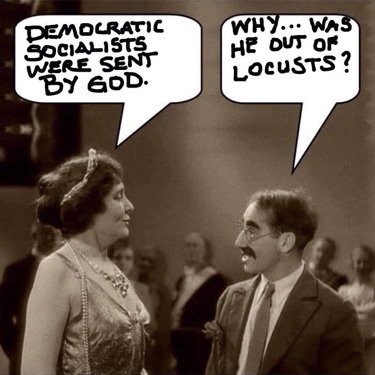
Democratic Socialists

,

19 Dec 2019

Shameless

, , ,

18 Dec 2019

An Uneasy Peace With Husband’s Politics, Career Choice, & Guns

, , ,

From Long Reads: Urban liberal Simone Gorrindo marries Red State soldier and is mostly uncomfortable with rural gun culture. Her emotions, she finds, become different when 2 a.m. noises cause her husband to rise and pick up the handgun from the nightstand.

I knew nothing about guns. I’d spent my childhood in California’s Bay Area and had worked as an editor in New York City before moving to Georgia. In my liberal, urban corners of the country, I’d never had the opportunity or need to even touch a gun; they had been something to oppose, to lament, the occasional shot heard from a safe distance at night. Where I’d grown up, owning a gun was about as sinful and strange as voting red. And I had come of age in the era of mass shootings, was just 13 when I watched the news about Columbine unfold on the television for weeks. Something in me had cemented then: a distaste not just for guns, but also for the people who owned them, championed them, fetishized them.

But I was a long way from home now. Guns were on the hips of men shopping for instant mashed potatoes; at every social gathering we were invited to, on top of refrigerators, in kitchen drawers, on shoe racks and in closets. I knew I should learn how to handle one. Andrew had offered to take me to the range before, but the prospect filled me with dread, a queasiness that I suspected had less to do with my upbringing and more to do with that warning hand I put up in the face of my husband’s stories. Shooting a gun, I sensed, would put me in closer touch with what my husband did for a living. It could satisfy a curiosity that might be safer to ignore. …

Ladies’ Night, read a wrinkled flyer that hung by the front door of Shooters. A few of the salesman nodded at Andrew and I as we entered and walked quickly through the aisles of guns for sale to the shooting range in the back. The thin fabric of my dress clung to my thighs. As far as I could tell, I was the only lady here today.

The guy manning the gun rental counter was younger than the men up front, and he seemed to be the real beating heart of the place, the territorial guard dog standing between the range and the rest of the world. He looked as though he’d spent the best years of his adulthood behind that counter, growing out a thick beard, letting his plaid button-downs get snug around the waist. On a leather string around his neck, he wore a crucifix patterned with the American flag.

“You military?” he asked. They always knew.

Andrew nodded, sliding his California ID across the glass counter. Beneath it were rows of handguns, gleaming like wedding bands.

“The left coast, huh?” the man asked skeptically as he studied the ID. He looked up at us. “I’m from Minnesota originally,” he said in a conciliatory tone. “The communists live there too.”

Andrew gave him a weak smile. This talk had surprised us when’d first arrived — could the stereotypes really be so accurate? But we’d gotten used to hearing this kind of thing with some regularity: communists, Yankees, traitors. People had teasingly called us every one of these names, simply for being from somewhere else, a fact that was as impossible to hide as our race or sex.

Andrew chose the lowest caliber weapon they had on offer — a silver revolver — and got us some “eyes and ears,” protective glasses and ear protection. We signed a few waivers and bought some overpriced ammo. It was almost time to start shooting; there was just one more thing.

“Pick a target,” the man said, nodding toward the area behind us.

We turned around. Neatly stacked in a wire rack were typical targets for a buck apiece. For two dollars, you could purchase a skeleton or goblin or bloody zombie bride. A bear-size man approached and grabbed a target that was above my line of sight. As he walked away, I caught a quick glimpse of it: A bearded cartoon in a Keffiyeh sneered at me, a Kalishnakov clutched in his hands.

“Is that — ?”

“Yep,” Andrew said with a finality that I knew could only mean: Let’s not talk about this here.

Andrew opened a heavy door that led to a vestibule, a kind of portal between the range and the rest of the building. The moment Andrew opened the next door, the air turned humid. The cement room smelled of sweat. Empty bullet casings rolled under my steps as I followed Andrew to the shooting stands, where a row of men stood, their backs wet with perspiration. Most of them looked, from the back, like suburban dads, their bodies and T-shirts softened by age. Their guns went off in startling waves. My shoulders jumped with each blast.

“These aren’t working!” I yelled at Andrew, pointing to my ear muffs.

“It’s the sensation,” Andrew yelled back. “You’ll get used to it.” It was a sensation more than a sound, an unsettling tremor moving through me.

“Shooting is athletic,” he yelled, setting down the gun in front of him. “How you hold your body matters.” He demonstrated: left foot forward, arms taut but slightly bent, the way a batter might ready himself at home plate, except forward-facing. I mimicked him, and he gave me a thumbs-up.

“All right, tell me three of the basic rules of gun safety,” he said. He had drilled these into me on the ride over.

“Treat every weapon as if it is loaded.” I began dutifully. “Never point the weapon at anything you don’t intend to destroy. That seems like an important one,” I said, stalling.

Andrew waited.

“And … keep your finger straight and off the trigger until you’re ready to fire.”

“Good. Now line your eye up with the sight, and make sure that red dot you see is just below where you’re aiming.” He paused. “Release the safety,” he said, doing it for me. “Take a breath, and then pull.”

“What if it goes spinning out of my hands?” I yelled.

Andrew laughed. I took a breath, and, just as I closed my eyes, I heard Andrew tell me to keep them open. I pulled the trigger.

Nothing. I opened my eyes and pulled again. And again.

“What am I doing wrong?” He took the revolver from me and shot off a few rounds.

“You’re afraid,” he said gently, handing it back to me. “Don’t be.”

I paused, regained my stance, and tried again. Nothing.

“Pull a little harder,” Andrew said.

I pulled again. My finger was starting to cramp.

“I can’t,” I said, and let the gun slip gently out of my hands onto the counter. The barrel pointed toward us.

Andrew scooped it up. “Never point a gun, loaded or unloaded, toward anyone.”

“Sorry.” I felt myself blush. Maybe the fact that I was unable to shoot meant we could abandon our mission, go home, and do something I was good at, like reading books.

Andrew left then and returned with a Glock .45. It was heavier and somehow more serious looking; by comparison, the silver revolver seemed like a prop out of an old Western. He showed me how to load the first couple bullets.

Just pull the trigger, I told myself. I squinted, located the floating white dot and then, after a moment’s hesitation, went for it.

The force of the shot went through me instantly, the gun kicking back against my hands, through my arms, into my shoulders, and then out of my body.

Some people describe their first time shooting as exhilarating, a rush, the top of a roller coaster before you plummet. I understood the appeal of a rush, the kind of moment that requires surrender. But this was different. This was asking me to trust — not the gun or the men running the range or Andrew, but myself.

“Keep shooting,” Andrew said.

I adjusted my feet, tightened my arms, and pulled the trigger again. The same bone-rattling power surged through me.

“Wouldn’t you rather at least have some familiarity with guns?” Andrew had asked when I’d turned down the range in the past. But why? I wasn’t interested in hunting. I’d spent my life strategizing how to avoid violence, not engage in it. If I needed to defend myself, the only weapons I could imagine wielding were mace or a good old house key wedged between my fingers. Guns had never felt like a realistic or viable option, perhaps because they had never been real to me. They had always been, for me, more idea than object, a symbol of an irrationality in the human heart. The notion of them as tools of utility or purpose — or fun — was outside of my understanding. But moving to the South and joining the world of the Army had forced me to acknowledge that guns were not only real; they were common, as unremarkable on a man’s hip as the cell phone in his hand.

I unleashed a few more shots, put down the .45, and looked at the target: I hadn’t gotten a single bullet on even its far borders. And somehow, I was exhausted.

“I’m going to take a breather,” I yelled over the noise.

From the safety of the vestibule, I watched Andrew. He shot round after round, a swarm of little holes appearing around his target. …

I had not wanted him to join the Army. Years before, when he’d first mentioned the possibility at the beginning of our relationship, I’d even told him I’d leave him if he did. Why on earth did he want to seek out violence? He remained silent about it for two years after that, but then recruitment pamphlets started appearing in our home, and I found notepads on his nightstand filled with workout regimes. He wasn’t going to give up on this desire, which was so strong and enduring some might say it was a calling. If I wanted Andrew, I would have to say yes to the Army.

Nine days after we married in a New York City courthouse, he shipped off to boot camp. His sudden departure, his decision to do things I did not want to think about, felt almost like a betrayal. My husband was the kind of man who brought me flowers, who asked forgiveness when he made a mistake, who’d walked a mile in the sticky summer heat of Brooklyn with a bookcase on his back, carried it up two flights of stairs, and lined it with my treasured books to surprise me. His very presence anchored me. He was thoughtful and gentle. He was tender and loving. He was also a killer.

***

A month after our day at the range, Andrew brought a gun into our home.

“That was scary easy,” Andrew said as he walked into our bedroom, where I was sitting on our bed, reading a book. He took a black handgun out of a crumpled brown bag and set it down on our faded paisley comforter. I’d known this was coming. Initially I’d pushed back, but ultimately, I’d acquiesced. Guns were a part of Andrew’s daily life and world, after all. Even so, the unloaded 40-cal felt like a threat to my cozy home, my marriage. I didn’t want anything to do with it.

Because Andrew had purchased the gun from a friend, he wasn’t legally required to register it in his name. It was free-floating in the Georgia atmosphere now. Andrew believes in gun control. He supports background checks and thinks owning a gun should be a tested, licensed activity, like driving a car. He also likes guns. His father got him his first BB gun at age 8, and his first .22 rifle at 12. On family road trips, Andrew’s father took him out to shoot it in the Nevada desert. Andrew had told me those stories in the early years of our relationship, when he was a classics student tending bar to support himself. But I’d ignored them, or blocked them out. Instead, I’d absorbed the chapters of his childhood spent on a commune, the afternoons running shoeless in the woods. I envisioned these parts like a film reel, a story about Andrew that matched the man I fell in love with.

But his father saw in Andrew what he’d always wished for himself: physical strength, a native athleticism, an electric current of intensity. Andrew remembers being 8 years old, riding in the passenger seat of his father’s Toyota, rotating Chinese meditation balls in his palm that his martial arts teacher had given him. At a stoplight, his father put a hand over Andrew’s to stop the movement. “Be careful with those,” he told him. “You’ll become too peaceful.” Though everyone in our liberal families was taken aback when Andrew joined the Army, I imagine his father, who died when Andrew was 18, would have been pleased.

His very presence anchored me. He was thoughtful and gentle. He was tender and loving. He was also a killer.

Andrew handed me the gun. It felt cool in my hands. I stared at it, trying to quiet the dissonance I felt. It was the same sensation I experienced when I picked him up from deployment in a parking lot late at night and I could sense immediately, even in the dark, that he was different, that I was different. I felt it, too, during the fights we’d started having since coming to Georgia, clashes over politics and world views that made me question when we’d stopped seeing eye to eye, or if we ever had at all.

“I think I’ll stay away from it,” I said, and handed the gun back to him, though I wanted to say more: Why would you bring this into our home? This is a part of your world, not mine. …

Here was the greatest surprise: Sometimes the gun set me at ease. A few weeks after Andrew purchased it, someone pounded on the door at 2 a.m., and I felt a swell of warmth as Andrew roused and moved toward the nightstand.

All the words, all the self-admiring cerebration, and the writer still doesn’t quite get the obvious insight that there is a fundamental problem with, a serious disconnect from reality in, all the fashionable left-wing ideology she considers basic to her identity. It flies in the face of her obvious unconscious need, and preference, for a strong man ready and able to defend home and country.

18 Dec 2019

Ancient Genome Found in Lump of Birch Pitch

, , ,

Wired reports the results of an interesting study of ancient human DNA.

Nearly 6,000 years ago, in a seaside marshland in what is now southern Denmark, a woman with blue eyes and dark hair and skin popped a piece of chewing gum in her mouth. Not spearmint gum, mind you, but a decidedly less palatable chunk of black-brown pitch, boiled down from the bark of the birch tree. An indispensable tool in her time, birch pitch would solidify as it cooled, so the woman and her comrades would have had to chew it before using it as a sort of superglue for, say, making tools. Our ancient subject may have even chewed it for its antiseptic properties, perhaps to ease the pain of an infected tooth.

Eventually she spit out the gum, and six millennia later, scientists found it and ran the blob through a battery of genetic tests. They not only found the chewer’s full genome and determined her sex and likely skin and hair and eye color, they also revealed her oral microbiome—the bacteria and viruses that pack the human mouth—as well as finding the DNA of hazelnut and duck she may have recently consumed. All told, from a chunk of birch pitch less than an inch long, the researchers have painted a remarkably detailed portrait of the biology and behavior of an ancient human.

When that birch pitch hit the ground 5,700 years ago, the European continent was playing host to a full-tilt transformation of its human residents. Agriculture was spreading north from the Middle East, and humans were literally and figuratively planting roots—if you’re looking after crops, you’re staying put and building up infrastructure to support your efforts, not following around herds of wild game.

But several converging lines of evidence indicate that this gum-chewing woman actually was a hunter-gatherer, thousands of years after the invention of agriculture. For one, previous analyses have allowed scientists to associate certain genes with either agricultural or hunter-gatherer lifestyles. They did this by matching DNA samples with archaeological evidence for those people—farming tools versus hunting tools, for instance.

The genetics of this ancient woman point to the hunter-gatherer way of life, matched with contemporaneous archeological evidence from the area. “You find lots of fish traps and eel-catching prongs and spears,” says University of Copenhagen geneticist Hannes Schroeder, coauthor on a new paper in Nature Communications describing the findings. Evidence of a more settled lifestyle at the site only came later in history.

RTWT

17 Dec 2019

Collectivist Statism Rejected in British Election

, , ,

Jeffrey Tucker sees the recent Tory landslide victory as strong evidence that the main portion of the voting public has had it with the Progressive Left.

Voters throughout the developed world have been getting wiser through the decades. When politicians attack the rich, decry the holes in the safety net, demand controls on business, rail against financial markets, and demand more free things for everyone, there is a missing piece in the rhetoric: enacting all these things puts more power in the hands of the state. Here is the fundamental choice that no amount of fancy language can change: we either trust society and markets to manage themselves or we give more power to the state to use compulsion against the population. This is finally the reality that unmasks every proponent of socialism. Left-wing collectivism is not, in the end, about making society better off; it is about transferring power from the people outside of government to those inside of government.

RTWT

Let’s hope he’s right. All this “progressive” infatuation with Statism, Collectivism, and the supposed superiority of decision-making by scientific experts is a 19th Century fantasy that really hit its peak influence a century ago. Thereafter, it left a spectacular record of economic failure and atrocity. The mystery is: why is it taking the pseudo-intelligentsia so long to recognize the obvious?

16 Dec 2019

Russian Cosmonauts’ TP-82 Survival Pistol

, , ,

We Are the Mighty explains that the Soviet Cosmonaut’s three-barreled TP-82 Survival Pistol was developed to to defend them, not against Marvin the Martian, but against hungry bears after they landed deep in Russia’s wilderness interior.

Alexey Leonov – the first human to do a spacewalk – landed his capsule in forests of the snow-covered Ural mountains [in 1965], some 600 miles off target. Luckily for him, he carried a 9mm pistol that would protect him from the beasts in the untamed wilderness. His fears of landing off-course caused him to lobby for a survival weapon that would be included in all Soyuz capsules. What he got was the TP-82, a weapon that could hunt, take down large predators, and fire off flares. But wait, there’s more: The weapon’s buttstock was also a large machete that could be used as another survival tool.

But the survival weapons didn’t show up overnight. Leonov and his partner in the Soyuz capsule that day, Pavel Belyayev, spent two nights on the ground in the Urals, cold and fearful of large predators. They weren’t able to be rescued for two full days before a ground crew could ski out to them in the deep snow and heavy forest canopy. Leonov’s fear of being stranded among brown bears never left him, however. Nearly 20 years after the rescue, he became second in command of the cosmonaut training program in 1981.

He used this influence to develop the three-barreled pistol and make it standard in Soyuz space capsules.

More on the TP-82:

We Are the Mighty, Pt. 2

Wikipedia tells us the shotgun barrels were chambered for 12.5×70 mm ammunition (40 gauge –.492, bigger than .410), and the lower rifled barrel used the 5.45×39mm ammunition developed for the AK-74 assault rifle.

—————————

HT: Karen L. Myers.

16 Dec 2019

Lego Battle of Rorke’s Drift

, ,

16 Dec 2019

Characteristic National Approach

,

16 Dec 2019

The Duel at Blood Creek

, ,

15 Dec 2019

How Marxists Invented “Hispanics”

, , , , ,

In a must-read article in Claremont Review, Mike Gonzalez explains how the Marxist Left successfully created a second imaginary racial category of victims and turned White Mexicans brown.

I know a Spanish count, a grandee of Spain and a descendant of the Hapsburgs, who got into Yale as a Hispanic victim of White European Oppression. He thought it was hilarious.

America’s surging politics of victimhood and identitarian division did not emerge organically or inevitably, as many believe. Nor are these practices the result of irrepressible demands by minorities for recognition, or for redress of past wrongs, as we are constantly told. Those explanations are myths, spread by the activists, intellectuals, and philanthropists who set out deliberately, beginning at mid-century, to redefine our country. Their goal was mass mobilization for political ends, and one of their earliest targets was the Mexican-American community. These activists strived purposefully to turn Americans of this community (who mostly resided in the Southwestern states) against their countrymen, teaching them first to see themselves as a racial minority and then to think of themselves as the core of a pan-ethnic victim group of “Hispanics”—a fabricated term with no basis in ethnicity, culture, or race.

This transformation took effort—because many Mexican Americans had traditionally seen themselves as white. When the 1930 Census classified “Mexican American” as a race, leaders of the community protested vehemently and had the classification changed back to white in the very next census. …

They had the law on their side: a federal district court ruled in In Re Ricardo Rodríguez (1896) that Mexican Americans were to be considered white for the purposes of citizenship concerns. …
And so as late as 1947, the judge in another federal case (Mendez v. Westminster) ruled that segregating Mexican-American students in remedial schools in Orange County was unconstitutional because it represented social disadvantage, not racial discrimination. At that time Mexican Americans were as white before the law as they were in their own estimation.

Half a century later, many Mexican Americans had been persuaded of a very different origin story. Among the persuaders-in-chief was Paul Ylvisaker, head of the Public Affairs Program at New York’s wealthy Ford Foundation during the 1950s and ’60s. Though little-known today, he wielded great power and influence to advance a particular vision of social justice inspired partly by socialism and its politics of resentment. Ylvisaker hoped, as he later put it in a 1991 essay, “The Future of Hispanic Nonprofits,” that Mexican Americans could be organized into a “united front.” That concept, formulated in 1922 by the Comintern, implied a union of disparate groups on the Left into what the Comintern’s 4th World Congress called “a common struggle to defend the immediate, basic interests of the working class against the bourgeoisie.”

Ylvisaker, who saw philanthropy as “the passing gear” of social change, set off to find out if something similar was possible with Mexican Americans. In 1968, he poured $2.2 million in seed funding into the Mexican American Legal Defense and Educational Fund (MALDEF), a national advocacy conglomerate whose headquarters still buzz with activity in Los Angeles today.

He built on foundations laid by the organizing guru Saul Alinsky, who had begun the effort to consolidate the Mexican-American vote during Ed Roybal’s 1949 L.A. City Council election. Roybal, an army veteran and distant descendant of New Mexico’s Spanish settlers, was one of many Democrats at the time whose success in local politics owed much to Alinsky’s organizing tactics. Alinsky’s groups also trained men like Herman Gallegos, Julian Samora, and Ernesto Galarza—Chicano Movement intellectuals who used Ylvisaker’s Ford Foundation money (starting with a one-year grant of $630,000) to found the interest group La Raza in 1968.

What all these radicals sought—and were quite successful at eventually achieving—was to analogize the experience of black Americans to that of Latinos. The term La Raza, literally “the race,” by itself epitomized this process of racialization. Ylvisaker was direct on this point. In 1964 he handed UCLA researchers the then-goodly sum of $647,999 for a deep survey of Mexican Americans in the Southwest. One of the things he wanted this survey to find out was in what respect the Mexican-American experience was comparable to that of “Negroes today.”

RTWT

If you look at any university today, you’ll find that the same bad guys have also got Asian kids brainwashed into signing on as another whiny victim group fighting against White Male Oppression, quite ironically since the only real modern discrimination against Asians consists of college admission quotas created and enforced by the very same Left-Wing Establishment that leads them around by the nose.

13 Dec 2019

Honey Badger Versus Python & Jackals

, , ,


(no video embed available) 4:22 video.

“There is a bloody brave little animal called the honey badger in Africa. It may be the meanest animal in the world. It kills for malice and sport, and it does not go for the jugular – it goes straight for the groin.”

–Robert Ruark.

The Independent

HT: Karen L. Myers.

13 Dec 2019

Left Bedfellows Quarrel Over Zapata Painting

, , , , , ,


Fabián Cháirez, La Revolución, 2014, currently under exhibition at the Museo del Palacio de Bellas Artes, Mexico City.

Members of a Mexican Labor Union recently took violent exception to the artistic appropriation of Revolutionary Leader Emiliano Zapata by an LGBTQ+ painter.

Hyperallergenic could only clutch its pearls and collapse fainting.

A protest by representatives of farmworker unions at the Museo del Palacio de Bellas Artes in Mexico City escalated into a violent confrontation with LGBTQ+ activists on Tuesday, December 10, around noon. The protests were sparked by a painting of Mexican revolutionary leader Emiliano Zapata by artist Fabián Cháirez, on view in the exhibition Emiliano. Zapata Después de Zapata.

“La Revolución” (2014), which depicts a nude Zapata donning a pink hat and high heels suggestively straddling a horse, was condemned by members of the Unión Nacional de Trabajadores Agrícolas (UNTA) and other similar agricultural groups for its characterization of the revolutionary. The clashes around Cháirez’s painting come at a tumultuous time for the Instituto Nacional de Bellas Artes y Literatura (INBAL), the larger institution that oversees the museum, which was closed by unionized workers protesting alleged lack of payments on Wednesday morning. The museum remains closed to the public as of this afternoon.

According to El Universal, Álvaro López Ríos, a representative of UNTA, led a storming of the museum around noon on Tuesday to demand that the painting be removed from view and destroyed. Protesters blocked the entrance and chanted “Burn it, burn it!”; they later hurled homophobic insults and other slurs at members of LGBTQ+ communities who had approached the scene in counter-protest. One of them was journalist and activist Antonio Bertran, whom López Ríos hit with a water bottle. A harrowing video shows another young man being violently kicked and beaten by protesters outside the museum.

Hyperallergic spoke to Luis Vargas Santiago, curator of the exhibition Emiliano. Zapata Después de Zapata, which hosts the contested painting. Organized in commemoration of the 100th anniversary of Zapata’s death, the show includes 141 works that trace the life of images of the leader. “La Revolución” is included in a section titled “Contemporary Revolutions,” which focuses on representations of Zapata created in the last 50 years. Many of the works in that grouping, says Vargas, speak to cultural developments in the 1980s and ’90s in Mexico, when many artists began to create unconventional, and often deliberately feminine, representations of male historical figures. “Cháirez’s painting proposes that other representations of heroes are possible, ones that depart from virile, hegemonic masculinity. There can be revolution in other kinds of bodies,” says Vargas.

Cháirez’s representation in particular has incensed those who prefer to remember only a conventionally masculine image of Zapata, widely known as a principal figure of the Mexican Revolution, an early and important advocate for peasant rights in Mexico, and the namesake of the Zapatista movement. To farmworkers and ordinary Mexicans alike, he remains a beloved symbol of empowerment for poor and historically marginalized communities. …

“What this polemic reveals is that Mexico is still filled with homophobic machos. Because what bothered people was not an image of a Zapata ‘mandilón,’ a barbaric Zapata, or even the cannibalistic Zapata that appears in revolutionary cartoons,” reflects Vargas, describing other works in the show. “What bothered people was an effeminate Zapata.”

Vargas recounts that many of the members of agricultural unions who protested on Tuesday claimed ownersship of Zapata’s image. They were invited into the museum to view the entire exhibition, which also includes traditional images of the leader, but they refused.

RTWT

Your are browsing
the Archives of Never Yet Melted for December 2019.
/div>


Feeds
Entries (RSS)
Comments (RSS)
Feed Shark



