Donald Trump has published 8 books. Who would have imagined? I’d actually heard of one of them. Mercifully, you and I do not have to read them. Carlos Lozada did last summer and tells us all about them. It sounds as if they are very much what you would expect.
Sitting down with the collected works of Donald J. Trump is unlike any literary experience I’ve ever had or could ever imagine. I spent this past week reading eight of his books — three memoirs, three business-advice titles and his two political books, all published between 1987 and 2011 — hoping to develop a unified theory of the man, or at least find a method in the Trumpness.
Instead, I found . . . well, is there a single word that combines revulsion, amusement, respect and confusion? That is how it feels, sometimes by turns, often all at once, to binge on Trump’s writings. Over the course of 2,212 pages, I encountered a world where bragging is breathing and insulting is talking, where repetition and contradiction come standard, where vengefulness and insecurity erupt at random.
Elsewhere, such qualities might get in the way of the story. With Trump, they are the story. There is little else. He writes about his real estate dealings, his television show, his country, but after a while that all feels like an excuse. The one deal Trump has been pitching his entire career — the one that now culminates in his play for that most coveted piece of property, at 1600 Pennsylvania Ave. — is himself. …
Streaks of insecurity run through the books. Trump constantly reminds readers that he studied at the University of Pennsylvania’s Wharton School, a concession to the credentialism he purports to despise. (“I went to the great Wharton School of Finance and did well†. . . “I learned at the Wharton School of Finance that the economy runs in cycles†. . . “I have had friends, many friends, who went to the Wharton School with me who were very smart.â€) Everything he owns is the best, biggest, hottest. His apartment: “There may be no other apartment in the world like it.†His yacht: “probably the most beautiful yacht ever built.†His living room: “While I can’t honestly say I need an eighty-foot living room, I get a kick out of having one.†And his third wife, Melania: “considered by many, including me, to be one of the most beautiful women in the world.â€
Simona Kossak, daughter of Polish painter Jerzy Kossak, lived more than 30 years in a wooden hut in the Białowieża Forest, without electricity or access to running water. A lynx slept in her bed, and a tamed boar lived under the same roof with her. She was a scientist, ecologist and the author of award-winning films, as well as radio broadcasts.
A new biography, titled “Simona. Opowieść o niezwyczajnym życiu” [Simona. The story of an unusual life] has been published in Poland.
Culture.PL has a feature article based on the new bio. Amusingly, the article translates the Polish for “bison” as “aurochs.”
When you get admitted to an elite university, you receive “the freshman packet,” a large envelope containing a guide to the campus, a course catalog, various brochures inviting you to join organizations or buy things… and a suggested reading list for the summer. At some point, after you arrive on campus in the Fall, there is going to be a Freshman introductory meeting at which the suggested book(s) are going to be discussed. In other words, you will be tested on the reading(s).
In my day, at Yale, the suggested book was Jacques Monod’s “Chance and Necessity“.
I was, I fear, naive as an incoming freshman. I read it as a rather turgid, Continental recounting of the Miller-Urey Experiment, involving the creation of amino acids (the building blocks of life) by passing electrical charges through a mixture of methane, ammonia, water, and hydrogen gases in a closed container. In reality, “Chance and Necessity” was an attempt to dispel my (non-existent at that point) religious faith in order to replace it with the proper sort of faith in materialism and scientism which a good member of the establishment elite ought to have.
Jacques Monod, the Nobel Prize winning biochemist, allies himself, in the title of this admirable treatise, to the atomist Democritus, who held that the whole universe is but the fruit of two qualities, chance and necessity. Interpreting the laws of natural selection along purely naturalistic lines, he succeeds in presenting a powerful case that takes into account the ethical, political and philosophical undercurrents of the synthesis in modern biology. Above all, he stresses that science must commit itself to the postulate of objectivity by casting aside delusive ideological and moral props, even though he enjoins, at the same time, that the postulate of objectivity itself is a moral injunction. He launches a bitter polemic against metaphysical and scientific vitalisms, dismissing them as obscurantist. … He refutes teleological explanations of nature as being contrary to the postulate of objectivity, drawing attention to self-constructing proteins as teleonomic agents, followed by an explanation of the role of nucleic acids, reproduction and invariance. This leads him to dismiss Judaeo-Christian religiosity, which accords man a significant role as being created in God’s image, as a nauseating and false pietism and he even goes so far as to recommend eugenic reform. Writing with great clarity and flair, and often in a forceful and idiosyncratic idiom, he puts forward a compelling case.
——————————
Plus ça change, plus c’est la même chose. I was reading today that incoming freshmen at Duke also have summertime suggested readings, and that certain unenlightened members of the Duke Class of 2019 have had the temerity to resist reading this year’s choice, a graphic novel, titled “Fun Home“.
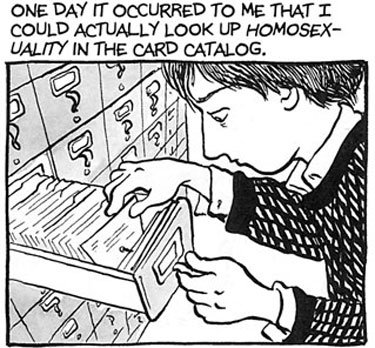
Several incoming freshmen decided not to read “Fun Home†because its sexual images and themes conflicted with their personal and religious beliefs. Freshman Brian Grasso posted in the Class of 2019 Facebook page July 26 that he would not read the book “because of the graphic visual depictions of sexuality,†igniting conversation among students. The graphic novel, written by Alison Bechdel, chronicles her relationship with her father and her issues with sexual identity.
“I feel as if I would have to compromise my personal Christian moral beliefs to read it,†Grasso wrote in the post.
Many first-year students responded to the post, expressing their thoughts on Grasso’s discomfort with the novel. Some defended the book’s images as having literary value and said that the book could broaden students’ viewpoints.
“Reading the book will allow you to open your mind to a new perspective and examine a way of life and thinking with which you are unfamiliar,†wrote freshman Marivi Howell-Arza.
However, several freshmen agreed with Grasso that the novel’s images conflicted with their beliefs. Freshman Bianca D’Souza said that while the novel discussed important topics, she did not find the sexual interactions appropriate and could not bring herself to view the images depicting nudity.
Freshman Jeffrey Wubbenhorst based his decision not to read the book on its graphic novel format.
“The nature of ‘Fun Home’ means that content that I might have consented to read in print now violates my conscience due to its pornographic nature,†he wrote in an email.
Grasso said that many students privately messaged him thanking him for the post and agreeing with his viewpoint. He explained that he knew the post would be controversial but wanted to make sure students with similar Christian beliefs did not feel alone, adding that he also heard from several students with non-Christian backgrounds who chose not to read the book for moral reasons.
“There is so much pressure on Duke students, and they want so badly to fit in,†he said. “But at the end of the day, we don’t have to read the book.â€
The summer reading book selection committee expected that the novel would be contentious among its readers, said senior Sherry Zhang, a member of the committee and co-chair of the First-Year Advisory Counselor Board. The debate generated by Grasso’s post was “very respectful and considerate,†Zhang said.
This autobiography by the author of the long-running [comic] strip, Dykes to Watch Out For, deals with her childhood with a closeted gay father, who was an English teacher and proprietor of the local funeral parlor (the former allowed him access to teen boys). Fun Home refers both to the funeral parlor, where he put makeup on the corpses and arranged the flowers, and the family’s meticulously restored gothic revival house, filled with gilt and lace, where he liked to imagine himself a 19th-century aristocrat. … Bechdel’s talent for intimacy and banter gains gravitas when used to describe a family in which a man’s secrets make his wife a tired husk and overshadow his daughter’s burgeoning womanhood and homosexuality. His court trial over his dealings with a young boy pushes aside the importance of her early teen years. Her coming out is pushed aside by his death, probably a suicide.
In 1966, those-who-know-better were trying to get rid of your religious superstitions and make you into a good secular materialist believer in progressive scientism and the rule of experts. Today, the goal is to get rid of that old-fashioned religion-based morality and to make you into a politically correct and appropriately sensitive and respectful admirer and supporter of the LBGTQ movement, if not LBGTQ yourself.
Entertaining “Local Hero-ish” (1983) fantasies of escaping from the rat race to live the simple life in a quaint Scottish village? Ever dreamt of running your own bookshop? The Guardian reports that you can try out your fantasies during vacation this year for a mere £150 a week.
[A]ll those who … who yearn to spend their days amongst the pristine spines and glossy covers of a small bookshop, what might be the perfect holiday retreat has just been listed on AirBnB: the opportunity to become a bookseller for a week or two.
For the sum of £150 a week, guests at The Open Book in Wigtown, Scotland’s national book town, will be expected to sell books for 40 hours a week while living in the flat above the shop. Given training in bookselling from Wigtown’s community of booksellers, they will also have the opportunity to put their “own stamp†on the store while they’re there. “The bookshop residency’s aim is to celebrate bookshops, encourage education in running independent bookshops and welcome people around the world to Scotland’s national book town,†says the AirBnB listing.
The Open Book is leased by the Wigtown book festival from a local family. Organisers have been letting paying volunteers run the shop for a week or two at a time since the start of the year, but opened the experience up to the world at large this week when they launched what they are calling “the first ever bookshop holiday experience†on AirBnB.
“I wouldn’t call it a working holiday,†said Adrian Turpin, director of the Wigtown book festival. “It’s a particular kind of holiday [for people] who don’t feel that running a bookshop is work. It’s not about cheap labour – it’s about offering people an experience … It’s one of those great fantasies.â€
The money is “just essentially to cover our costsâ€, said Turpin, admitting that “it can be a hard life, selling books in a small town, so it’s not a holiday for everybodyâ€.
John D. Davidson reviews Mario Vargas Llosa’s just-released Notes on the Death of Culture, a must-read pessimistic essay discussing the West’s rate of decline since 1948 (the year of my birth) and our civilization’s gloomy prospects for the future.
In his 1948 essay, Notes Towards the Definition of Culture, T.S. Eliot argued that the highest levels of culture are only attainable by relatively small groups of people, and that in order for a civilization to sustain high culture a class system of some kind is necessary. Because culture is transmitted primarily through the family and religion—not schools—and because it relies to a large extent on these particular loyalties for its perpetuation, when these institutions fail, “we must expect our culture to deteriorate.â€
At the risk of over-simplifying Eliot’s argument, one of his basic contentions sounds rather old-fashioned, perhaps even bigoted by today’s standards, that “we can distinguish between higher and lower cultures; we can distinguish between advance and retrogression.†This notion flies in the face of multiculturalism, not to say the notion of equality. Yet it’s a necessary premise for his assessment of the state of contemporary culture:
“We can assert with some confidence that our own period is one of decline; that the standards of culture are lower than they were fifty years ago; and that the evidences of this decline are visible in every department of human activity. I see no reason why the decay of culture should not proceed much further, and why we may not even anticipate a period, of some duration, of which it is possible to say that it will have no culture.â€
According to Peruvian writer and Nobel laureate Mario Vargas Llosa, the culture-less period foreseen 67 years ago by Eliot is the one in which we are all now living.
Sherlock Holmes lecturing Dr. Watson, drawn by Sidney Paget
Christopher Sandford, writing in The (always dubiously conservative) American Conservative, concludes perfectly correctly that Sherlock Holmes was everything The American Conservative is not “a Victorian libertarian—and imperial conservative,” i.e. essentially an older version of that now vanishing American species, the Goldwater Conservative.
Holmes is an individualist. In the best sense of the words, he’s a confirmed loner and an inveterate free-thinker. Holmes is often the only man in the room with a contrary opinion, whether about someone’s character or a set of circumstances. Even in his latest BBC manifestation, it’s hard to imagine him carrying a sign or joining a picket line. Instead, the tell-tale signs of the libertarian are everywhere, from Holmes’s dress-code—essentially respectable but with just that touch of the haphazard to eschew the orthodox—to his famously bohemian lodgings, and erratic but long work hours.
He’s the epitome of the sort of self-sufficient, small-state, freelance operator Margaret Thatcher surely had in mind when she said that there was no such thing as “society†in Britain, merely millions of innately free-willed and aspirational men and women.
Holmes is also a precursor to James Bond—surely another neo-Thatcherite—in enjoying some of life’s more luxurious consumer goodies. He frequently accepts expensive presents from grateful clients in high places, invariably travels first-class, smokes custom-blended tobacco, and takes hits from a jewel-encrusted snuff box, one of numerous gifts from the nobility. …
Here’s how Holmes sets the scene of his retirement in The Adventure of the Lion’s Mane:
[The case] occurred after my withdrawal to my little Sussex home, when I had given myself up entirely to that soothing life of Nature for which I had so often yearned during the long years spent amid the gloom of London. … My villa is situated upon the southern slope of the downs, commanding a great view of the Channel. … My house is lonely. I, my old housekeeper, and my bees have the estate all to ourselves.
Surely this retreat to the heart, then as now, of Tory England speaks to the deep vein of traditionalism that lies under Holmes’s bohemian façade. The final stories may include some of the most outlandish plots of the entire series, but alongside all the veiled lodgers and creeping professors, the obsessive moral theme becomes more than ever the urgent need to maintain a social order under threat both from within and without. There’s no need to look further for proof of Holmes’s profound sense of disquiet than when he’s left in old age with a feeling of having “failed both my clients and myself,†or when he contemplates the coming ruin of the “quiet, ordered, harmonious, well balanced†Britain personified by Queen Victoria and the rise of the “brash, smug, self-regarding generation†yapping impatiently at the old nation’s heels.
“Is not all life pathetic and futile?†Holmes inquires in his 60th and final appearance, The Adventure of the Retired Colourman. “We reach. We grasp. And what is left in our hands at the end? A shadow. Or worse than a shadow—misery.†There speaks the true voice of the British conservative.
James Salter, West Point graduate, fighter pilot, novelist, film director, lady killer, and mountain climber, died last Friday suddenly at his local gymnasium in Sag Harbor, Long Island at the age of 90.
Salter never attracted a mass audience and consequently never wound up included in last century’s list of “great American writers”, but sophisticated readers did read him with deep respect and always kind of wondered exactly why that was the case. I suppose the combination of Salter’s hyper-masculine point of view and the gem-like perfection and careful stoical restraint of his prose style somehow failed to capture the attention of the popular culture in our hyper-democratic age. Salter’s perspective reeked of elitism, and he never trafficked at all in conventional archetypes.
I expect he would have enjoyed more money and larger public recognition, but Salter never took any of the conventional writer’s shortcuts to obtain them. He never manufactured a public persona (like Papa Hemingway) nor even a specifically recognizable genre of writing of his own. Each of Salter’s novels is very different from the others. There is a kind of stubborn authenticity about Salter.
His 1998 autobiography, Burning the Days, struck a sudden bell in the consciousness of the establishment media. From being an author lucky to be favored with a quick one-column review in the rear pages, Salter suddenly became, in his latter years, “the best writer you’ve never read.” I expect he smiled ironically at that line.
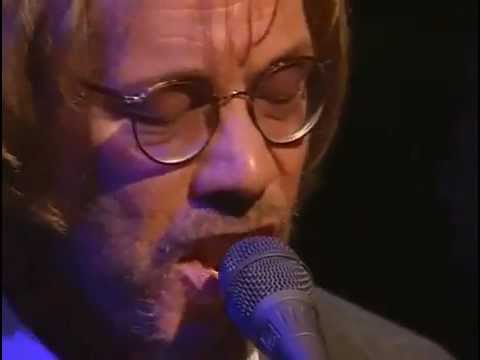
I, and lots of other “bespectacled guys in knit shirts and khakis” have a thing for Zevon.
[M]ost of it seems brutally honest, underlining Zevon’s years of alcoholism, resulting in strained familial relations, spousal abuse, a blown marriage, dozens of affairs, etc. The usual rock-star stuff, only this time it’s presented in a “this is simply how the guy was†light as opposed to either glorifying or condemning his behavior. Even after he got sober, he could be assholic: self-centered, argumentative, problematic, etc. It was made clear that his goodness, which is also noted many times over in terms of his humor, intelligence and flashes of generosity, was counter-balanced with a very dark side.
What I felt reading the book was virtually no different from the vibe I get around many musicians, whether or not they’re anywhere near the level of success Zevon had. Danny Fields had a great quote in the Legs McNeill oral history of the punk scene, which boiled down to: “All musicians are assholes. 
It seems to me Warren Zevon’s life was what happened to a stereotypical musician who hit “the big time†in some respect and spent the rest of his days leading a relatively pampered rock-star life. Good work if you can get it, but I suspect your average person with zero contact with musicians doesn’t understand what that implies, which is never as alluring as the image.
From what little I’ve seen, a successful recording artist or band functions in its own little snow-globe world, especially on the road. Since the artist tends to be the center of attention much of the time, he doesn’t fully develop an adult sense of the world. In Zevon’s case, he just took money out of the bank whenever he felt like it, had very little understanding of his finances, and assumed money would always be there for him. Luckily, it was, although it got tight from time to time as his success boiled down to a few 70s hits he either recorded on his own or wrote for others (like Linda Rondstadt, who was hugely successful back in the 70s). After 1978’s Excitable Boy, his albums were much more critical than commercial successes, and aside from “Werewolves of London,†he never had any huge hit singles. He often toured solo in theaters and small clubs, most likely to reduce costs and make as much money as possible.
The artist also tends to populate his world with people who either support or depend on his ongoing success. Imagine a large family where a father is encouraged to be both infantile and patriarchal, and you have your average rock star. Reading the book, that’s how Zevon came off to me. I suspect that’s how many famous entertainers conduct their private lives, save they’ll be lucky not to receive the same sober scrutiny Zevon’s life receives in this book. (And not to worry if you don’t like the concept of rock stars being ambiguous and hard to accept beneath the image: there won’t be too many more rock stars. And just about everyone I know comes with strings attached, sooner or later.)
That’s also how a lot of his songs come off to me. With this renewed interest in Zevon, I doubled back and listened to his songs (of which I have just about all thanks to a returned MP3 favor from a friend). The first few albums, I was struck by how rigid his work was – either a slow ballad or stomping rocker, with little in between. And most of the rock songs I can live without. For years I’ve noted how “Roland, the Headless Thompson Gunner†has got to be the most retarded song I’ve ever heard, from the clunky martial beat to the silly mercenary story line. (I recall cringing the first time I heard it on my brother’s basement stereo in 1978.) I’ve always favored his ballads, and those early ones, like “Mohammed’s Radio†and “Carmelita,†still sound great.
Even when he lost his way a bit production-wise in the 80s, he had roughly the same formula that worked for him. What struck me most was how much his later work loosened up, to the extent I found myself more drawn to that material. He experimented with different styles (even incorporated a few celtic numbers), and there was a sense of artistic freedom I picked up on that wasn’t in his earlier, more popular work. The harder-rocking songs, like “Things to Do in Denver When You’re Dead†and “Factory,†swung more than they stomped. In his case, I’d say the lack of pressure to write and record a Top 40 hit did him a world of good. I should also note sobriety agreed with him creatively, which is sometimes not the case for recording artists.
His lyrics? Always excellent, even on musically awful songs. Another reason I never warmed up to Zevon over the years was this odd effect his songs have on writers, and not just the famous ones he knew. I can’t tell you how many times I’ve been around newspaper or magazine types in bars in New York, whom I know personally to have very little taste in music, but the one thing they can all agree on is a deep, abiding Warren Zevon appreciation. And while these guys are often great writers, they’re dicks when it comes to music, jam-band types who own about five CDs. Thus, I pictured Zevon concerts being a bunch of bespectacled guys in knit shirts and khakis, rocking out to that awful headless gunner song, and recalling their crazy nights copy editing while stoned after midnight at the campus newspaper.