Richard Fernandez (who went to Harvard and is consequently shaky on his Greek Mythology.*) thinks that Information Technology, the Internet, and the Blogosphere have revived the Muses.
Today most people don’t believe in the Muses any more. Not in the sense that the ancients did. The three — the goddesses of literarture, science and the arts — were at one time supposed to command men to speak. They have largely been replaced by the single all purpose modern deity: the Job. In modern political orthodoxy we do things for one rational reason only, which is to get paid.
We write when the Boss tells us to. We craft a speech of talking points that the committee has approved. But of the muses we heard no more. Until recently.
If any spiritual debt is owed to the informational technology revolution it has been in the resurrection of the Muses. For no one familiar with the programming world will believe for a minute that its best developers write code to be paid. They code because it is cool. They code and you would have to pay them not to code.
They are laboring, not for the chump change offered on Rent-A-Coder, but under the lash of the muse. And because they have been so successful at remolding our world modern, cynical, materialistic culture has once again been forced, at iPod-point to re-acknowledge the impulse of creativity.
We are no more surprised to read of some eminent programmer found dead in a motel room, surrounded by empty boxes of pizza and hundreds of cans of Jolt Cola, expired of heart attack, one bony finger poised to type the final curly bracket of his life than the ancients would have been to find some pilgrim deceased on the path to a seer’s cave, or overcome by the smoke of the Oracle. A victim to the muse and wanderer along the way.
William Alexander Anderson “Bigfoot” Wallace (April 3, 1817 – January 7, 1899)
The highlight of Heritage Auctions’ upcoming March 1-2 “Texana” sale seems to be an albumen photograph dating from 1872 of the famous veteran of the Texas War of Independence and the Mexican War, Indian fighter, and Texas Ranger “Bigfoot” Wallace.
Bigfoot Wallace appears in the Larry McMurtry novel Dead Man’s Walk, later made into a movie in which Wallace was played by Keith Carradine.
It’s interesting to note that, as late as 1872, the legendary frontiersman is found leaning on a percussion lock long rifle. No Spencer repeater or Model 1866 Winchester for him. Wallace is also packing some unidentifiable large pistol in a covered holster, facing forward on his left hip. He looks like a tough hombre.
On this day in 1939, Raymond Chandler’s The Big Sleep was published. Chandler was fifty-one, an ex-oil company executive who had taken up writing at the age of forty-five, after being fired for alcohol-inspired absenteeism. Over the previous five years he had published enough crime stories in the pulp magazines to survive, but this was his first novel, the first of seven featuring the ever-inimitable and much-copied Philip Marlowe. Marlowe’s first words, to the first of so many women — here Carmen Sternwood, with tawny hair, slate-gray eyes and “predatory teeth, as white as fresh orange pith” — give notice:
“Tall, aren’t you?” she said.
“I didn’t mean to be.”
Her eyes rounded. She was puzzled. She was thinking. I could see, even on that short acquaintance, that thinking was always going to be a bother to her.
Ray Chandler’s Philip Marlowe added wisecracking and ruefully reflective worldly wisdom to the hard-boiled school of detective fiction, establishing a new American type which has remained popular ever since, his model being successfully exploited by a host of deliberate imitators from Ross MacDonald to Robert Parker.
[D]own these mean streets a man must go who is not himself mean, who is neither tarnished nor afraid. The detective in this kind of story must be such a man. He is the hero, he is everything. He must be a complete man and a common man and yet an unusual man. He must be, to use a rather weathered phrase, a man of honor, by instinct, by inevitability, without thought of it, and certainly without saying it. He must be the best man in his world and a good enough man for any world. I do not care much about his private life; he is neither a eunuch nor a satyr; I think he might seduce a duchess and I am quite sure he would not spoil a virgin; if he is a man of honor in one thing, he is that in all things. He is a relatively poor man, or he would not be a detective at all. He is a common man or he could not go among common people. He has a sense of character, or he would not know his job. He will take no man’s money dishonestly and no man’s insolence without a due and dispassionate revenge. He is a lonely man and his pride is that you will treat him as a proud man or be very sorry you ever saw him. He talks as the man of his age talks, that is, with rude wit, a lively sense of the grotesque, a disgust for sham, and a contempt for pettiness. The story is his adventure in search of a hidden truth, and it would be no adventure if it did not happen to a man fit for adventure. He has a range of awareness that startles you, but it belongs to him by right, because it belongs to the world he lives in.
If there were enough like him, I think the world would be a very safe place to live in, and yet not too dull to be worth living in.
Mayor Michael R. Bloomberg’s push to increase development in east Midtown would threaten some of the very buildings that give the neighborhood its character, preservation groups and community boards warn.
The buildings include the Barclay Hotel, the Yale Club, Brooks Brothers flagship store and the Graybar Building, which many New Yorkers may think — incorrectly — are protected as landmarks already.
The proposal is intended to provide a legacy of the Bloomberg administration by ensuring that the area around Grand Central Terminal stays on a competitive footing with business centers worldwide. It would increase the maximum allowable building density by 60 percent for some large sites near the terminal. Potential density would be increased 44 percent along an 11-block stretch of Park Avenue. Lesser increases would take effect elsewhere in the area between East 39th and East 57th Streets and between Fifth and Second Avenues, although most of the easternmost residential blocks would not be affected.
Such increases in density — meaning higher potential profits for landlords down the road — would give builders an incentive to spend the time and money needed to assemble large development parcels and then empty and demolish the buildings on them.
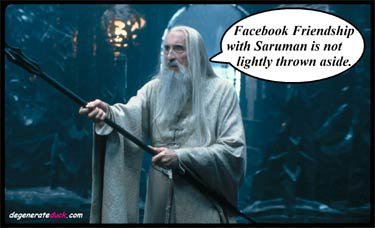
Adrian Simmons delves deep into Tolkien’s Unfinished Tales to identify Saruman’s actual mission in Middle Earth and then attempts to put the white wizard’s motives, policies, and machinations into proper perspective.
Sarumon didn’t have time to build a big enough army of half-orcs to stand against Sauron, so Plan A is shot all to hell, and he didn’t get his hands on the Ring, so there goes Plan B, and thanks to the remarkable willpower of those scruffy Hobbits, he can’t take refuge under Sauron’s massive cloak (where I feel confident that Sarumon would have convinced himself that he’d affect long-term change from within the organization). His pride– something that is a key part of his very being is stung — so what does he do? Well, he goes and screws with the Hobbits because he can. Because there is no one else for him to take revenge on. In a creepy way he still won’t turn a hand against Men or Elves, and the Ents have already handed him his ass (and, well, Radagast might be a harder opponent than Sarumon’s tough talk implies).
I have no idea what Sarumon is thinking in taking over the Shire, yes he is spiteful, he is vengeful-minded, but again he has totally not turned completely from his path. He doesn’t, as far as I know, do anything to the Hobbits himself, even to Frodo. So what the heck is he doing in the Shire? What is his long-term plan? Plan D, I think, is that the new age is just starting, and that if you give him another century (and what is a century to Sarumon?), he will build a great thing, a great kingdom, the Elves and the Men will have to deal with Sarumon, one way or another.
Back to the firefighter analogy: just as the incompetent firefighter gets himself into trouble and diverts energy and materials away from the fire itself, so does Sarumon.
He refers to Saruman as being like “a bold, but incompetent fireman,” but what he is really getting at is the famous classification of officers, usually attributed to Field Marshal Count von Moltke:
Each officer possesses at least two of these qualities. Those who are clever and industrious are fitted for the highest staff appointments. Use can be made of those who are stupid and lazy. The man who is clever and lazy however is for the very highest command; he has the temperament and nerves to deal with all situations. But whoever is stupid and industrious is a menace and must be removed immediately!â€