This morning arsonists seriously damaged a 15th century instrument of white supremacy, the Cathedral of Nantes. It had survived the French Revolution, the Reign of Terror, Nazi bombing in WWII, and a 1972 fire.
A fire at the cathedral in the French city of Nantes is believed to have been started deliberately, prosecutors say.
Three fires were started at the site and an investigation into suspected arson is under way, Prosecutor Pierre Sennes said.
The blaze destroyed stained glass windows and the grand organ at the Saint-Pierre-et-Saint-Paul cathedral, which dates from the 15th Century. …
The fire began in the early morning, with massive flames visible from outside the building. More than 100 firefighters brought it under control after several hours.
Mr Sennes said the national police would be involved in the investigation and a fire expert was travelling to Nantes
“When we arrive at a place where a fire has taken place, when you see three separate fire outbreaks, it’s a question of common sense, you open an investigation,” he said.
Newsagent Jean-Yves Burban said he heard a bang at about 07:30 local time (05:30 GMT) and saw flames when he went out to see what was happening.
“I am shook up because I’ve been here eight years and I see the cathedral every morning and evening. It’s our cathedral and I’ve got tears in my eyes,” he told Reuters.
Andrew is bending over backwards acrobatically to be nice about it, but he clearly didn’t fall. He was pushed.
What has happened, I think, is relatively simple: A critical mass of the staff and management at New York Magazine and Vox Media no longer want to associate with me, and, in a time of ever tightening budgets, I’m a luxury item they don’t want to afford. And that’s entirely their prerogative. They seem to believe, and this is increasingly the orthodoxy in mainstream media, that any writer not actively committed to critical theory in questions of race, gender, sexual orientation, and gender identity is actively, physically harming co-workers merely by existing in the same virtual space. Actually attacking, and even mocking, critical theory’s ideas and methods, as I have done continually in this space, is therefore out of sync with the values of Vox Media. That, to the best of my understanding, is why I’m out of here.
Two years ago, I wrote that we all live on campus now. That is an understatement. In academia, a tiny fraction of professors and administrators have not yet bent the knee to the woke program — and those few left are being purged. The latest study of Harvard University faculty, for example, finds that only 1.46 percent call themselves conservative. But that’s probably higher than the proportion of journalists who call themselves conservative at the New York Times or CNN or New York Magazine. And maybe it’s worth pointing out that “conservative†in my case means that I have passionately opposed Donald J. Trump and pioneered marriage equality, that I support legalized drugs, criminal-justice reform, more redistribution of wealth, aggressive action against climate change, police reform, a realist foreign policy, and laws to protect transgender people from discrimination. I was one of the first journalists in established media to come out. I was a major and early supporter of Barack Obama. I intend to vote for Biden in November.
It seems to me that if this conservatism is so foul that many of my peers are embarrassed to be working at the same magazine, then I have no idea what version of conservatism could ever be tolerated. And that’s fine. We have freedom of association in this country, and if the mainstream media want to cut ties with even moderate anti-Trump conservatives, because they won’t bend the knee to critical theory’s version of reality, that’s their prerogative. It may even win them more readers, at least temporarily. But this is less of a systemic problem than in the past, because the web has massively eroded the power of gatekeepers to suppress and control speech. I was among the first to recognize this potential for individual freedom of speech, and helped pioneer individual online media, specifically blogging, 20 years ago.
And he’s right: if an anti-Trump, anti-Bush Quizling ersatz conservative, who additionally plays for the wrong team, is not an acceptable token in Establishment journalism today, things have reached one helluva pass. Andrew, of course, needs to sit back and reflect on his own part, in the role of sell-out, in letting matters proceed so far.
Andrew finds himself rather in the position of the late German pastor Martin Niemöller:
“They came first for the Communists, and I didn’t speak up because I wasn’t a Communist. Then they came for the Jews, and I didn’t speak up because I wasn’t a Jew. Then they came for the trade unionists, and I didn’t speak up because I wasn’t a trade unionist. Then they came for the Catholics, and I didn’t speak up because I was a Protestant. Then they came for me, and by that time no one was left to speak up.”
NYT Classical Music Critic Anthony Tommasini says “ensembles [need] to reflect the communities they serve, [and] the [hiring] audition process [for musicians] should take into account race, gender and other factors.”
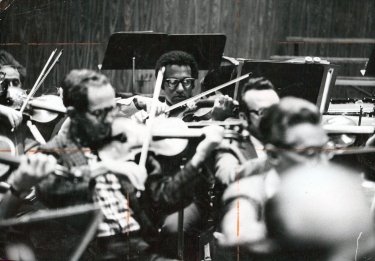
During the tumultuous summer of 1969, two Black musicians accused the New York Philharmonic of discrimination. Earl Madison, a cellist, and J. Arthur Davis, a bassist, said they had been rejected for positions because of their race.
The city’s Commission on Human Rights decided against the musicians, but found that aspects of the orchestra’s hiring system, especially regarding substitute and extra players, functioned as an old boys’ network and were discriminatory. The ruling helped prod American orchestras, finally, to try and deal with the biases that had kept them overwhelmingly white and male. The Philharmonic, and many other ensembles, began to hold auditions behind a screen, so that factors like race and gender wouldn’t influence strictly musical appraisals.
Blind auditions, as they became known, proved transformative. The percentage of women in orchestras, which hovered under 6 percent in 1970, grew. Today, women make up a third of the Boston Symphony Orchestra, and they are half the New York Philharmonic. Blind auditions changed the face of American orchestras.
But not enough.
American orchestras remain among the nation’s least racially diverse institutions, especially in regard to Black and Latino artists. In a 2014 study, only 1.8 percent of the players in top ensembles were Black; just 2.5 percent were Latino. At the time of the Philharmonic’s 1969 discrimination case, it had one Black player, the first it ever hired: Sanford Allen, a violinist. Today, in a city that is a quarter Black, just one out of 106 full-time players is Black: Anthony McGill, the principal clarinet.
The status quo is not working. If things are to change, ensembles must be able to take proactive steps to address the appalling racial imbalance that remains in their ranks. Blind auditions are no longer tenable.
Can there be any notion more preposterous, more incapable of surviving intellectual scrutiny, than today’s liberal shibboleth of “Diversity”?
Diversity requires abandonment of standards of merit, achievement, and genuine equality of opportunity, accompanied by lots of rationalizations, denial, and outright lying about what is needed to produce sufficient representation of members of various privileged victim identity groups. Note how Mr. Tommasini assures NYT readers that there is
remarkably little difference between players at the top tier. There is an athletic component to playing an instrument, and as with sprinters, gymnasts and tennis pros, the basic level of technical skill among American instrumentalists has steadily risen. A typical orchestral audition might end up attracting dozens of people who are essentially indistinguishable in their musicianship and technique.
But this begs the question: are there actually many representatives of underclass minorities in that “top tier”? Obviously, there are not, because, if there were, then blind auditions would work to achieve their hiring just fine.
Mr. Tommasini fails also to explain why “diversity” in the sense of more African-Americans in classical orchestras is an urgent problem, while massive over-representation of African-Americans in professional sports is no problem at all.
Why, I often wonder, are blacks, Mexicans and Puerto Ricans, and homosexuals important for “Diversity” but not Finns, Ukrainians, or Belgians? If the answer is that a sob story about past hardships is required, then how come Jews, Appalachian hillbillies, and all those ethnic Catholic blue collar communities count for nothing in the Diversity sweepstakes? Tell us, Mr. Tommasini: what percentage of classical orchestra ensembles are made up of Southern Italians from the Outer Boroughs of New York?
————-
You can imagine what I thought when I looked up Mr. Tommasini and found that he is a Yale classmate of mine.
Chancellor of the Exchequer Rishi Sunak was photographed working, with a $179.95 Coffee Mug on his desk.
Class warfare is popular in Britain, and the current Tory Chancellor inadvertently afforded Labourites a chance to mau-mau him by letting the Press catch sight of an expensive high-tech self-heating coffee mug (the Ember travel mug) sitting on his desk.
[[T]he current chancellor, Rishi Sunak, appears to have gone one step further in the traditional pre-budget photo opportunity by posing with a “smart mug†costing £180.
A series of snaps released by the Treasury show Sunak at work, with the expensive gadget on his desk as he pores over the details of the mini-budget he will deliver to the Commons on Wednesday.
The Ember travel mug, reportedly a gift from his wife, Akshata Murthy, the daughter of a billionaire businessman, retails for up to £179.95 online, with a product description boasting that it “does more than simply keep your coffee hotâ€.
It adds: “Our smart mug allows you to set an exact drinking temperature and keeps it there for up to three hours, so your coffee is never too hot, or too cold.†The 355ml mug is apparently dishwasher safe and even includes a charging coaster.
Rishi Sunak found himself in hot water last week, though fortunately it was not too hot. Just the right temperature, in fact. The Chancellor was photographed at his desk with a £180 ‘smart mug’, which keeps his drink somewhere between 50°C and 62.5°C for up to three hours on the move or indefinitely if placed on its charging coaster. Very sensible, you might think; but some thought the picture was revealing. Labour MP Beth Winter was quick to point out that her mug, turquoise and shaped like a dinosaur, had cost just £3. ‘No wonder,’ Winter tweeted, ‘he said no when I asked him this week about a wealth tax.’
It being Britain, they probably drink their horrible tea with milk out of it.
Andrea Widburg passes along an interesting Instagram video by a black conservative from Texas.
[The] truth.. about the Black Lives Matter movement is perfectly highlighted in a video that Damani Felder, a black conservative in Texas, posted to Instagram on Monday. Felder was dining with friends at an outdoor venue next to an open plaza in Dallas, Texas. As he repeatedly pans the dining area with his camera, you can see that the diners are a mix of races and ages.
The film begins immediately after a group of about 20 or 25 Black Lives Matter protesters arrayed themselves in an ankle-deep fountain running the length of the dining area. The protesters are, by a pretty clear margin, young, white, and female. In other words, they perfectly match the demographics in American colleges, which are also mostly young, white, and female.
These are the good little girls who have always worked hard in school, diligently imbibing everything their hard-left Democrat teachers and professors have taught them. These “educators†have played on their sense of self-worth, guilt, and credulity to turn themselves into the foot soldiers of anarchy.
Felder knows what’s going on with these young people:
The majority-white people in the crowd that want to feel good about themselves. Look at this. They want to feel good about themselves, so they’re here ruining an otherwise peaceful evening with their B.S.
[snip]
Look at this. Majority-white people, out here acting the fool because they want to feel like they are important.
Look at this. Look at the racial make-up of this. Think about what the purpose of this would be. Remember that Opal Tometi and Patrisse Cullors are the founders of this organization, and they are admitting on camera that they are trained Marxists. All they care about is anarchy and social unrest.
Look at this. Look at this. Again, majority-white crowd because they want to feel that they belong to something.
What’s unique about the video, in addition to Felder’s astute insights, is that we can watch how the protesters transform in real-time from being loud and vulgar to being so violent that the police bring tear gas and pepper spray to stop them (but not before the protesters throw things, breaking windows and possibly doing other damage). The bewildered diners, who had been hoping these human mosquitoes would spontaneously depart, end up scattering, their lovely evening completely spoiled.
Jonathan Malesic has an interesting article, in Commonweal, on the hard times and drinking culture of The Anthracite Coal Region, focusing on my hometown’s Northern neighbor: Wilkes Barre.
On a typical Friday afternoon during my time in Wilkes-Barre, after the curriculum-committee meeting adjourns, my friend G. and I walk across the street to a bar whose name is variously spelled Senunas’, Senunas’s, or Senuna’s. The place isn’t busy yet. We cross the ceramic-tiled floor and settle in at two stools at the corner of the bar. We’re flanked by solo drinkers, men watching other men shout at each other on ESPN. The TVs are muted and closed-captioned to clear aural space for the jukebox, not that anyone has spared a dollar to make it play.
We each place a ten-dollar bill on the bar and order a lager. We don’t say “Yuengling lager,†because in this region, where it’s brewed, that would be redundant. The bartender, M., is a student of mine. She pours our beers and slides our glasses in front of us—each of them an ounce or two short of a pint. She picks up our tens and then sets down a stack of bills and coins totaling $7.75 in front of each of us. The other men sitting at the bar—all of us white, paunchy except for G., and between thirty and sixty years old—have similar stacks in front of them. …
Halfway through our drinks, M. sets shot glasses, upside down, in front of me and G. The grey-mustached drinker has just bought us a round, and the shot glasses signal what we’re owed—and what we’ll owe. M. pulls four singles and two quarters from his stack.
Now I have to talk to him. And not just through this round. Two rounds, because now I’m on the hook for one. I can’t bail after I finish the one he buys me. At least, I think I can’t. That would violate the way of things here. Owing him ties me to him. And I don’t want that tie. I would much prefer to settle the debt immediately, or even to act as if I don’t know how this economy works, say thanks as I get up off the stool to leave, and forget I owe him anything. Instead, I grit my teeth, buy him a round, and bear it. We make small talk: sports, work, where we’re from. M. takes a few dollars and coins from my stack. I leave her the rest.
I never initiated this sort of exchange. On a different day, at a different bar, I would walk away without reciprocating. And, over time, I did that more and more. When I finally moved away to Dallas, Texas, miserable in my academic job and ready to follow the career of my Berkeley girlfriend, now my wife, I was several beers in the red.
The desire to belong is incongruous with the individualistic culture of America’s elite.
Throughout my years in Wilkes-Barre, I believed the area had no culture. But I was mistaken. What I didn’t realize was that drinking alcohol is culture. …
I’ve never had a beer at my new upper-class parish in Dallas, surrounded by office towers and condo complexes. The relative lack of binding customs in the urban brewpubs and $15 cocktail bars of this sun-blasted “global city†signals a thin, flattened-out drinking culture—of a piece with a thin, flattened-out culture here overall. In the sort of bar I go to now, straight guys don’t buy rounds for other straight guys they just met. There’s only one unwritten rule: leave each other alone. The smartphone helps enforce this taboo. It allows educated urbanites to go to bars and carry on conversations with their closest friends—only they can’t clink glasses by text message.
Wow! $2.25 for a draft beer back there. When I was young, you could get a beer anywhere in Shenandoah or Mahanoy City for 15¢, and I knew bars in Shamokin where you could get F&S beer for 10¢ a glass.
Unbelievable. Not only did they *arrest* a child merely for saying ugly things to a celebrity of color, but they're *bragging* about having arrested a child for words. Ugly words, yes, but words. He's 12 years old. What are you, @wmpolice, the Stasi? https://t.co/z1ENthqT8r
Ennio Morricone, who passed away on the 6th of July at the age of 91, is best known for the unusually-instrumented title music to “The Good the Bad and the Ugly” (1966).
His “March Of The Beggars” from “Duck You Sucker” (1971) is similarly amusing.