
(click on image for larger version as usual.)
27 Jun 2021
Futuristic Movie Timeline
Cinema, Science Fiction, Time

27 Jun 2021
Drone Tour of Moscow
Moscow, Russia
Like visiting a different planet. Russia has obviously come a very, very long way since the fall of Communism. Roads in Moscow, for instance, used to be empty with only a handful of cars.
26 Jun 2021
Tasmanian Devils Kill Every Penguin on Tiny Australian Island
Australia, Fairy Penguin, Natural History, Official Incompetence, Tasmanian Devil

Sorry! The experts, it turns out, blew it again. NY Post:
In the process of trying to save one animal, another was decimated.
The 45-square-mile Maria Island was once a safe space for the pocket-sized little penguin species. The corner blip of land was free of the menaces the birds face elsewhere and proved a safe home for the creatures, which grow to be just two pounds. Just a decade ago, some 3,000 breeding pairs of little penguins thrived there, the Guardian reported.
Then, in response to an outbreak of a deadly facial tumor disease among Tasmanian devils, 28 of the marsupials were released on the island between 2012 and 2013. Since then, the face tumor disease’s spread has slowed and the devils’ ranks have grown to approximately 100.
But all of that comes at the expense of the little penguins, as there are no longer any on the island.
“Losing 3,000 pairs of penguins from an island that is a national park that should be a refuge for this species basically is a major blow,” Dr. Eric Woehler of BirdLife Tasmania told the Guardian.
24 Jun 2021
“Adios, Gringo!” — A John McAfee Tribute
John McAfee, Obituaries, The Right Stuff
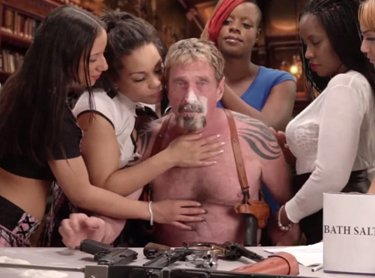
From Stephen L. Miller in The Spectator:
Underneath the paranoia and craziness of his last years, beneath a persona that took on what felt like a bit of a forced Hank Scorpio world supervillain act, was someone who understood the very foundations of personal liberty and freedom. As he said in the 2016 Libertarian party debate, ‘Our minds and our bodies belong to us.’ This was a basic foundational principle of his politics — a constitutional tenet that neither Donald Trump nor Joe Biden, nor many members of either major political party seem to grasp today. In the end, as we learned yesterday, he would rather check out altogether than have either have his freedoms curtailed by any government. …
John possessed an extraordinary emotional intelligence behind the leathery exterior. He had the soul of a poet and composer. In interviews about his latest crypto or blockchain scheme, he would veer off-topic and talk about, say, the genius of John Lennon. That was ultimately the most fascinating thing about him. It made him truly accessible in the social media age. He regularly conversed with his social media followers and responded to unsolicited podcast appearance requests, genuinely because it seemed he loved putting on a show. He had real charisma. John McAfee also built up an entire myth of himself. What was real? What wasn’t? This made him even more absurdly well-suited to the social media age. He understood the media enough to manipulate it. He once mused on Twitter that ‘A world in which dogs write poetry is more believable than the world as seen through the eyes of the media.’ That’s a great line. As old world media collides and colludes with new tech oligarchs, it has become more and more true.
McAfee understood the new tech empires because he helped build them. He would have been an invaluable ally, a lunatic suicide bomber and recruiter, in the coming information-and-techology wars, where the truth is now suppressed by YouTube, Google and Facebook as they preach about ‘false news’. This is a big deal — and McAfee understood that.
I didn’t come of age with Hunter S. Thompson, though of course like almost every other high-school kid or college student I read him. But this Thompson line immediately jumps to mind when I think of McAfee: ‘One of God’s own prototypes. A high-powered mutant of some kind never even considered for mass production. Too weird to live, and too rare to die.’ God doesn’t make many of these guys. When he does, he never takes them back. John McAfee is beyond the great blue yonder now, aboard his eternal freedom boat to sea, a drink in hand, still searching for that great white whale to fuck.
24 Jun 2021
Vote Lithuanian!
Curtis Sliva, Elections, Guardian Angels, New York City

The GOP candidate for Mayor of New York City.
24 Jun 2021
Crazy Academia Story of the Week
Brandeis University, Language, Official Insanity, Political Correctness

A liberal arts college in Massachusetts has warned its students and faculty against using ‘violent language’ – even banning the phrase ‘trigger warning’ for its association with guns.
Brandeis University in Waltham has created an anti-violence resource called the Prevention, Advocacy & Resource Center which provides information and advice to students and staff.
It lists words and idioms, including ‘picnic’ and ‘rule of thumb,’ which it claims are ‘violent’ and suggests dreary alternatives such as ‘outdoor eating’ for the former and ‘general rule’ for the latter. …
In addition to its page of ‘violent language’ the college has a whole section dedicated to ‘oppressive language,’ which includes ‘identity-based language,’ ‘language that doesn’t say what we mean,’ ‘culturally appropriative language’ and ‘person-first alternatives’

“Violent language” list.
21 Jun 2021
Voynich Manuscript Deciphered?
Mysteries, Paleography, Philology, Voynich Manuscript, Yale
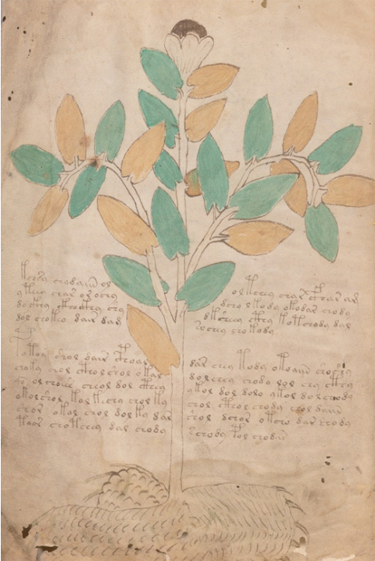
Gerard E. Cheshire, in a new paper on Academia.edu: “Voicing the Voynich: The Pronuncial Writing System and Graeco-Iberian Language of MS408 (Ischia/Voynich),” claims to have identified the language Yale’s Voynich Manuscript is written in, and proposes a methodology for readers to employ and join in to help compete its decipherment.
This paper provides more precise guidance and instruction with regard to the palaeographic method in translating manuscript MS408 (Ischia, Voynich). Manuscripts of antiquity typically require palaeographic interpretive techniques for the purpose of translation, because they include idiomatic abbreviations, unusual calligraphy, exotic language, unique letter symbols and so on, making them a challenge to read. Therefore, it is necessary to learn and understand the associated peculiarities of the MS408 language and writing system in order to arrive at reasonable translations.
This process requires historical and linguistic research, so that initial translation possibilities can be progressively honed by a process of elimination until the semantics and syntax are workable. This scientific approach ensures that the emergent translations are sufficiently refined to be as close a match as possible to the intended meaning of the text. Due to the mutable nature of palaeographic analysis, there is often room for continued adjustment in translation, so accuracy relies on reprocessing the text time and time again, until new passes offer no further improvement. Thus, by repetition of the procedure the translation becomes more and more precise by degrees: i.e. as near to 100% accuracy as possible.
Initially the language was thought to be an anachronistic or outdated form of proto-Romance, but further research has revealed the language to be the Medieval Iberian variant of Romance known as Galician-Portuguese (G-P), with the inclusion of some Latin, Greek and occasional Arabic. The writing system is phonetic but is heavily abbreviated with enclitics, clitics and plosives, so that silent and junctural consonants and vowels have often become omitted altogether. Thus, the text was written in direct imitation of speech rather than obeying rules of
spelling, grammar and punctuation – thus, it is a pronuncial writing system. In addition, Latin stock words and phrases are abbreviated to initial letters.As the writing system is pronuncial the consistency seen in its idiosyncratic spelling, from one page to the next, suggests that all of the text was written by the same hand, simply because two or more authors would have arrived at two or more spelling methods, unless there was some agreement, or the scribes were being dictated to. As the text does seem to differ in style, this is a possible explanation, although individuals can and do vary in their handwriting from day to day.
Whichever explanation is correct, the author, or authors, of the manuscript evidently devised a unique writing system, which may have been due to absence of formal education, due to cultural isolation, or it may have been deliberate to keep the information away from male eyes, as it would have been deemed embarrassing due to courtly etiquette, because the contents largely refer to private womanly matters relating to seduction, impregnation, gestation, contraception, abortion, childbirth, gynaecology, paediatrics, medicines, astrology, supernatural beliefs, treatments, therapies, ageing, beautification, illness and death.
Ischia was home to a Greek diaspora population with its own Basilian Orthodox monastery and nunnery in the early 15th century, when the island and its citadel, Castello Aragonese, were appropriated by Alfonso V, of the Crown of Aragon, during his campaign to conquer nearby Naples. Thus, the Iberian language of the newcomers was mixed with the Graeco language of the islanders, resulting in the manuscript language, best described as Graeco-Iberian Romance.
Despite its close geographical proximity to Italy, the island of Ischia had been culturally discrete for centuries when the manuscript was written, and therefore had little linguistic commonality with the contemporaneous Neapolitan culture. The manuscript dates quite precisely because a narrative map within the manuscript describes and illustrates the rescue of islanders from Vulcano and Lipari, with a flotilla of ships from Ischia, following a volcanic eruption that began on the February 4th, 1444, and created the Vulcanello peninsula. The map lies between
Portfolios 86 and 87. …This paper presents reworked and updated translations of the first lines of the manuscript plant pages 1-10 (Portfolios 2a-6b), so that the reader can see how the translation process is conducted and to encourage the reader to continue translating the pages, by employing deeper knowledge of the writing system, the language and historical botanical information, to arrive at the most cogent translations, based on semantics (meaning) and syntax (structure).
An algorithmic approach is first employed, whereby possible words are listed according to the priority array queue of Galician-Portuguese, Latin, Greek, Arabic. Due to their linguistic stem and cultural assimilation, similar words are also often found in other Iberian Romance languages: Valencian, Catalan, Occitan, Asturian, Aragonese. Many variants are also found in other Romance languages: Italian, Neapolitan, Sicilian, Corsican, Sardinian, Istriot, Ladin, Venetian,
Friulian, French, Romanian, Aromanian.Cross-reference with historical botanical and medicinal information is then employed to arrive at the most logical semantics and syntax, so that the most likely translations are preserved, and the least likely translations are eliminated. By running sentences through this process a number of times, the translations are gradually perfected.
I’m not at all certain that he’s right, but his paper is intriguing.
————————–
Older description from Yale’s Beinecke Library:
Written in Central Europe at the end of the 15th or during the 16th century, the origin, language, and date of the Voynich Manuscript –named after the Polish-American antiquarian bookseller, Wilfrid M. Voynich, who acquired it in 1912– are still being debated as vigorously as its puzzling drawings and undeciphered text. Described as a magical or scientific text, nearly every page contains botanical, figurative, and scientific drawings of a provincial but lively character, drawn in ink with vibrant washes in various shades of green, brown, yellow, blue, and red.
Based on the subject matter of the drawings, the contents of the manuscript falls into six sections: 1) botanicals containing drawings of 113 unidentified plant species; 2) astronomical and astrological drawings including astral charts with radiating circles, suns and moons, Zodiac symbols such as fish (Pisces), a bull (Taurus), and an archer (Sagittarius), nude females emerging from pipes or chimneys, and courtly figures; 3) a biological section containing a myriad of drawings of miniature female nudes, most with swelled abdomens, immersed or wading in fluids and oddly interacting with interconnecting tubes and capsules; 4) an elaborate array of nine cosmological medallions, many drawn across several folded folios and depicting possible geographical forms; 5) pharmaceutical drawings of over 100 different species of medicinal herbs and roots portrayed with jars or vessels in red, blue, or green, oand 6) continuous pages of text, possibly recipes, with star-like flowers marking each entry in the margins.
21 Jun 2021
Napoleon’s Campaign Drinking Glass
Auction Sales, Napoleon

Sat, Jun 19, 2021 10:00 AM EDT
Alex Cooper Auctions
Lot 1500 Details
DESCRIPTION
Circa 1800-1810; cut and faceted crystal cup by Montcenis, with etched Napoleonic cypher, 3 3/4 in. H., 3 in. Diam. with brown fitted kid leather cylindrical case with gilt bees and cypher on lid, having green velvet interior, 4 1/4 in. H., 3 3/4 in. Diam. Consignor states was purchased by General John M. Schweizer Jr. USAAF, in German antique store in 1953, and authenticated by the Louvre in 1956. Goblet is same as example on Napoleon.org website with slight size difference. Leather case is same as one displayed at Fondation Napoleon in October of 2018 and gobelet is very similar.
Sold for $3520 (with 28% Buyer Premium).
I did not win.
20 Jun 2021
Racism of the Week
Macy Gray, New Flag, Racial Politics, Ressentiment, Stars and Stripes

The Macy Gray flag.
Sharing the same country with a large percentage of black Americans is very much like having a dangerously crazy ex-girlfriend constantly boiling your rabbit.
African Americans are frequently exceptionaily gifted in musical or athletic ability, but their greatest talent clearly lies in a different direction. No other known group could possibly compete with them in vanity and in the ability to fabricate grievances. They are what? 12% of the population? but everything, all the time, is entirely about them and how they have suffered. They always have to be the center and focus of it all. It’s racist injustice that they didn’t found the country and are not the national majority.
But the reality is: they are the people obsessed with Race. They are the racial chauvinists who value group identity over everything else and who habitually judge people by the color of their skin.
Now, two federal holidays aren’t enough. Macy Gray wants the American flag changed!
The Confederate battle flag, which was crafted as a symbol of opposition to the abolishment of slavery, is just recently tired. We don’t see it much anymore. However, on the 6th, when the stormers rained on the nation’s most precious hut, waving Old Glory — the memo was received: the American flag is its replacement.
President Biden, Madame Harris and members of Congress: the American flag has been hijacked as code for a specific belief. God bless those believers, they can have it. Like the Confederate, it is tattered, dated, divisive, and incorrect. It no longer represents democracy and freedom. It no longer represents ALL of us. It’s not fair to be forced to honor it. It’s time for a new flag.
Incorrect? Let’s look to the stars. There are 50, where there should be 52. D.C. and Puerto Rico have been lobbying for statehood for decades. Both have been denied, since statehood would allow each territory’s elected officials seats in the house.
Assuming D.C. reps would be African-American and Puerto Rican reps would be Hispanic, the ultimate assumption is that these elected officials would be Democratic. That alone is racist.
On to the stripes. The Smithsonian documents that the “white” stripes represent purity and innocence. America is great. It is beautiful. Pure, it ain’t. It is broken and in pieces.
What if the stripes were OFF-white? What if there were 52 stars to include D.C. and Puerto Rico? What if the stars were the colors of ALL of us — your skin tone and mine — like the melanin scale? The blue square represents vigilance and perseverance; and the red stripes stand for valor. America is all of those things. So, what if those elements on the flag remained? What if the flag looked like this? …
Sixty-two years later, in 2021, we have changed and it’s time for a reset, a transformation. One that represents all states and all of us.
20 Jun 2021
A Modest Proposal
Jeff Bezos, Mona Lisa, Petitions

NYT:
In order to “imagine a new art, one must break the ancient art,” the French author Marcel Schwob wrote more than 100 years ago. Today, that call to action has been boldly made in the form of a Change.org petition demanding that Jeff Bezos buy and eat the Mona Lisa.
The petition, which at press time had over 9,200 signatures, was started by Kane Powell, a resident of Stevensville, Md. “Nobody has eaten the mona lisa and we feel jeff bezos needs to take a stand and make this happen,” his petition reads.
Mr. Powell isn’t wrong, in a matter of fact: Since it was painted by Leonardo da Vinci in the early 1500s, people have stolen the Mona Lisa, copied the Mona Lisa and thrown a teacup at the Mona Lisa — but no one has ever eaten it.
Mr. Powell came up with the idea for the petition — which, to be clear, is a joke — while at an Applebee’s with his fiancée and two friends before the pandemic. The group of four had dinner and started ordering from the $1 drink menu, and that’s when the ingenuity started to flow. “Jeff Bezos was in the news at the time,” Mr. Powell said. “We were like, ‘what if he bought it and ate it?’ It would be stupid and outlandish.”
Only in the past week or so has the petition gained any sort of traction. Mr. Powell said that he’d long forgotten that he had even made it.
HT: Althouse.
19 Jun 2021
Casa Ottolenghi: “A Great House Whose Roof is the Sky”
Architecture, Casa Ottolenghi, Italy
The house must not rest on the ground, but rest, it must come from the ground,” said Lloyd Wright, and these words must have echoed in Scarpa’s mind so much that he inspired Villa Ottolenghi. Located in Bardolino, on the eastern shore of Lake Garda, this 1974 building looks like an ancient ruin, which is born, “from the ground, itself a piece of land with its roof-terrace stretched out on the lake”. The morphological configuration of the area, bounded on the west by a steep slope, to the north and east by an embankment, has in fact suggested to the man to bury most of the house in the ground and to play with interesting design ideas. The most striking of them is the roof that becomes a habitable place, inspired by the farmyard of the Veneto farms, a brick surface with irregular pattern from which to admire the splendid surrounding landscape as if there were no borders, as if the real roof it was heaven. Pure poetry.



