03 Dec 2018


Atlas Obscura:
During the Bronze Age, around 4,000 years ago, in what is now Afghanistan, an artisan from the Indus Valley (or Harappan) civilization made a ceramic pot. The four-inch-tall vessel was distinguished by a doe-eyed antelope painted across its flank. We’ll never know who used it, or for what—at least before 2013.
That’s when Karl Martin, a valuer at Hansons Auctioneers in Derbyshire, England, purchased the pot at a car boot sale, a kind of English flea market. And why not? He got it and another pot for a total of £4—or, £1 for every thousand years since it had been made.
Of course Martin didn’t know at the time that he was buying an authentic artifact from one of the cradles of civilization. All he knew, he said in a Hansons release, was that he “liked it straight away,†so he gave it a place of honor in his household where he would see it every day. It was in the bathroom, where it held his toothbrush and toothpaste. There it sat for years.
And there it would have stayed, if not for the fact that Martin often encounters antiquities in his line of work. One day, he was helping a Hansons colleague unload some items headed for the block when he spotted some familiar-looking pottery, coated with patterns and animals like those on his toothbrush-holder. He brought his holder to the colleague, James-Seymour Brenchley, Hansons’ Head of Ancient Art, Antiquities & Classical Coins. Brenchley was able to link the pot’s painting style to that of other Indus Valley artifacts. He speculates that the pot had arrived in the United Kingdom via British tourists. Martin decided to put it up for auction at Hansons, where it sold this week for £80—“not a fortune,†Martin admits, but still a 1,900 percent profit, not adjusting for inflation.
RTWT
For £80 minus seller’s fee, I’d have kept it for my toothbrush.
03 Dec 2018

Rare Historical Photographs:
The Solvay Conference, founded by the Belgian industrialist Ernest Solvay in 1912, was considered a turning point in the world of physics. Located in Brussels, the conferences were devoted to outstanding preeminent open problems in both physics and chemistry. The most famous conference was the October 1927 Fifth Solvay International Conference on Electrons and Photons, where the world’s most notable physicists met to discuss the newly formulated quantum theory. The leading figures were Albert Einstein and Niels Bohr.
Einstein, disenchanted with Heisenberg’s uncertainty principle, remarked “God does not play diceâ€. Bohr replied: “Einstein, stop telling God what to doâ€. 17 of the 29 attendees were or became Nobel Prize winners, including Marie Curie, who alone among them, had won Nobel Prizes in two separate scientific disciplines.
This conference was also the culmination of the struggle between Einstein and the scientific realists, who wanted strict rules of scientific method as laid out by Charles Peirce and Karl Popper, versus Bohr and the instrumentalists, who wanted looser rules based on outcomes. Starting at this point, the instrumentalists won, instrumentalism having been seen as the norm ever since.
01 Dec 2018

George H. W. Bush, captain of the Yale Baseball team.
As the photo above demonstrates, George Herbert Walker Bush was the living embodiment of the All-American Boy ideal represented in fiction set at Yale by Dink Stover and Frank Merriwell.
He was handsome, athletic, well-born, a good student, and a fine sportsman, captain of the Baseball teams at Andover and Yale, tapped inevitably for Skull and Bones, youngest pilot in the Navy during WWII.
He was a good and decent man, embodying to perfection all the virtues and weaknesses of his culture and his class. Alas! he was too indifferent to theory and ideology to make a good conservative president. He was the sort who behaves with propriety and who governs in accordance with the best opinions, so he broke his word to the voters, raised taxes, and consequently lost in 1992 to a slick con man.
I knew him because he was so dutiful and so loyal to Yale. Back in the late ’60s and early ’70s, whenever a scheduled conservative guest speaker at the Yale Political Union cancelled, we knew that, even at the last minute, we could always get George Bush. We took advantage of him regularly, and –back then– he was only a minor Texas Congressman or defeated GOP candidate for the Senate, no kind of big name.
It fell to me several times to take George Bush to dinner at Mory’s. He just wasn’t famous enough in those days to draw a crowd, so he and I would eat dinner alone, talking typically of the differences between his time at Yale and mine. He wasn’t scintillating like Bill Buckley or dazzling like Ronald Reagan, but he was a classic example of the kind of good man and faithful public servant that the Old Yale specialized in producing. In fact, he was kind of a Rowland Ward record book specimen of that breed. It made me sad to recognize that America, Andover, and Yale had stopped making any more like him. Yale men of my own time, I thought, were cleverer, but men like George Bush were a lot better for the country.
29 Nov 2018

Kevin D. Williamson points out that saving GM cost a lot and did not actually work.
General Motors just shared some very bad news: It is closing five factories in the United States and Canada, eliminating 15 percent of its work force (and 25 percent of its executives), and getting out of the passenger-car business almost entirely to focus on SUVs and trucks. President Donald Trump threw a fit, but GM shrugged him off. The facts are the facts.
What did U.S. taxpayers get for their $11.2 billion bailout of GM? About ten years of business-as-usual, and one very expensive lesson.
Bailouts don’t work.
Never mind the moral hazard, the rent-seeking, the cronyism and the favoritism, and all of the inevitable corruption that inevitably accompanies multibillion-dollar sweetheart deals between Big Business and Big Government. Set aside the ethical questions entirely and focus on the mechanics: Businesses such as GM get into trouble not because of one-time events in the wider economic environment, but because they are so weak as businesses that they cannot weather one-time events in the wider economic environment. GM’s sedan business is weak because GM’s sedans are weak: Virtually all of the best-selling sedans in the United States are made by Toyota, Honda, and Nissan. The lower and middle sections of the market are dominated by Asia, and the high end of the market by Europe: Mercedes, Audi, BMW. GM can’t compete with the Honda Civic at its price point or with the Audi A7 at its price point. Consumers like what they like, and they aren’t buying what GM is selling.
RTWT
28 Nov 2018

Babylon Bee:
WASHINGTON, D.C.—Melania Trump is causing controversy yet again, this time for decorating the White House with the skulls of her decapitated enemies.
While past first ladies have decorated the White House with traditional Christmas wreaths, trees, holly, and lights, Trump opted to mount the heads of her slain foes throughout the executive residence “as a warning.”
“Did she go too far?” one pundit on CNN pondered. “I gotta say, these heads don’t exactly say ‘peace’ and ‘love’ like a good, old-fashioned wreath would, you know?”
Speaking to reporters, the First Lady commented, “The skulls bring out the festive joy of the holiday season in our decor. We’re reminded to treasure what we have when we see the skulls of our conquered foes every time we walk through these sacred halls.”
“It’s all to point us to the reason for the season,” she added.
When asked what the “reason for the season” is, she stated, “To crush your enemies, to see them driven before you, and to hear the lamentations of their women.”
——————
This satire piece was occasioned by all this.
26 Nov 2018

“Andrea Long Chu”.
Yesterday’s NYT’s transitioning person’s editorial by a deeply disturbed guy who calls himself Andrea Long Chu, discussed previously here, rather lit Rod Dreher’s fuse and the usually meek and depressive Rod comes out sounding like Cato the Elder on a cranky day.
Chu says that the treatments doctors have given him are making him sicker, even making him desire suicide. But if he wants to suffer and to die, then he should have that right. Satisfying desire is the only thing that matters.
This poor man with asparagus-colored hair is going to submit to mutilation next week, and will have to spend the rest of his life inserting an object into the wound surgeons will have made in his pubic area, to prevent his body from healing itself. This man — “like many of my trans friends†— expects this medical procedure to make him no happier, and in fact may make him feel more miserable, even suicidal.
But he wants it. People like him want all of society to upend its laws, its customs, and its norms to facilitate that desire, and to act like there’s nothing wrong with it. And society is giving them what they want, and punishing those who deny that this is paradise.
Freeing the autonomous will from sex and gender norms is the summum bonum of contemporary American progressivism. The insatiably miserable Andrea Long Chu is its incarnation. …
We have gone beyond gay people to allow transgender people — fewer than one percent of the population — to change America forever.
Progressives! They make a desert and call it peace. They carve a gash and call it a vagina. They make us all insane, and call the sane crazy.
————————
The less attractive, but more obviously masculine, picture of “Andrea Long Chu” above comes, hilariously enough, from his “Buy Me a New Body” Go Fund Me site.
He wants $30,000 to mutilate himself with, and 271 people have already obligingly ponied up $10,998 in the course of three months.
26 Nov 2018

Grub Street has bad news for the residents of Portland and Brooklyn.
There was a time, not so long ago, when Pabst Blue Ribbon and the term “hipster†were more or less synonymous. The watery budget brew was catnip for urban creatives, and business was thriving. In 2003, when the Times first took notice of PBR’s bike-messenger cachet, the paper reported that sales had risen 5.3 percent the year before. It was the start of a boom. By 2009, sales were growing by 25 percent. In 2011, someone went on record with the Chicago Tribune to call it “the nectar of the hipster gods.†David Chang put it on tap when he opened a Momofuku outpost in Toronto.
The beer’s cultural bona fides were always something of an instant cliché, but now PBR is in danger of receiving the ultimate badge of hipster credibility: being killed by big business.
Despite the name of the Pabst Brewing Company, they don’t brew the PBR that was beloved by everyone living in Williamsburg in 2009. For years, Pabst has outsourced its beer-making to MillerCoors, a relationship that has suddenly gone sour. The two companies are locked in a half-billion-dollar court battle that, some say, could spell the end of PBR, as well as many other beer brands that Pabst owns. Pabst currently pays MillerCoors nearly $80 million a year to brew its beer; MillerCoors says that, after 2020, it may no longer have the necessary resources available, and is threatening to let the contract expire unless Pabst agrees to a fee that’s closer to $200 million per year, an amount that Pabst contends would “bankrupt us three times over.†…
Pabst closed its flagship Milwaukee brewery in 1996. When Pabst’s last brewery, in Fogelsville, Pennsylvania, closed in 2001, it shifted brewing responsibilities to Miller. In the meantime, Pabst was also focused on buying plenty of beer brands that weren’t PBR, including Lone Star, Schlitz, and Schaefer (“the one beer to have when you’re having more than oneâ€). “We own 77 brands, and 50 of them are dormant,†current owner Eugene Kashper told a New Jersey paper in 2015. “We have a virtual monopoly on American heritage brands.â€
What Pabst doesn’t own is a brewing complex to make its beer. The company did recently offer $100 million for a shuttered facility in North Carolina, but that brewery’s owner, which is — wait for it — MillerCoors, made a counter offer of $750 million, effectively ending negotiations.
Pabst is stuck. Its products are brewed, packaged, and distributed by a rival who seems to have no interest and, MillerCoors’s lawyers argue, no obligation to keep the relationship alive. Now, according to the AP, Pabst “is seeking more than $400 million in damages and for MillerCoors to be ordered to honor its contract.â€
RTWT
Hmmm. Hiring your competitor to make your product, then sitting back and essentially collecting rent, has a down-side! Who would have imagined?
26 Nov 2018
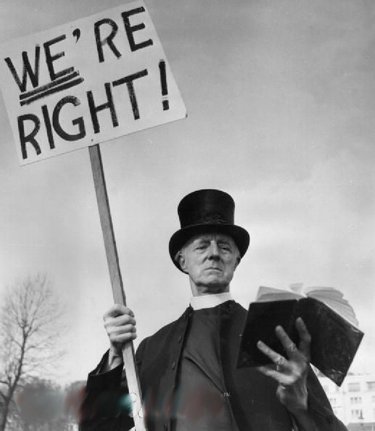
In the American Conservative, Robert W. Merry has a thoughtful essay contrasting the original American WASP elite with its contemporary successors.
Today we look back on that old elite, if we look back on it at all, as a relic of the distant past. But this development—the old elite’s slow loss of self-confidence after World War II and then its obliteration as a cultural force—represents a profound transformation in America’s social history. What emerged was a new country with a new elite.
In place of the old-school folkways and legends and values of the Anglo-Saxons, we have what is known as a meritocratic system dominated by a class of strivers who have managed to scope out the new system and rise to the top. …
[A]s far back as 1995, social commentator Christopher Lasch, in a book entitled The Revolt of the Elites and the Betrayal of Democracy (published posthumously), excoriated what he called America’s “new aristocracy of brains.†He wrote: “There has always been a privileged class, even in America, but it has never been so dangerously isolated from its surroundings.†He foresaw an emerging chasm between the country’s new upper class and its great mass of citizens. “The new elites,†he wrote, “are in revolt against ‘Middle America,’ as they imagine it: a nation technologically backward, politically reactionary, repressive in its sexual morality, middlebrow in its tastes, smug and complacent, dull and dowdy. 
America’s Anglo-Saxon elite both reflected and perpetuated Anglo-Saxon sensibilities on the Continent for some 300 years. And it did so as its proportion of the country’s population declined steadily throughout that period. Given that, [Benjamin] Schwarz [in “The Diversity Myth,” published in The Atlantic in 1995] suggests that the American elite’s ability to “dominate American cultural and political life for three centuries—…in fact define what it meant to be an American—is a remarkable achievement.†It was an achievement of cultural identity and pride.
It couldn’t last forever. The question was—and remains—why. Alsop speculated that a significant factor was the decline of Great Britain as a global power, which undermined a significant element of the elite’s sense of identity. He surmised that the “erosion of authority†that transformed American society in a host of ways in the 1960s (and later the 1970s) may have been a factor as well. But probably the largest contributor was demographics. America was becoming less and less an Anglo-Saxon country, and less and less did it look to its old elite for guidance and governance. New impulses, attitudes, and agendas—precisely what Theodore Roosevelt had warned against—were making their way into the American consciousness with more diverse waves of immigration, and these had a profound effect upon the nation. …
[In terms] of what’s going on in America today. Christopher Lasch got closer to the heart of it in The Revolt of the Elites. To Lasch the problem doesn’t reside simply in the distribution of wealth or income, although these are not insignificant. It goes much deeper, far into the civic consciousness of the elite and the nation at large. The destructive nature of the new elite, by his reckoning, touches on profound questions of who we are, where we are going as a nation and society, and how we reconcile our present with our past and our future.
Like Stewart, Lasch sees major civic problems festering in America under the new elite. He views many of them, though not all, as economic in nature. And he believes that the new elites, in pursuing their positions of economic and social privilege, have ignored the fate of those below. “Elites, who define the issues, have lost touch with the people,†he writes.
But he goes further, painting a picture of an elite that harbors little sentiment of noblesse oblige toward the common people; that has little regard for democratic ideals; that favors globalism over patriotism; that accepts assaults on free speech in the academy; that sneeringly assaults the national heritage and the foundations of Western thought; that promotes a politics of diversity and a preoccupation with “self-esteem†(tied to identity politics) to the detriment of civic harmony; that fosters civic rancor through its open borders advocacy; and that employs powerful weapon-words such as “racist,†“sexist,†and “xenophobic†to stifle debate on matters it wants handled out of established halls of discourse.
In short, Lasch portrays an elite that has cut itself off from its own nation and civilization. He invokes Jose Ortega y Gasset’s famous book from the 1930s, The Revolt of the Masses, written in the era of the Bolshevik Revolution and the rise of European fascism. Ortega saw the Western crisis of that time as a product of the “political domination of the masses…the spoiled child of human history.†Now the spoiled child, says Lasch, is the new elite.
“Today,†he writes, “it is the elites, however—those who control the international flow of money and information, preside over philanthropic foundations and institutions of higher learning, manage the instruments of cultural production and thus set the terms of public debate—that have lost faith in the values, or what remains of them, of the West.†Indeed, he adds that for many of these people the very term “Western civilization†now “calls to mind an organized system of domination designed to enforce conformity to bourgeois values and to keep the victims of patriarchal oppression—women, children, homosexuals, people of color—in a permanent state of subjection.â€
RTWT
Links
More or Less Sound Blogs
A Mind Aroused
Aaron’s cc
ABFreedom
Ace of Spades HQ
Albion’s Seedlings
Alphecca
American Conservative, The (Buchananite Paleocons)
American Nihilist Underground Society
Amused Cynic
An Antique Dealer’s Blog
Andrew Cusack
Ankle Biting pundits
Anti-Idiotarian Rottweiler
Art of the Blog
Assistant Village Idiot
Assistant Village Idiot
Augean Stables
Austin Bay Blog
Becker-Posner Blog
Begging to Differ
Bidinotto Bog, The
Big Lizards.net
Black and Right
BlameBush!
Blue Crab Boulevard
Brainster
Brussels Journal, The
Brutally Honest
Captain’s Journal, The
Carnage And culture
Cato at Liberty
Cato Unbound
Cave of the Curmudgeon
Chaos in Motion
Chequer-Board of Nights and Days, A
Chicago Boyz
Claremont Institute
Clarity & Resolve
Clayton Cramer’s Blog
Cobb–Curious,Skeptical,Analytical
Cold Fury
Colonel Robert Neville Always Dresses For Dinner
Conblogeration
Confederate Yankee
Conspiracy to Keep You Poor and Stupid
Corner – National Review Online
CounterIntelligence Center
Coyote Blog
Crosspatch Chronicle
Cubachi
CultureGrrl
Daily Pundit
Daisy Cutter
Dalrock
Damnum Absque Injuria
Dangerous Times
David Bellavia
David Frum
David Thompson
Dean’s World
Death By 1000 Papercuts
Democracy Reform
Dennis the Peasant
Diminished Expectations
Dinocrat.com
Don Surber
Doug Ross
Dust in the Light
Eject! Eject! Eject!
Enchiridion Militis
Error Theory
ex-Liberal in Hollywood
Faster, Please (Michael Ledeen)
FKIN
Flit(tm)
Flopping Aces
Forward Movement (Jules Crittenden)
Fraters Libertas
Front Porch Republic
Future Uncertain, The
Gates of Vienna
Gateway Pundit
Gays Defending Marriage
Greg R. Lawson's Blog
Grouchy Old Cripple
Hog on Ice
Horsefeathers
Hugh Hewitt
Ideas
IMAO
In Mala Fide
In the Bullpen
INDC Journal
Interested-Participant
Irish Pennants
Isegoria
Jack Lewis
Jawa Report, The
JayReding.Com
Jeremayakovka
Jeremy Lott
Jon Swift
Just One Minute
Ken McCracken
Kim du Toit
Kobayashi Maru
Law of the Bad Premise
Left Exposed
Likelihood of Success
Lileks
Lone Pony
Make Haste Slowly (Trad)
Man Without Qualities
Mark Levin
Mike Stopa
Modern Art Notes
Mr. Blonde’s Garage
Musings of the Geek with a .45
Nation of Riflemen, A
New Majority (David Frum) -Neocon Sellout Blog
Nickie Goombah
No End But Victory
No Left Turns
Obsidian Order
Oh, That Liberal Media!
One Cosmos
One Hand Clapping
Only Republican in San Francisco, The
Other Things Amanzi
Outside the Beltway
Palmetto Pundit
Patterico’s Pontifications
Pileus
Point Five
PoliPundit.com
Political Horizons
Political Teen, The
PostLiberal Blog, The
ProfessorBainbridge.Com
Prospero; the Home of the Generative Thought Experiment
Protein Wisdom
QandO
Radio Blogger
Rage Against the Kakistocracy
Rantingprofs
Reason Online – Hit and Run
RedState.org
Republican Dan
Revolutionary War Veteran’s Association Weblog
Revolver Guy
Riding Sun
Right Reason
Right Wings News
Rightwing Nuthouse
Roger L. Simon
Room 12A
Samizdata.net
SayUncle
Scylla & Charybdis
Secular Right
Shot in the Dark
Shrinkwrapped
Solid Surfer, The
Soxblog
stikNstein
Stop Obama
Stop the ACLU
Strange Women Lying in Ponds
Sultan Knish
Sweetness & Light
Taki’s Top Drawer
Tech Central Station
The Buck Stops Here
Three Rounds Brisk
TigerHawk
Tim Chapman Blog
TKS
Tom Delay
Tongue Tied
Transterrestrial Musings
Unqualified Offerinds
Unqualified Reservations (Mencius Moldbug)
Vanishing American
VariFrank
Victor Davis Hanson
View from the Right
ViewPointJournal.Com
Vince aut Morire
Vodka Pundit
War and Piece
Watcher of Weasels
Weapons of Mass Destruction
Western Confucian
What Would Charles Martel Do?
Will Wilkinson
Winds of Change
Wizbang
Xavier Thoughts (Pawn Shop Guns!)
YARGB – Flares into Darkness
Blogs From the Philippines
Pinoy Stupid
Blogs From Israel
Zionist Conspiracy
Blogs From Russia
Mat Rodina
Blogs From Japan
Gaijin Mama
Blogs From Germany
Observing Hermann
/div>

Feeds
|





