24 Dec 2017


Vermont Connecticut Royster (1914-1996)
The Wall Street Journal has an excellent tradition, going back to 1949, of publishing the following editorial in the issue nearest preceding Christmas:
(excerpt)
In Hoc Anno Domini
December 24, 2018
When Saul of Tarsus set out on his journey to Damascus the whole of the known world lay in bondage. There was one state, and it was Rome. There was one master for it all, and he was Tiberius Caesar
Everywhere there was civil order, for the arm of the Roman law was long. Everywhere there was stability, in government and in society, for the centurions saw that it was so.
But everywhere there was something else, too. There was oppression — for those who were not the friends of Tiberius Caesar. There was the tax gatherer to take the grain from the fields and the flax from the spindle to feed the legions or to fill the hungry treasury from which divine Caesar gave largess to the people. There was the impressor to find recruits for the circuses. There were executioners to quiet those whom the Emperor proscribed. What was a man for but to serve Caesar?
There was the persecution of men who dared think differently, who heard strange voices or read strange manuscripts. There was enslavement of men whose tribes came not from Rome, disdain for those who did not have the familiar visage. And most of all, there was everywhere a contempt for human life. What, to the strong, was one man more or less in a crowded world?
Then, of a sudden, there was a light in the world, and a man from Galilee saying, Render unto Caesar the things which are Caesar’s and unto God the things that are God’s….
And so Paul, the apostle of the Son of Man, spoke to his brethren, the Galatians, the words he would have us remember afterward in each of the years of his Lord:
Stand fast therefore in the liberty wherewith Christ has made us free and be not entangled again with the yoke of bondage.
This editorial was written in 1949 by the late Vermont C. Royster and has been published annually ever since.
23 Dec 2017
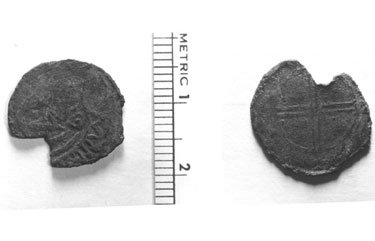
Atlas Obscura:
The story that Guy Mellgren told about the curious silver coin began on the shores of Maine, where he met a stranger named Goddard. In the fall of 1956, Mellgren and Ed Runge, a pair of amateur archaeologists, had come in search of the most basic of coastal dig sites—a shell midden—when they happened onto a more unusual discovery.
Goddard had invited them to explore his shoreline property, and there, on a natural terrace about eight feet above the high tide line, they found stone chips, knives, and fire pits, along with an abundance of other unexpected artifacts. Each summer for many years, Mellgren and Runge returned to excavate the “Goddard Site,†with little help from professional archaeologists. In the second summer, they produced the coin.
For two decades, based on an analysis by a friend in a numismatics club, Mellgren described it as a coin minted in 12th-century England, and no one questioned that identification. The discovery should have been noteworthy—there’s no good explanation for how a medieval English coin could have crossed the Atlantic—but Mellgren never sought wider attention for the find. It was a curiosity to show off to friends and his son’s classmates, until, in 1978, a scrappy regional bulletin published a picture of the coin and an article titled, “Were the English the First to Discover America?â€
That picture found its way to a well-known London dealer, who recognized at once that the coin could not have come from England. Two weeks after Mellgren died, the coin’s reidentification swept into the news. It was a Norse penny, made between 1065 and 1093—evidence for Viking contact with North America centuries before Columbus.
All of sudden, experts from around the world began taking a careful look at the details of Mellgren’s story. Of many objects purported to prove a Viking presence in North America, only the artifacts painstakingly excavated at L’Anse aux Meadows, in Newfoundland, have stood up to investigation. The rest—the Beardmore relics, the Vinland Map, the notorious Kensington Rune Stone—are all considered hoaxes.
Since 1978, no one has questioned that the Mellgren coin is an authentic Norse penny, made in medieval Scandinavia. But 60 years after Mellgren’s find, archaeologists and numismatic experts are still asking how in the world this small, worn coin got to Maine.
RTWT
Hat tip to Glenn Reynolds.
23 Dec 2017

Despite Donald Trump’s surprising list of real accomplishments, which I am obliged to admit distinctly exceed those of several recent legitimate and respectable Republican presidents, there are still a lot of carping, sneering professional conservative commentators out there, clinging to now pointless #NeverTrump irredentism.
Roger L. Simon argues that these people ought to start admitting they’ve been wrong, give the devil Trump his due, and close ranks with fellow conservatives. Winning major political battles and the culture war is a lot more important than Donald Trump’s aesthetics or continued proof of the superiority of certain people’s souls.
[I]t is time for the remaining NeverTrumpers to apologize for a reason far more important than self-castigation or merely to make things “right.” Donald Trump — whose initial victory was a shock, even, ironically, to those of us who predicted it — has compounded that shock by being astoundingly successful in his first year, especially at the conclusion. (He’s a quick study, evidently.) More conservative goals have been achieved or put in motion in eleven months than in any time in recent, or even distant, memory. It’s an astonishing reversal for our country accompanied by the beginnings of an economic boom.
But that same success is causing, it’s becoming increasingly clear, an equally determined, even virulent, reaction from the left. At first they too thought Trump was an ineffectual blowhard who would shoot himself in the foot, ultimately redounding to their advantage. Now that they have found that not to be the case, they are in a state of panic, fearing a defeat for their ideals that would set them back years, even decades. They cannot let this stand and are marshaling all their forces from the media to Hollywood to the academy, not to mention at least some of the investigative units of the FBI.
NeverTrumpers Ignore Trump’s Accomplishments
The next year seems poised to be an ideological duel as close to the death as we have seen in a long time. If the right does not win, the gains of 2017 will be stymied by the election of 2018 and completely washed away in 2020.
It’s an all-hands-on-deck situation and we need the NeverTrumpers’ help. We need — to borrow a hoary leftist term — a united front.
RTWT
21 Dec 2017

Ben Shapiro is on a roll:
Wednesday dawned to the horrifying cacophony of howling dogs mourning their dead masters — men, women and children killed in a mass slaughter by the Senate’s passage of a rather ordinary tax bill from the Republicans. Yes, the Republicans had been warned that their plan would cause a symphony of darkness to play across the land. They’d been warned that the streets would be strewn with bodies. Worse, they’d been warned that those dead people would then move to Chicago and vote Democratic.
But even Republicans, who are also dead, were shocked to find themselves inhabiting the bowels of Hell — in particular, inhabiting a special place therein reserved for women who did not vote for Hillary Clinton and voters who did not stand with Roy Moore.
And all of this thanks to President Trump, who had pitched the tax cut by stating that he merely wanted what was best in life: to crush your enemies, to see them driven before you, and to hear the lamentations of their women.
RTWT
20 Dec 2017

David Solway quit teaching, and he had good reasons.
Some years back, I decided I had to quit the teaching profession to which I had dedicated half my life. The modern academy, I felt, was so far gone that restoration was no longer possible. Indeed, I now believe that complete collapse is the only hope for the future, but as Woody Allen said about death, I’d rather not be there when it happens.
Three reasons determined my course of action. For one thing, administration had come to deal less with academic issues and more with rules of conduct and punitive codes of behavior, as if it were a policing body rather than an arm of the teaching profession. Woe betide the (male) student accused of sexual assault or misconduct; the administration will convene an extra-judicial tribunal to punish or expel the accused, often with a low burden of proof. It will find ways to shut down conservative speakers. It will browbeat faculty and students to attend sensitivity training sessions on matters of race and gender. It will strike task forces to deal with imaginary issues like campus rape culture and propose draconian measures to contain a raging fantasy. The administration is now beset by two basic compulsions: to expand its reach at the expense of the academic community and to ensure compliance with the puritanical norms of the day. I thought it prudent to take early retirement rather than wait for the guillotine to descend.
For another, colleagues were increasingly buying into the politically correct mantras circulating in the cultural climate. The dubious axioms of “social justice” and equality of outcome, the postmodern campaign against the Western tradition of learning, and the Marxist critique of capitalism now superseded the original purpose of the university to seek out truth, to pursue the impartial study of historical events and movements, and to remain faithful to the rigors of disciplined scholarship. Most of my colleagues were rote members of the left-liberal orthodoxy: pro-Islam, pro-unfettered immigration, pro-abortion, pro-feminist, anti-conservative, anti-Zionist, and anti-white. Departmental committees were now basing their hiring protocols not on demonstrated merit, but on minority and gender identities, leading to marked pedagogical decline. Professional hypocrisy could be glaring. Case in point: The most recent hire speaking at a department meeting was a white woman advocating for more brown and black faces on staff – though, as a recent hire, she had never thought of stepping aside in favor of minority candidates vying for her position. In any event, faculties were and are progressively defined by firebrands on the one hand and soyboys on the other – partisans rather than pedagogues, plaster saints all. I found I could no longer respect the majority of people I had to work with.
But the primary incentive for flight had to do with the caliber of students I was required to instruct. The quality of what we called the student “clientele” had deteriorated so dramatically over the years that the classroom struck me as a barn full of ruminants and the curriculum as a stack of winter ensilage. I knew I could not teach James Joyce’s Ulysses or Thomas Mann’s The Magic Mountain since they were plainly beyond the capacity of our catechumens – mind you, all old enough to vote and be drafted. The level of interest in and attention to the subjects was about as flat as a fallen arch. The ability to write a coherent English sentence was practically nonexistent; ordinary grammar was a traumatic ordeal. In fact, many native English-speakers could not produce a lucid verbal analysis of a text, let alone carry on an intelligible conversation, and some were even unable to properly pronounce common English words.
RTWT
19 Dec 2017

————————

Lohort Castle, County Cork, Ireland
Lohort Castle was built near Cecilstown around 1496 by Donogh Og McDonagh McCarthy. It was taken by Irish forces during the Civil War. In 1647, one of the bloodiest battles of the War took place at the Castle and over 4,500 men were killed. In 1650 Lohort was bombarded and captured by Cromwell’s troops but the structure withstood the cannon fire due to the strength of its 10 foot thick walls. Lohort was rebuilt around 1750 by Sir John Percival, the Earl Of Egmont. The Percivals lived there until 1922 when Lohort Castle was burned down by the IRA.
18 Dec 2017

Charles C.W. Cooke nukes Jennifer Rubin until she glows for her everlasting Never-Trump-ism, which is turning her into a liberal tool.
The era of Trump has been as hard on the mind as it has been good for the muscles in the chest. Ours is a moment in which millions rush breathlessly to exclaim. In defense! In resistance! In bloody-minded persistence! “I will not back down!†we are told, by people who have not been asked to, and could not be compelled to. They won’t be “intimidated†either, nor “silenced,†nor “bullied†nor, it seems, pushed to any form of self-reflection. Indignation, not analysis, is the perennial order of the day, and the tone of our debates is ineluctably Twitteresque. Retweets are points on the board, and hyperbole gets you oodles of them. The worst. Ding! Insane. Ding! Crisis. Ding, ding, ding! Congratulations, you have been promoted to the next level. Time for some game theory . . .
From this self-laudatory funhouse has emerged a host of cynical entrepreneurs, each with the same approach to our dismal, fractious moment: Take no prisoners, brook no opposition, and never, ever step away from the umbrage. These people end their sentences with “Really.†or “In 2017.†or “Let that sink inâ€; they pepper their analyses with eschatology; and, as is apt for a cult, they are promiscuous with their accusations of heresy. Like Lewis’s busybodies, they are convinced to a man that they are saving the country, and insistent that the dissenters are miscreants or weaklings. They have little sense of history, no instinct for context, and no meaningful faith in the system they want to save. They are marching in an army, and damn does it feel good.
Which brings us to Jennifer Rubin, the Washington Post’s ostensibly conservative blogger.
Rubin is not the only example of this president’s remarkable talent for corrupting his detractors as well as his devotees, but she is perhaps the best one. Since Donald Trump burst onto the political scene, Rubin has become precisely what she dislikes in others: a monomaniac and a bore, whose visceral dislike of her opponents has prompted her to drop the keys to her conscience into a well.
RTWT
Regular, long-term readers will recall that, right up to Election Night, I was anti-Trump myself, and I did not even vote for him. I voted for that Mc-Somebody-or-other guy from Utah.
But, I did indulge in some private gloating Election Night as Hillary went down in flames. And, as Inauguration Day arrived, I sat down with a large drink, and reflected. I realized that I had been wrong: Trump really was evidently not a democrat Q-Boat. He was actually sincere, and he was proposing to do a lot of good things. And, while Donald Trump was never going to measure up to the ideal form of President of the United States, if you compare him to the great majority of presidents in my own lifetime, he’s not really so awful as all that.
He isn’t really any more plebian than Truman. Trump was never a bagman for a crooked urban political machine. He is not even close to being as worthless and fraudulent in every way as JFK. He isn’t a total poltroon, and he probably won’t be banging hookers in the White House pool. He is not as vulgar and just plain nasty as Lyndon Johnson. He will not humiliate his underlings by making them talk to him while he’s on the can. Trump also will probably refrain from waving his male organ at the White House press corps. And he is not even close to being as nerdy and neurotic as Nixon. He won’t drink himself to sleep every night on taxpayer-funded Haut Brion.
He actually is more consistently conservative in his policies and is keeping a lot more of his promises than the Bushes.
The trick to enjoying the Trump presidency is simply never watch him speak, just sit back and watch all the liberal heads exploding everywhere, pour yourself another drink, and laugh.
The way I see it. Conservatives like me did not elect Donald Trump. The Liberals did by driving ordinary working class Americans round the bend with their left-wing insanity, their incredible arrogance, and their contempt for America and Americans. Trump is the ordinary American-in-the-street’s rejoinder. And they obviously deserve it.
18 Dec 2017

We had hired a local Amish crew last Summer to install a new steel roof on the 1812 log cabin. Naturally, they finally showed up to work the day following our first six inch snowfall of the season, and even a bit of snow falling that day did not keep them from working.
We are both retired now, so we are finally getting to stay full-time out here at the 300-acre Central Pennsylvania farm we purchased as a vacation place thirty years ago.
Karen’s photos are here.
18 Dec 2017

Atlas Obscura:
There are many ways a college student might spend spring break. Making an archaeological breakthrough is not usually one of them. In his first year at Harvard, Manny Medrano did just that.
“There’s something in me, I can’t explain where it came from, but I love the idea of digging around and trying to find secrets hidden from the past,†Medrano says.
With the help of his professor, Gary Urton, a scholar of Pre-Columbian studies, Medrano interpreted a set of six khipus, knotted cords used for record keeping in the Inca Empire. By matching the khipus to a colonial-era Spanish census document, Medrano and Urton uncovered the meaning of the cords in greater detail than ever before. Their findings could contribute to a better understanding of daily life in the Andean civilization.
The Inca Empire reached its height of power in 15th- and 16th-century Peru. When Spanish conquistadors invaded, the Inca had established the largest and most complex society in the Americas. Architectural marvels from the civilization, such as Machu Picchu, survive to this day, but the Inca left behind no written records.
“The only sources we have at present are chronicles of the Inca that were written by the Spaniards,†Urton says. “We know in a lot of cases those histories were skewed by Spanish beliefs and Spanish motivations, and so we don’t really have any indigenous Inca history.â€
The only records the Inca are known to have kept are in the form of intricately knotted khipu textiles. In 2002, Urton began Harvard’s Khipu Database Project. He traveled to museums and private collections around the world to record the numbers of knots, lengths of cords, colors of fibers, and other distinguishing details about every Inca khipu he could find—more than 900 in total.
Urton says he and other researchers in the field have always had a general sense of what the khipus represented. Many, they could tell, had to do with census data. Others appeared to be registers of goods or calendar systems. But, until recently, none of the khipus Urton studied could be understood on a very detailed level. If the khipus held messages or cultural information beyond just numbers, the meanings were opaque to modern scholars.
A turning point came when Urton began looking into a set of six khipus from the 17th-century Santa River Valley region of Northwest Peru. One day, Urton picked up a book and happened to spot a Spanish census document from the same region and time period.
“A lot of the numbers that were recorded in that census record matched those six khipus exactly,†Urton says.
It was an exciting enough coincidence that Urton mentioned it to his undergraduate students at the end of class in the spring of 2016. For Medrano, who was sitting in the lecture hall that day, it was too enticing of a lead to ignore.
“I walked up to him and said, ‘hey, spring break is coming up, if you need someone to put a few hours into this, I’d be happy to take a look,’†Medrano recalls. …
The khipus in question are in a private collection in Peru, so Medrano worked from information Urton had recorded in his khipu database. Medrano recalls combing through spreadsheets in Microsoft Excel, graphing some of the data, and enjoying the hunt for patterns.
“I have a love of puzzles, just for entertainment. I love to do a Sudoku on a plane or something, but this is so much more profound,†he says.
Medrano comes from a Mexican-American family and speaks Spanish, so understanding the Spanish census document was no problem. Handling numbers and data came naturally to him as well, as an economics major. The challenge, as both Medrano and Urton note, seemed to demand a perfect alignment of his skills and interests.
“Not every archaeology project operates in Excel,†Medrano points out.
Medrano noticed that the way each cord was tied onto the khipu seemed to correspond to the social status of the 132 people recorded in the census document. The colors of the strings also appeared to be related to the people’s first names. The correlations seemed too strong to be a coincidence. After spring break, Medrano told his professor about his theories.
“I just remember being pretty excited, that, ‘Wow! I think the guy’s got it,’†Urton says. “There were a couple of things that didn’t add up and I’d point that out and he’d take it back and work on it for a week or two and come back and he would have understood something about it at a deeper level.â€
Medrano worked with Urton over the next several months and the two compiled their findings into a paper which will be published in the peer-reviewed journal Ethnohistory in January. Medrano is the first author on the paper, indicating he contributed the bulk of the research, something Urton notes is extremely rare for an undergraduate student.
Sabine Hyland researches Andean anthropology at the University of St. Andrews. She has read Medrano and Urton’s forthcoming paper and describes their discoveries as “thrilling.â€
“Manny has proven that the way in which pendant cords are tied to the top cord indicates which social group an individual belonged to. This is the first time anyone has shown that and it’s a big deal,†Hyland says.
Urton is now optimistic that the six khipus examined in the research could serve as a key to decode the hundreds of others he has in his database. The colors of the cords as they relate to first names could hint at the meanings of colors in other khipus, for example.
“There’s a lot we can draw on from this one case,†Urton says.
RTWT
Links
More or Less Sound Blogs
A Mind Aroused
Aaron’s cc
ABFreedom
Ace of Spades HQ
Albion’s Seedlings
Alphecca
American Conservative, The (Buchananite Paleocons)
American Nihilist Underground Society
Amused Cynic
An Antique Dealer’s Blog
Andrew Cusack
Ankle Biting pundits
Anti-Idiotarian Rottweiler
Art of the Blog
Assistant Village Idiot
Assistant Village Idiot
Augean Stables
Austin Bay Blog
Becker-Posner Blog
Begging to Differ
Bidinotto Bog, The
Big Lizards.net
Black and Right
BlameBush!
Blue Crab Boulevard
Brainster
Brussels Journal, The
Brutally Honest
Captain’s Journal, The
Carnage And culture
Cato at Liberty
Cato Unbound
Cave of the Curmudgeon
Chaos in Motion
Chequer-Board of Nights and Days, A
Chicago Boyz
Claremont Institute
Clarity & Resolve
Clayton Cramer’s Blog
Cobb–Curious,Skeptical,Analytical
Cold Fury
Colonel Robert Neville Always Dresses For Dinner
Conblogeration
Confederate Yankee
Conspiracy to Keep You Poor and Stupid
Corner – National Review Online
CounterIntelligence Center
Coyote Blog
Crosspatch Chronicle
Cubachi
CultureGrrl
Daily Pundit
Daisy Cutter
Dalrock
Damnum Absque Injuria
Dangerous Times
David Bellavia
David Frum
David Thompson
Dean’s World
Death By 1000 Papercuts
Democracy Reform
Dennis the Peasant
Diminished Expectations
Dinocrat.com
Don Surber
Doug Ross
Dust in the Light
Eject! Eject! Eject!
Enchiridion Militis
Error Theory
ex-Liberal in Hollywood
Faster, Please (Michael Ledeen)
FKIN
Flit(tm)
Flopping Aces
Forward Movement (Jules Crittenden)
Fraters Libertas
Front Porch Republic
Future Uncertain, The
Gates of Vienna
Gateway Pundit
Gays Defending Marriage
Greg R. Lawson's Blog
Grouchy Old Cripple
Hog on Ice
Horsefeathers
Hugh Hewitt
Ideas
IMAO
In Mala Fide
In the Bullpen
INDC Journal
Interested-Participant
Irish Pennants
Isegoria
Jack Lewis
Jawa Report, The
JayReding.Com
Jeremayakovka
Jeremy Lott
Jon Swift
Just One Minute
Ken McCracken
Kim du Toit
Kobayashi Maru
Law of the Bad Premise
Left Exposed
Likelihood of Success
Lileks
Lone Pony
Make Haste Slowly (Trad)
Man Without Qualities
Mark Levin
Mike Stopa
Modern Art Notes
Mr. Blonde’s Garage
Musings of the Geek with a .45
Nation of Riflemen, A
New Majority (David Frum) -Neocon Sellout Blog
Nickie Goombah
No End But Victory
No Left Turns
Obsidian Order
Oh, That Liberal Media!
One Cosmos
One Hand Clapping
Only Republican in San Francisco, The
Other Things Amanzi
Outside the Beltway
Palmetto Pundit
Patterico’s Pontifications
Pileus
Point Five
PoliPundit.com
Political Horizons
Political Teen, The
PostLiberal Blog, The
ProfessorBainbridge.Com
Prospero; the Home of the Generative Thought Experiment
Protein Wisdom
QandO
Radio Blogger
Rage Against the Kakistocracy
Rantingprofs
Reason Online – Hit and Run
RedState.org
Republican Dan
Revolutionary War Veteran’s Association Weblog
Revolver Guy
Riding Sun
Right Reason
Right Wings News
Rightwing Nuthouse
Roger L. Simon
Room 12A
Samizdata.net
SayUncle
Scylla & Charybdis
Secular Right
Shot in the Dark
Shrinkwrapped
Solid Surfer, The
Soxblog
stikNstein
Stop Obama
Stop the ACLU
Strange Women Lying in Ponds
Sultan Knish
Sweetness & Light
Taki’s Top Drawer
Tech Central Station
The Buck Stops Here
Three Rounds Brisk
TigerHawk
Tim Chapman Blog
TKS
Tom Delay
Tongue Tied
Transterrestrial Musings
Unqualified Offerinds
Unqualified Reservations (Mencius Moldbug)
Vanishing American
VariFrank
Victor Davis Hanson
View from the Right
ViewPointJournal.Com
Vince aut Morire
Vodka Pundit
War and Piece
Watcher of Weasels
Weapons of Mass Destruction
Western Confucian
What Would Charles Martel Do?
Will Wilkinson
Winds of Change
Wizbang
Xavier Thoughts (Pawn Shop Guns!)
YARGB – Flares into Darkness
Blogs From the Philippines
Pinoy Stupid
Blogs From Israel
Zionist Conspiracy
Blogs From Russia
Mat Rodina
Blogs From Japan
Gaijin Mama
Blogs From Germany
Observing Hermann
/div>

Feeds
|