An interesting specimen of an extinct and forgotten musical genre, recorded at Charlotte, North Carolina on Tuesday, August 9, 1927 — Andrew Baxter, fidle; Charles Ernest Moody,banjo-ukelele; Phil Reeve, guitar/vocals; Clyde Evans, guitar; Bud Landress, spoons.
The music of African-American (and Cherokee) fiddler Andrew Baxter backed-up by his son Jim on guitar is one great example of an old string-band tradition among African-Americans that is now almost completely extinct and was rarely recorded on phonograph records. Folklorists and researchers found that the rural string-band music so much associated with whites nowadays was commonly played also by blacks in the Southern States until the beginning of the 20th century but soon faded away due to migrations to the North and the cities, the popularity of Blues and Jazz during the phonograph years and changes in popular tastes. Many white musicians testified to have learned the banjo or the fiddle in their youth watching black musicians and some of this influential musicians were recorded by phonograph companies or on field recordings. Their repertoire was sometimes very similar to white string-bands but included tunes that were typically African-American in style. Some were able to play in more than one style to please their public, whether it was a white or a black audience. Andrew and Jim Baxter,for example, could play breakdowns, Blues or Church music even if their more Bluesy repertoire is prominent on the recordings we have of them, due to the popularity of the genre among the black record buyers from those days. They came from Gordon County, Georgia and were recorded in Charlotte, North Carolina in 1927 by the Victor Records company. They made the trip to the recording studios with a white string-band from their hometown called The Georgia Yellow Hammers. Due to segregation, they had to be separated on their train ride to Charlotte and recorded in separate sessions. But for one track, “G Rag”, Andrew Baxter played fiddle with The Georgia Yellow Hammers, a very rare example of an “integrated” band during the 1920′s.
Paul Slade traces the (factual and performance) history of America’s favorite revenge ballad, “Stagger Lee,” and gleefully explains that “each successive generation darkens the song and casts aside another scrap of what pity [for the shooting victim, Billy] remains.”
“SHOT IN CURTIS’S PLACE
“William Lyons, 25, coloured, a levee hand, living at 1410 Morgan Street, was shot in the abdomen yesterday evening at 10 o’clock in the saloon of Bill Curtis, at Eleventh and Morgan streets, by Lee Sheldon, also coloured.
“Both parties, it seems, had been drinking, and were feeling in exuberant spirits. Lyons and Sheldon were friends and were talking together. The discussion drifted to politics, and an argument was started, the conclusion of which was that Lyons snatched Sheldon’s hat from his head.
“The latter indignantly demanded its return. Lyons refused, and Sheldon drew his revolver and shot Lyons in the abdomen […] When his victim fell to the floor, Sheldon took his hat from the hand of the wounded man and coolly walked away.â€
– St Louis Globe-Democrat, December 26, 1895.
There were five other murders that Christmas night in St Louis, but this was the one that counted. Work songs, field chants and folktales describing how Lee ‘Stack Lee’ Shelton killed Billy Lyons started to spring up almost immediately. The earliest written lyrics we have date back to 1903, and the first discs to 1923. There have been well over 200 versions of Stack’s story released on record since then, giving him a list of biographers which includes some of the biggest names in popular music. Duke Ellington, Fats Domino, Jerry Lee Lewis and James Brown have all recorded the song at one time or another, as have Wilson Pickett, The Clash, Bob Dylan, Dr John and Nick Cave. Even Elvis Presley had a stab at it in a 1970 rehearsal session which later surfaced as a bootleg CD.
——————————-
Lloyd Price landmark 1957 version, “a runaway train of a record, fueled by blaring horns and the backing singers’ constant roars of encouragement.” Go, Stagger Lee!
George Armstrong Custer’s Personal Army-Issue Model 1865 Spencer Carbine
A good friend from Yale, Tom Slater (JE ’72), is Director of Americana at Heritage Auctions in Dallas. An email update from that auction house reports that Tom has outdone himself in putting together a really spectacular group of offerings for Heritage’s December 11th & 12th Western Americana auction
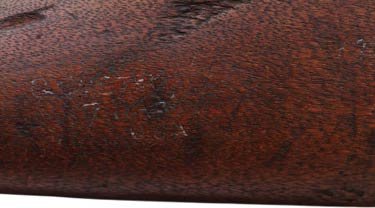
The undoubted highlight of the sale is George Armstrong Custer’s personal Spencer repeating carbine, bearing his name scratched on the buttstock, and frequently mentioned in his accounts of hunting. The bidding starts at $50,000; but, even with recession clouds still lowering over Obamistan, it will probably go much higher.
[T]he Spencer carbine offered here pre-dates his Fort Abraham Lincoln period, it does date from the Indian Wars, and could quite possibly have been with him at the Battle of Washita.
It was part of the legendary collection of Dr. Lawrence A. Frost of Monroe, Michigan, who at one time had what may have been the most extensive private collection of Custer artifacts and relics ever assembled. A signed identification tag in Frost’s hand which accompanies the gun identifies it as a “Spencer Carbine – Saddle Ring / Cal. 50, No. 3658, Model 1865 / ‘G. Custer – 7 Cav USA’ cut into wooden stock…Used by Gen. Custer in Kansas in 1867 campaign.” …
Dr. Frost purchased the carbine in 1955 from Howard Berry. A notarized bill of sale describes the gun in detail. In a 1973 letter (a copy of which is included in this lot), Frost refers to purchasing various Custer items from Berry, whom he describes as “a former 7th Cavalryman”. Frost states that he showed them to James Calhoun Custer (a nephew of Gen. Custer and son of Nevin Custer), and that Custer assured him he remembered these items which had been shown to him by his father who stated that they were the General’s.
Custer used a wide range of military and commercially available firearms over the course of his career, but he had a special familiarity with Spencer carbines. During the Civil War his Michigan regiments were armed with Spencers (Carbines of the U.S. Cavalry, John McAulay, p. 32). As the war ended, a new Spencer model was issued to the army with a more powerful 56-50 cartridge (Spencer Repeating Firearms, Roy Marcot, pp. 80-81). When the 7th Cavalry was formed in 1866 (Bugles, Banners and War Bonnets, Ernest Reedstrom, pp. 1-2), the Spencer Carbine became standard issue (Carbines of the U.S. Cavalry, p. 88), and was in use by them until replaced by the Sharps carbine in 1870 (Carbines of the U.S. Cavalry, p. 95). In his 1980 book, Nomad, George A. Custer in Turf, Field and Farm, Brian W. Dippie reproduces an 1867 article written by Custer in which he describes in great detail a buffalo hunting expedition. He describes learning that pistol shots “only seemed to increase (the buffalo’s) speed.” Accordingly, Custer wrote, “I concluded to discard the use of my revolvers and trust my Spencer carbine” (p.117). The example offered here, serial #3658, is the 1865 model and should not be confused with the Spencer rifle gifted to Custer in 1866; that gun has never surfaced (Spencer Repeating Firearms, p. 152). The presentation gun would have been the 56-44 sporting model.
Custer’s regard for his Spencer carbine is evidenced in his own words in his autobiography, My Life on the Plains, where he writes: “Leaping from my bed I grasped my trusty Spencer which was always at my side” (p. 77).
Found in John Alden’s house, built in 1653 using material from an earlier house erected in 1632, at 105 Alden Street in Duxbury, Massachusetts “in a secret protective cubbyhole near the front door of the home” during a 1924 renovation, this wheel-lock bears makers’ marks on the lock and barrel indicating it was made by the Beretta, family of Brescia, Italy, known to have been in business since 1526.
It is the only firearm brought over on the Mayflower known to have survived and it is preserved today in the collection of the National Firearms Museum operated by the NRA.
Shenandoah, Pennsylvania: South Main Street in the 1940s, a bit before my time.
My high school and elementary school classmate Norman Gregas posted on Facebook this Iris Dement nostalgic tribute to a vanished small town, particularly applicable in the case of our hometown whose treatment at the hands of time and economic change was exceptionally destructive and cruel.
This striking photo of a Pittsburgh street at night in 1900 kind of reminded me of the gritty Pennsylvania coal town where I grew up. We didn’t have steel mills though, only coal mines.
The Melungeons are an ethnic group, commonly described as a “tri-racial isolate,” resident in the Cumberland Gap neighborhood of Eastern Tennesee, Southwest Virginia, and Eastern Kentucky. The Melungeons’ comparatively dark complexions and other exotic characteristics have been attributed to mixed Amerindian and Spanish or Portuguese descent. Other alleged origins included shipwrecked Turkish slaves or descent from Gypsies. One legendary account claims that they descend from a native people resident before the arrival of European colonists.
Recent research seems to offer a much simpler explanation: descent from African freedmen.
[A] new DNA study in the Journal of Genetic Genealogy [Not apparently yet available on-line] attempts to separate truth from oral tradition and wishful thinking. The study found the truth to be somewhat less exotic: Genetic evidence shows that the families historically called Melungeons are the offspring of sub-Saharan African men and white women of northern or central European origin.
The New York Times attends a very special event in rural Mississippi.
Tamke and I are at the annual Otha Turner Family Picnic, a legendary jam session that takes place every summer behind a tumbledown sharecropper’s shack deep in Mississippi’s hill country. The interracial crowd is a few hundred strong and drawn from nearly every stratum of local life — bikers, college kids, workingmen, toughs, gentlemen farmers. And then there are a couple dozen like me: urban cosmopolites eager to hear the deepest roots of the blues. Tamke calls himself “a redneck,†and he’s attacked me because I’m from The New York Times. Shouting into my ear over the music, Tamke makes me his megaphone for what he wants the outside world to know: “Our races have melded together, we share everything,†he says, voice trembling. “We love each other.†He’s squeezing my skull so hard it feels like it might pop, and it’s clear that he’s under the influence of something very powerful. The moonshine or the music, I don’t know. Finally, when it seems something is about to crack — my neck, or Tamke’s tenuous hold on sanity, or both — he lets me go. “It’s sacred,†he says, choking up. “It’s ancient, man.â€
“It†is fife and drum, an African take on colonial English marching songs, and one of the oldest forms of distinctly American music, played by the slaves of Jefferson’s Monticello and still played today — by one family, once a year, at this, one of the last of the traditional farm picnics celebrating the end of the growing season.
Judging by how you talk you are probably from north Jersey, New York City, Connecticut or Rhode Island. Chances are, if you are from New York City (and not those other places) people would probably be able to tell if they actually heard you speak.
Mike Blanchard’s “In Memoriam” notice from the Denver Post has gone viral internationally.
It was reported with appropriate admiration by Britain’s Daily Mail.
———————————
Charlie Martin added a bit more at the Daily Caller:
“What’s in the vial?â€
“Nitroglycerin.â€
According to lifelong friend Ron Remy, those were the first words he heard from Mike Blanchard when they met during high school.
“I was coming up the walk to his parents’ house when he came out, carrying a small vial, very carefully. He said it was nitroglycerin. He’d just cooked it up in his parents’ kitchen. We put it on a fence post and Mike shot it with a pellet gun, and it blew out a whole section of fence,†Remy said. “We all have these fantasies — but Mike would go out and just do it. I spent a year in Viet Nam, and some of the moments of stark terror I had with Mike eclipsed anything I saw there.†…
Collecting stories from Flathead’s life, however, initially presented a small problem. “I’m not sure of the statute of limitations,†one of his friends said. After assuring them we’d protect our sources, the stories flowed like whiskey.
“We had friends who joined these ‘outlaw’ motorcycle clubs. We decided we’d have our own. We called it the ‘Dead Cats MC,’†said one of the attendees who had been worried about misdeeds recent enough to prosecute. …
The stories Blanchard’s family and friends told certainly didn’t paint him as a boy scout. According to his friends, he was astonishingly intelligent and well read, with encyclopedic knowledge of Fords, guns, and explosives, but equally deep knowledge of European history and of prosaic topics like landscaping.
On the other hand, he had real difficulties with authority, and didn’t give in to social pressures — like hygiene.
“You could have drilled for oil in the leg of his jeans,†remembered one friend who wished to remain anonymous. …
As his obituary noted, Blanchard was a life-long Republican and an NRA member. And according to another friend, he had what we might now charitably call “old-fashioned†attitudes about race.
In March, Harvard University Press will publish the Dictionary [of American Regional English]’s Volume V, finishing off the alphabet with slab through zydeco, nearly half a century after the first fieldworkers fanned out in “Word Wagons” to 1,002 communities across America, administering a 1,600-item questionnaire to sometimes-suspicious, often-perplexed locals.
The fruits of their labors have been a feast for the lexicographically inclined ever since. What does a patient in the South mean when he complains of dew poison? What does a waitress in California mean when she offers you coffee and snails? Where would you go if a New Englander directed you to the willywags?
(Answers: The patient has a rash on his feet or legs. The waitress is offering you cinnamon rolls with your cup of joe. The New Englander means what others might call the boonies.)