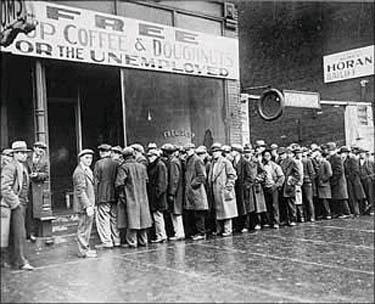
Williamson’s core argument is that politics has a congenital defect: Politics cannot get “less wrong†(a term coined by artificial-intelligence guru Eliezer Yudkowsky). Productive systems — the scientific method, the market, evolution — all have the built-in ability to learn from failures. Nothing (in this life at least) ever becomes immortally perfect, but some things become less wrong through trial and error. The market, writes Williamson, “is a form of social evolution that is metaphorically parallel to bioÂlogical evolution. Consider the case of New Coke, or Betamax, or McDonald’s Arch Deluxe, or Clairol’s Touch of Yogurt Shampoo. . . . When hordes of people don’t show up to buy the product, then the product dies.†Just like organisms in the wild, corporations that don’t learn from failures eventually fade away.
Except in politics: “The problem of politics is that it does not know how to get less wrong.†While new iPhones regularly burst forth like gifts from the gods, politics plods along. “Other than Social Security, there are very few 1935 vintage products still in use,†he writes. “Resistance to innovation is a part of the deep structure of politics. In that, it is like any other monopoly. It never goes out of business — despite flooding the market with defective and dangerous products, mistreating its customers, degrading the environment, cooking the books, and engaging in financial shenanigans that would have made Gordon Gekko pale to contemplate.†Hence, it is not U.S. Steel, which was eventually washed away like an imposing sand castle in the surf, but only politics that can claim to be “the eternal corporation.â€
The reason for this immortality is simple: The people running the State are never sufficiently willing to contemplate that they are the problem. If a program dedicated to putting the round pegs of humanity into square holes fails, the bureaucrats running it will conclude that the citizens need to be squared off long before it dawns on them that the State should stop treating people like pegs in the first place. Furthermore, in government, failure is an exciting excuse to ask for more funding or more power.
The following are 40 statistics about the fall of the U.S. economy that are almost too crazy to believe…
#1 Back in 1980, the U.S. national debt was less than one trillion dollars. Today, it is rapidly approaching 17 trillion dollars…
#2 During Obama’s first term, the federal government accumulated more debt than it did under the first 42 U.S presidents combined.
#3 The U.S. national debt is now more than 23 times larger than it was when Jimmy Carter became president.
#4 If you started paying off just the new debt that the U.S. has accumulated during the Obama administration at the rate of one dollar per second, it would take more than 184,000 years to pay it off.
#5 The federal government is stealing more than 100 million dollars from our children and our grandchildren every single hour of every single day.
#6 Back in 1970, the total amount of debt in the United States (government debt + business debt + consumer debt, etc.) was less than 2 trillion dollars. Today it is over 56 trillion dollars…
#7 According to the World Bank, U.S. GDP accounted for 31.8 percent of all global economic activity in 2001. That number dropped to 21.6 percent in 2011.
#8 The United States has fallen in the global economic competitiveness rankings compiled by the World Economic Forum for four years in a row.
#9 According to The Economist, the United States was the best place in the world to be born into back in 1988. Today, the United States is only tied for 16th place.
#10 Incredibly, more than 56,000 manufacturing facilities in the United States have been permanently shut down since 2001.
#11 There are less Americans working in manufacturing today than there was in 1950 even though the population of the country has more than doubled since then.
#12 According to the New York Times, there are now approximately 70,000 abandoned buildings in Detroit.
#13 When NAFTA was pushed through Congress in 1993, the United States had a trade surplus with Mexico of 1.6 billion dollars. By 2010, we had a trade deficit with Mexico of 61.6 billion dollars.
#14 Back in 1985, our trade deficit with China was approximately 6 million dollars (million with a little “m”) for the entire year. In 2012, our trade deficit with China was 315 billion dollars. That was the largest trade deficit that one nation has had with another nation in the history of the world.
#15 Overall, the United States has run a trade deficit of more than 8 trillion dollars with the rest of the world since 1975.
#16 According to the Economic Policy Institute, the United States is losing half a million jobs to China every single year.
#17 Back in 1950, more than 80 percent of all men in the United States had jobs. Today, less than 65 percent of all men in the United States have jobs.
#18 At this point, an astounding 53 percent of all American workers make less than $30,000 a year
Charles Hugh Smith discusses the popular liberal meme of widening inequality, and comes to the conclusion that inequality is widening alright, but the beneficiaries of this inequality are actually thoroughly and completely in cahoots with the leftwing administration which, on the one hand, makes political hay using class warfare rhetoric about inequality, while, simultaneously on the other hand, managing economic and central bank policy ruthlessly in pursuit of the interests of the financier sector at the expense of the general community.
Individuals are not powerless to change their circumstance. This is the basis of the American Dream (and also the Chinese Dream, Mexican Dream, Iraqi Dream, etc.) The question then becomes: how is the system “wired,” i.e. what are the obstacles, incentives and disincentives presented to individuals who are trying to better their circumstance?
It’s important to ask this question, and to be honest in our assessment of victimhood, oppression and individual responsibility.
The widening chasm refers to both the income chasm between the financier class (1/10th of 1%) and the 99.9%, and the chasm between the real economy and the official narrative of the economy. The essence of propaganda is to substitute an officially conjured narrative for independent critical thinking.
In the American propaganda narrative, the central state and bank are admirably supporting a “recovery” that though uneven in places is soundly on the path to widespread prosperity.
The primary support of this narrative is ginned-up statistics (bogus unemployment rate, etc.) and asset bubbles inflated by easy credit to the masses and unprecedented low-cost credit to the financier class. These are the basic tools of propaganda: choose a metric that you can control or game, and make that the measure of success.
In the Vietnam War, the body-count of enemy combatants was the metric chosen by the propaganda machine to measure success. Unsurprisingly, stacks of dead civilians were duly counted to boost morale and to mask the failure of the war’s managers.
Nowadays the unemployment rate is the new body-count: a metric that can be gamed to reflect an illusory success. Just erase tens of millions of people from the workforce, count every 4-hour a week job and dead-reckon a few million jobs were created outside the statistical universe (the Birth-Death Model of small business creation) and voila, the unemployment rate magically declines even as the economy and the job market stagnate.
The other metric of choice is the stock market, which has been inflated by central bank policies and identified as the gauge of recovery by a political class anxious to deflect inquiries into its systemic corruption and monumental policy failures.
The official narrative carefully leaves the kleptocracy, crony-capitalism and cartel rentier arrangements firmly in place. As noted above, those benefitting from the cartel-state neofeudalism defend their perquisites as “natural,” i.e. the result of meritocracy. This adds another layer of propaganda persuasion to the official narrative.
An independent, critical account of the American economy would soon raise questions about the structural causes of inequality by asking cui bono, to whose benefit is the system arranged?
If we can honestly say that the system’s primary source of inequality is a dynamic economy that rewards the top 10% who are best able to deploy skills and capital, then that suggests one set of potential remediations.
If however we find the system is unequal largely as a result of its cartel-state structure, then that suggests a political and financial reset is needed to clear the deadwood of corruption, malinvestment and state/central bank manipulation of statistics, finance and credit.
Obamacare is making Americans’ health care more expensive, not less. How can that be? Charles Krauthammer explains that when you arbitrarily sever one sixth of “the biggest economy on Planet Earth” from a functioning market system and then try winging the planning of its operation, bad things are inevitable.
The Yale Daily News recently did a feature exploring what life is like for meritocratic recruits from financially disadvantaged backgrounds at Yale.
MacBooks. Dooney & Bourke bags. MoMA and the Met. These were the things that [she didn’t have, that Shanaz Chowdhery ’13] says, set her apart.
It didn’t take long for [her] to notice that people were different at Yale. “There was all this cultural capital that people seemed to have,†she says.
Where she was from, no one read The New Yorker on Sundays.
The differences weren’t just cultural, either: Chowdhery recalls her shock at seeing girls walking around campus with $100 handbags.
After she noticed that so many students here used Macs, she says, she looked up the price and couldn’t believe her eyes. Her classmates were lounging on Old Campus with $2,000 laptops.
Chowdhery’s father put her generic Windows laptop on a credit card. She believes he was paying it off her entire freshman year.
Even after being admitted, many students from lower-income backgrounds feel socially aloof from their wealthier classmates.
For Leonard Thomas ’14, feelings of difference and isolation were the largest obstacles to overcome as he transitioned from life in Detroit to being a student at Yale. “I felt poor here,†he says. “I didn’t necessarily feel poor in Detroit because I wasn’t the extreme case.
“I’m an extreme case of poverty here.â€
David Truong ’14 still remembers what it was like to move into his freshman dorm. As he watched a suitemate buy a TV stand, a TV and an Xbox without hesitation, he cringed while paying for clothes hangers and plastic storage bins for his room. That first weekend when everyone was getting to know each other, Truong struggled with suite discussions about splitting the cost of a couch. The expectation that everyone would be contributing to the cost of furnishing the suite, while he thought it fair, was an adjustment.
That expectation of spending does not disappear after move-in weekend. Jennifer Friedmann ’13 says that Yale has a “culture around money.†“You were expected to be able to go out to dinner,†she said. “If I had a coffee date with someone, it was expected that everyone was buying coffee and that it wasn’t a financial burden for anyone.†But Friedmann did not want the fact that she was on financial aid to interfere with her ability to socialize with anyone on campus, regardless of socio-economic background. By shopping at thrift stores, she says she found it more feasible to “be a social person on this campus without making people feel weird about me being on financial aid.â€
———————–
I can remember friends of mine doing the thrift shop thing, and sometimes finding some really excellent Harris Tweed sport coats at derisory prices, back during the Cretaceous Period, when I was at Yale.
I grew up in an economically-depressed mining town in Northeastern Pennsylvania and got a full scholarship to Yale, so I’m personally quite well acquainted with the kind of experiences described in the Yalie Dailey’s feature.
I was well-insulated from social insecurity by personal arrogance and family pride, but financially I was a total idiot. I had never previously had a checkbook, and the Yale Coop presented you on arrival as a freshman with a credit card (and access to a store full of books and records).
My approach to poverty at Yale was to join in happily with the revels of my more-affluent classmates and perhaps even to cut a bit more of a dash than some of those. Like Mr. Micawber, I assumed all that financial stuff would work itself out somehow or other. However, the dour Puritan prep school regime extended onward into college life in those days, and fiscally-irresponsible black sheep like myself faced unlimited possible forms of vengeance at the hands of their residential college deans.
Inevitably, I found myself, before long, out of Yale, back in Pennsylvania in disgrace, and now classified 1-A by Richard Nixon’s draft board.
When I returned to Yale, several years later, I accidentally became involved in operating a successful film society, which happily provided me with the kind of income I needed to survive.
The Yale Daily News, I think, is basically correct in noting that naive and immature adolescents from extremely provincial backgrounds, however talented, are going to run into some real adaptation issues if they decide to accept the gold-engraved invitation to jump into the great big pond of elite university education, and not everyone will adapt.
I was one of six meritocratic Yale admissions accepted into a special Early Concentration in Philosophy program. Of our six oh-so-gifted young men, four got kicked out of Yale. Two of the four were eventually re-admitted. The other two never came back, and have never been heard from by the rest of us again. There has always been a pretty high casualty rate in the meritocracy.
Americans are not getting the economic benefit of the tremendous currency expansion in the form of more available credit, but never fear! We are going to get something very real as the result of the Obama Administration’s currency management efforts: Inflation.
While the career politicians prance about in their clownshoes and red rubber noses quacking about “the fiscal cliff” and are obediently parroted by the MSM and FTV charlatans, this is something they do NOT want to talk about or want anyone to even ‘think’ about.
This is actually very simple. Look at the two lines on this chart.
– The blue line reflects the falling purchasing power of the Dollar. From the creation of the FED when one Dollar was worth one Dollar to today, when one Dollar is really only ‘worth’ 3.8 cents.*
– The red line represents rising prices over time. This is the inflation the professional liars say does not exist.
– The turning point is pretty clearly indicated in the 1970’s. This is one trend that is NOT your friend!
It has been said before, but is worth repeating:
– It isn’t that the value (price) of Gold has gone UP. It has not. It is the value (purchasing power) of paper fiat that has gone DOWN.
*The Treasury will begin removing pennies and nickels from circulation in 2013. Pennies stopped being made of copper about 1984 and have been made of zinc with a copper ‘wash’ and are truly worthless in both nominal and real terms by now. Nickels still amazingly contain nickel, and are worth about seven nominal cents due to their metal content. Even the venerable Dollar bill, the greenback, is being ‘looked’ at for extinction by the 40# brains in government who dimly ‘sense’ something is wrong (well, a nominal Dollar is worth 3.8 cents in real terms anyway). Does this suggest to anyone…Bueller? Bueller? …that a currency reset/revaluation looms?
Clark Judge, at Ricochet, explains that though the federal government has been been enormously, fantastically expanding the money supply, the new electronically created dollars have not actually fueled an expansion of business credit.
A successful software entrepreneur and school friend sent me this chilling email last week:
Yesterday I was speaking to a banker in central California who related how he is being prevented from doing his job due to the compliance people (read government pressures) and could not convince the powers-to-be to make a loan despite his long history of good decisons. I hear stories daily regarding how people have seen orders evaporate as a result of the election. Multply this across the nation to understand the impact.
But how could loans be scarce when the Fed has been printing money at an unprecedented rate?
Here is Cato Institute and Johns Hopkins economist Steve Hanke’s explanation, from a recent EconTalk podcast:
[S]tart with Lehman’s collapse in September 2008. That’s a convenient date. Since that point in time, the Federal Reserve’s balance sheet has increased roughly by three and a half times. So that means they are buying a lot of these [U.S. government] bonds….
Now that means that high-powered money, or what I call state money–the amount of money produced by the state–has more or less tripled. It’s exploded…. [S]tate money has increased from about 6.5% of the total money supply, when you measure the money supply properly with a broad measure, like M3–so we went from state money being at about 6.5% at the time Lehman collapsed, until now it’s about 15% ….
[In other words] state money is peanuts. What really is important is bank money–and bank money is created by the commercial banking system and shadow banking system, and that’s what really counts.
So, in a way we have had the following scenario develop after Lehman: We’ve had ultra-loose monetary policy with regard to state money and the Federal Reserve.But with the financial regulation that was legislated with Dodd-Frank, and also with what is called the Basel capital requirements, and specifically Basel III, which is being imposed on banks–to increase the capital-asset ratios of the banks.These two things–financial regulation and Basel–have in effect imposed ultra-tight monetary policy on the banking system and bank money.
So, as a result of the two, we’ve had the total amount of the money supply actually being very anemic, not growing very much at all. And in fact, if you look at a trend line since 2009 and look at the endpoint today of the trend line as you are going left to right, that point is about 7.5% higher than the actual level of the money supply that we have.
So, you could argue that relative to trend we’ve got a deficiency of about 7.5% in broad money. And the reason why is that the dominating feature has been the reregulation of banks and the tight monetary policy imposed on bank money. Which accounts for 85% of the total amount of money in the economy.
Basel III is an international banking agreement — one of a series dating to the late 1980s — that is imposing increased reserve requirements on major money center banks globally, and is being applied in the U.S., it turns out, on regional banks, too. Thanks to it and Dodd-Frank, regulators are forcing U.S. banks to shift their portfolios toward U.S. government debt and other assets that qualify as reserves. This is, of course, very convenient at a time of World War II-scale federal borrowing needs made bigger by the president and his Congressional allies insisting on more entitlement and other domestic spending, meaning more debt, not less.
Frank J. Fleming, in the New York Post, explains the thinking of our Rand-villain democrat opponents.
The US unemployment rate has been pretty lousy for a while. Luckily, no one blames President Obama for this, as the recent election showed. And why should they? The government has done everything right: It enacted a huge stimulus, built infrastructure, passed ObamaCare to make sure employees are healthy and it supplied businesses with millions and millions of people just standing around waiting for work.
So if the government has done its part, and there still aren’t enough jobs, then who should we blame? Obviously, it’s the fault of those lazy, good-for-nothing businesses and job creators. …
[W]e can’t let the prospect of job losses keep us from going after businesses owners where it hurts them the most: their companies.
And that’s the tough line the government needs to take with job creators: You will spit out those jobs we demand — and good ones with health-care benefits! — or we will destroy you and your businesses.
Raising their taxes by repealing the Bush tax cuts is just the start. We need even more taxes and punishing regulations. We need to treat these people like the scum they are, and if they don’t want to watch their companies burn, they’ll yield and finally expand their businesses and create more jobs — and not make any more profit or get richer when they do that, because we find that highly annoying.
We’ve had enough of your sickening greed, business owners, so give us everything we want, and give it to us now.
Mark Steyn measures the depths of America’s federal debt abyss.
In the weeks ahead, Democrats and Republicans will reach a triumphant “bipartisan†deal to avert the fiscal cliff through some artful bookkeeping mechanism that postpones Taxmageddon for another year, or six months, or three, when they can reach yet another triumphant deal to postpone it yet again. Harry Reid has already announced that he wants to raise the debt ceiling — or, more accurately, lower the debt abyss — by $2.4 trillion before the end of the year, and no doubt we can look forward to a spectacular “bipartisan†agreement on that, too. It took the government of the United States two centuries to rack up its first trillion dollars in debt. Now Washington piles on another trillion every nine months. Forward!
If you add up the total debt — state, local, the works — every man, woman, and child in this country owes 200 grand (which is rather more than the average Greek does). Every American family owes about three-quarters of a million bucks, or about the budget deficit of Liechtenstein, which has the highest GDP per capita in the world. Which means that HRH Prince Hans-Adam II can afford it rather more easily than Bud and Cindy at 27b Elm Street. In 2009, the Democrats became the first government in the history of the planet to establish annual trillion-dollar deficits as a permanent feature of life. Before the end of Obama’s second term, the federal debt alone will hit $20 trillion. That ought to have been the central fact of this election — that Americans are the brokest brokey-broke losers who ever lived, and it’s time to do something about it.