Sayre’s Law holds that academic politics are so bitter because the stakes are so low.
Bowra was fierce in loyalty to his ideals. But he differed from other intellectuals in being even fiercer in loyalty to his friends. If a choice had to be made between friends and truth, friends won. His loyalty to people and institutions was passionate and uncompromising; if a friend failed, for instance, to get a post he concealed the blunt truth in comforting him afterwards and took it out on his opponents. Such tenderness did not extend to them: he pursued his enemies relentlessly. When he gave the oration at the memorial service for his old tutor Alec Smith the air was so dark with arrows he despatched, like Apollo spreading the plague among the Grecian host before Troy, that you half-expected the guilty to totter forth from St. Mary’s and expire stricken on the steps of the Radcliffe.”
——————————-
Annan also mentions, anent Bowra, some interesting German terms.
Bowra belonged to a generation who put enormous weight on friendship. Friendship was something more than casual geniality: it made demands, it imposed duties and much should be sacrificed for it. It was not to be confused with party-going, still less with Mitdabeisein [“being there” — JDZ] . Friendship implied unreserved affection and support, but it was a dry fierce heat, not humid; he was vehement, and he rebuked. He wanted his friends to do well. Like Jowett he expected them to make the most of their gifts. Whatever they produced was not enough: they must push on and do better still; and he could awaken self-confidence and dispel what he used to call ‘a sad state of Minko*.'”
* ‘Minko’ is the German colloquialism for Mindwetigkeitskomplex, or inferiority complex.
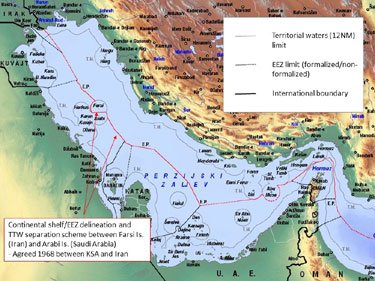
J.E. Dyer suggests that those riverine command boats were exposed to capture by Iran’s revolutionary guards because they were traveling a route intended to avoid Saudi waters.
The routine expectation that archipelagic transit will be accommodated by littoral states is a bedrock principle of the Law of the Sea. The Saudis may have had particular reasons over the years to be wary of extending that accommodation to some parties in the Persian Gulf. But that’s not a mitigating factor for a sea change in expectations that affects the United States, of all nations.
If this is why we took an especially dangerous route to move small boats around in the Gulf, it’s a very bad portent for the international order. The Law of the Sea itself falling apart is a key development that means we’re already in a world war, whether it’s been formally declared, in Westphalian style, or not.
I note, for completeness, that the CENTCOM news release isn’t convincing on the valid question of how 10 Navy sailors could possibly have exhibited the uniquely bad seamanship implied by the official explanation. It remains extremely unlikely that they failed to notice a navigation error taking them into Iranian waters. One mechanical error – earlier disavowed by DOD, now resurrected – between two boats doesn’t so absorb the attention of two boat drivers and two navigators that everyone strays off course.
But it looks like it’s “interesting times†for the U.S. Fifth Fleet today. If, as seems probable, there are important things we’re not hearing about the collapse of the status quo in the Gulf, those things are bound to be affecting maritime operations there. The situation is only going to get worse.
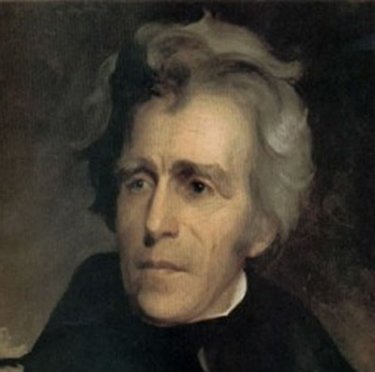
Walter Russell Mead warns that a spectre is haunting the election of 2016, the spectre is that of no less than Andrew By God! Jackson, and the Locofocos are again challenging the rule of the Bank and the Urban Elites.
Not since he fought with Nicholas Biddle over the future of the Bank of the United States has Andrew Jackson been this controversial or this central in American political life. Jacksonian populism, the sense of honor-driven egalitarianism and fiery nationalism that drove American politics for many years, has never been hated and reviled as often as it is today, and many American academics and intellectuals (to say nothing of Hollywood icons) are close to demanding that Jacksonian sentiment be redefined as a hate crime.
For President Barack Obama and his political allies in particular, Jacksonian America is the father of all evils. Jacksonians are who the then Senator had in mind when, in the campaign of 2008, he spoke of the ‘bitter clingers’ holding on to their guns and their Bibles. They are the source of the foreign policy instincts he most deplores, supporting Israel almost reflexively, demanding overwhelming response to terror attacks, agitating for tight immigration controls, resisting diplomacy with Iran and North Korea, supporting Guantanamo, cynical about the UN, skeptical of climate change, and willing to use ‘enhanced interrogation’ against terrorists in arms against the United States. …
The hate and the disdain don’t spring from anything as trivial as pique. Historically, Jacksonian America has been the enemy of many of what President Obama, rightly, sees as some of America’s most important advances. …
Virtually everything about progressive politics today is about liquidating the Jacksonian influence in American life. From immigration policy, touted as ending the era when American whites were the population of the United States, to gun policy and to regulatory policy, President Obama and his coalition aim to crush what Jacksonians love, empower what they fear, and exalt what they hate. …
What we are seeing in American politics today is a Jacksonian surge. …
Donald Trump, for now, is serving as a kind of blank screen on which Jacksonians project their hopes. Proposing himself as a strong leader who ‘gets’ America but is above party, Trump appeals to Jacksonian ideas about leadership. Trump’s Jacksonian appeal has left the Republican Party in deep disarray, demonstrating the gulf between contemporary conservative ideology and Jacksonian nationalism. Indeed, one of the reasons that Trump hasn’t been hurt by attacks that highlight his lack of long term commitment to the boilerplate conservative agenda (either in the social or economic conservative variant) is that Jacksonian voters are less dogmatic and less conservative than some of their would-be political representatives care to acknowledge. …
Whatever happens to the Trump candidacy, it now seems clear that Jacksonian America is rousing itself to fight for its identity, its culture and its primacy in a country that it believes it should own. Its cultural values have been traduced, its economic interests disregarded, and its future as the center of gravity of American political life is under attack. Overseas, it sees traditional rivals like Russia, China, North Korea and Iran making headway against a President that it distrusts; more troubling still, in ISIS and jihadi terror it sees the rapid spread of a movement aiming at the mass murder of Americans. Jacksonian America has lost all confidence in the will or the ability of the political establishment to fight the threats it sees abroad and at home. It wants what it has always wanted: to take its future into its own hands.
The biggest story in American politics today is this: Andrew Jackson is mad as hell, and he’s not going to take it anymore.
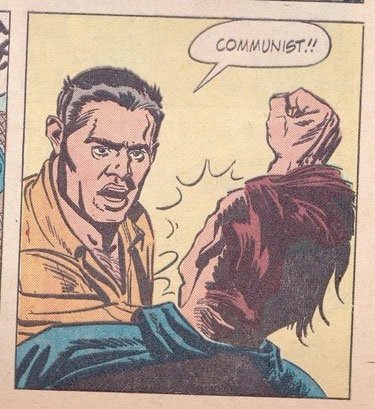
Paul Sperry, in the New York Post, points out that Bernie Sanders is not a “liberal,” not a “progressive.” He’s a lifelong, diehard, dyed-in-the-wool Communist.
As polls tighten and self-described socialist Bernie Sanders looks more like a serious contender than a novelty candidate for president, the liberal media elite have suddenly stopped calling him socialist. He’s now cleaned up as a “progressive†or “pragmatist.â€
But he’s not even a socialist. He’s a communist.
Mainstreaming Sanders requires whitewashing his radical pro-communist past. It won’t be easy to do.
If Sanders were vying for a Cabinet post, he’d never pass an FBI background check. There’d be too many subversive red flags popping up in his file. He was a communist collaborator during the height of the Cold War.
A group of hipster gin makers came close to creating chaos after they accidentally made mustard gas while trying to concoct a new flavour.
Workers from Sipsmith distillery, in Chiswick, west London, were attempting to create a mustard-flavoured drink but instead made the dangerous chemical agent, famous for its devastating use in World War One.
The firm, founded by Fairfax Hall, Sam Galsworthy and Jared Brown in 2009, evacuated its plant as soon as the blunder had been detected.
Kit Clancy, assistant distiller at Sipsmith, said: ‘There was a near disaster. What the guys actually produced was in effect mustard gas. The distillery was evacuated. That one wasn’t made again.’
British eventer Alice Pearson took a tremendous fall out with the Ledbury Hunt at Murrells End on January 15th latest, winding up under her struggling horse. Meanwhile, other members of the field poured over the same hedge, landing on both sides of the fallen horse and rider. This is the kind of thing the Irish refer to as “a crucifying fall.”
The ground must have been soft that day because both Alice & Chocky survived without serious injury.