I don’t normally post single-sourced “news items” totally lacking in corroboration, but in this case a Facebook correspondent claims that more information on all this is coming tomorrow, so I decided to link the video. We’ll see.
WWII JAPANESE TYPE 99 ARISAKA RIFLE W/ MUM-MATCHING DUSTCOVER-MONOPOD-AA-CLEANING ROD
38 bids — Sold for $1,985.00
Described:
Good condition WWII Japanese Type 99 Arisaka rifle in 7.7mm caliber that has a full untouched mum on the receiver and was manufactured as part of the 31st Series by Toyo Kogyo. Rifle is NOT import marked and has all matching serial numbers including receiver, bolt body, extractor, safety, and firing pin. Gun is complete with original cleaning rod, anti-aircraft rear sight wings, monopod, and matching numbered dustcover. Metal finish is original blue showing some normal wear. Bore is bright and excellent with strong rifling. Stock has been sanded and refinished and has nice mellow finish. A classic T-99, hard to find with all matching numbers including dustcover.
Did some identify the ownership marks of Musashi Miyamoto on this thing somewhere? There used to be barrel-fulls of these for sale in Antique Stores for $15 a piece. Why would anybody pay that price for an Arisaka (especially one with a sanded stock?)
Sally Fields and a bunch of Hollywood types you never heard of are warning Congress that they will not tolerate Donald Trump’s “Racism, Sexism, or Xenophobia” and that they expect Congress to block any legislation opposed to the interests of any and all of the fashionable Left’s pet victim groups of privilege.
If Congress fails to oblige, I guess they’ll all sit down and have a great big cry or make another ineffably self-important video.
Photojournalist Ikuru Kuwajima recorded Mari life when he journeyed deep into Russia’s Mari El republic – about 600 miles east of Moscow. Under Soviet rule, the Maris were encouraged to abandon their way of life and join the mainstream. Most joined the Russian Orthodox church during the Soviet era. But many kept their pagan traditions alive in secret, practising witchcraft and animal sacrifice, believing in half-men, half-deities called ‘keremets’ and seeking communion with Nature – a source of absolute good.
Probably distant cousins who lived way out there in the boondocks.
Not Balts though. Wikipedia says they’re Finno-Ugric speakers.
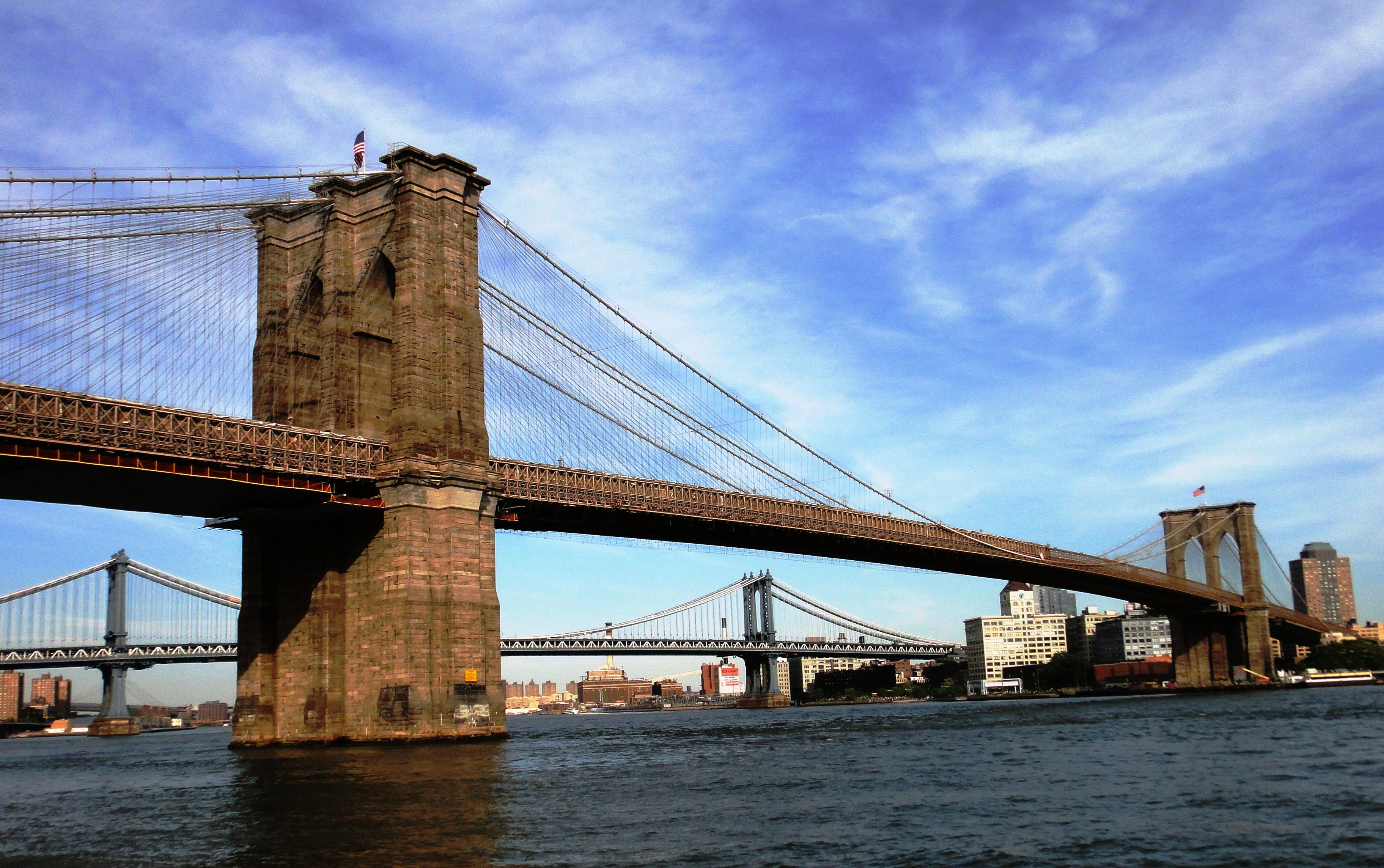
They started construction on the Brooklyn Bridge 140 years ago, yesterday, 3 January 1876. General Custer and Wild Bill Hickock were both still in good health at the time.
The pressure-related malady, “the bends,” was diagnosed for the first time in the course of construction of the bridge’s pilings.
The bridge’s original design engineer, John A. Roebling, died in 1869, before construction had begun, of tetanus, contracted when his foot was crushed by an arriving ferry while he was selecting a location for the bridge.
His son, Washington Roebling, took over the project, and became disabled during the course of the project by the bends from visiting the caisson. His wife, Emily Warren Roebling, taught herself engineering and effectively took over day-to-day supervision and management of the project.
A French tourist was bitten by a crocodile after posing next to the enormous reptile in a misguided attempt to take a selfie, according to reports.
The 41-year-old woman was exploring Thailand’s Khao Yai National Park with her husband when the duo came across the giant female reptile, reported The Mirror.
The couple squatted down next to the crocodile, which then reportedly sank its teeth into the woman’s thigh as the picture was taken.
Snaps from the scene show the woman being whisked away by rescuers, as the croc ambles away through the brush.
The park reportedly posts many signs telling visitors to stay on paths and not detour through the thicket.
The unnamed woman, whose leg appears bandaged, was transported to an area hospital, where she was treated for her injuries.
Adam Davis, from Division Leap, a Portland, Oregon, bookstore pays tribute to the marketing of classic Russian literature in 1950s paperback form.
The first edition of this unusual anthology, in which short stories and excerpts from larger works (including a piece by Isaac Babel) are collaged together and commercially packaged into a convenient narrative of female decline. The cover features an illustration by the illustrator Lou Marchetti, who lent his distinctive style to many crime fiction and western pulps of the era. Mark Merrill was a pseudonym of David Markson, and this is his first published book. The anthology was re-released in 1963 under the less titillating, but perhaps equally convenient title Great Tales of Old Russia.
While the primary motive behind the book may have been financial, as with his other early detective novels, the collage aspect of the book and the excellent selection of Russian works are the beginning of a trajectory that would culminate in Markson’s great, last collage novels.
I never knew Markson well, but when I worked at the Strand in the early aughts I sometimes used to talk to him about books in the evenings when he would come in and make his rounds. This wasn’t unusual; Markson’s well-known affection for the bookstore extended to many of the employees. I remember that he was the first person to mention the works of Isaac Babel to me. I was foolish enough to wait a few years to read Babel, just as I foolishly delayed reading Markson’s own work until after my acquaintance with him . Seeing Babel’s work here reinforces that particular regret of reading a book later then one would like.
Eishosai Choki (fl. 1780s-1800s), Sunrise at New Year
A bijin (beautiful woman), presumably a courtesan, has risen early to greet the rising sun of the New Year at the waterfront at Fukagawa in Edo. The woman is adjusting the top of her kimono to protect against the chill of the early morning. In the lower-left is a blossoming fukujuso plant, emblematic of the New Year.