“It’s now very common to hear people say, ‘I’m rather offended by that.’ As if that gives them certain rights. It’s actually nothing more… than a whine. ‘I find that offensive.’ It has no meaning; it has no purpose; it has no reason to be respected as a phrase. ‘I am offended by that.’ Well, so fucking what.“
– Stephen Fry, [I saw hate in a graveyard – Stephen Fry, The Guardian, 5 June 2005]â€
A Massachusetts elementary school has canceled its Halloween events and is celebrating ‘black and orange spirit day’ instead.
Boyden Elementary School’s principal sent a letter to parents this week saying that it had decided to cancel its traditional Halloween parade on October 31 because it was ‘not inclusive of all students’ and was ‘difficult’ for many.
Without specifying which students the parade excluded, Principal Brendan Dearborn said the school would instead hold a ‘black and orange spirit day’.
Children are allowed to dress in those colors but cannot come to school in costume.
Herodotus tells us that when Darius’ Persian army invaded Scythia, in the late sixth century bce, the Scythians ran away. The Persians followed them over the steppeland north of the Black Sea until, tiring of the pursuit, Darius sent a messenger to the Scythian king to tell him to make a stand or bend the knee. The Scythian king, Idanthyrsus, informed the messenger that as they had no cities or crops they had nothing to defend and could therefore afford to exhaust the Persians by making them traipse across the land. They would fight only if the Persians tried to loot their graves: ‘Attack those graves and you will soon discover whether we are fighters or not!’ Eventually, his army sickening and hungry, Darius gave up and returned to Persia.
Nomadic civilisations pose many of the same difficulties to archaeologists as they do to invading armies. They are difficult to pin down. For one thing the Scythians weren’t so much a people as some peoples. The term ‘Scythians’ is a collective name for a number of migratory tribes who spoke early Iranian dialects and enjoyed a similar lifestyle, culture, economy and set of beliefs. Between 800 bce and 300 bce, roughly speaking, these tribes roamed a vast expanse of land stretching from Central Asia in the east to the Hungarian plain in the west (an area that would include parts of south-west Russia, Ukraine and Kazakhstan today). They were wealthy, allegedly because they controlled the slave trade between Northern Europe and Greece. But being illiterate they left no manuscripts, and being nomadic no ruins. There are accounts of them written by non-Scythians, Herodotus most prominently, but a lot of what we know about them we know because the graves they were so keen to defend have been ransacked and their contents – in many cases well preserved by permafrost – brought to light.
These graves, or kurgans (their Slavic name), provided rich pickings for grave-robbers until looting them was made illegal by Peter the Great in the early 18th century. It was Peter the Great who commissioned the first archaeological excavations of Scythian tombs and his Siberian Collection, on which much of our knowledge of Scythian material culture depends, contains around 240 gold artefacts. One of the most famous pieces of Scythian art and the first exhibit in the British Museum’s current show (until 14 January 2018) is a fourth-century gold belt buckle from Peter’s collection, 16 cms wide and 12 cms tall, which depicts two men in low relief sitting with a dead comrade beneath a tree. The man on the right holds the reins of two horses while the man on the left cradles the head of his dead friend, who lies on the ground in a suit of armour looking a lot like the sculpture of a dead knight one might find on a medieval tomb. A quiver of arrows hangs from the tree. The leaves, horses’ heads and quiver all droop downwards giving the impression that the whole scene is sinking into the earth, drawn by the gravity of death.
5th Ward councilmen Chip Smith and Chuck Warpehoski were joined by 1st Ward council members Sumi Kailasapathy and Jason Frenzel in taking a knee when it came time to recite the Pledge of Allegiance before the city council meeting, M Live reported.
Warpehoski said his decision to kneel was an “act of attention, concern and respect.â€
“I can’t speak to what is in each person’s heart, but for me to ‘take a knee’ is an act of attention, of concern, and of respect,†Warpehoski wrote on his website ahead of Monday’s meeting and also stated at the meeting. “And it is in that spirit that I take a knee at tonight’s City Council meeting: out of respect for the aspiration that we be a nation ‘with liberty and justice for all,’ with full attention that we fall short of that ideal in many ways, and with humble dedication to continue to work that the promise of the pledge may be fulfilled.â€
Kailasapathy said during the meeting that she was kneeling for the pledge in order to demonstrate she was committed to upholding Democratic values.
“For me, taking a knee is also showing solidarity with the group of people who have been doing this at the national level,†she said.
The demonstrations reflect the NFL national anthem protests that began last year. Former San Francisco 49ers quarterback Colin Kaepernick began kneeling during the national anthem last season in order to draw attention to racial injustice. Some other players in the NFL followed suit, but it didn’t become a national phenomenon until late September of this year after President Donald Trump said NFL owners should not tolerate kneeling during the national anthem.
————————————-
Meanwhile incoal mining country, Josh Stowers delivers the national anthem for his workmates before his shift underground in West Virginia every day:
Just like Khyber Pass gunmakers. How are you going to stop them, Gun Controllers? Imagine what Americans with access to machine tools could produce in their garages.
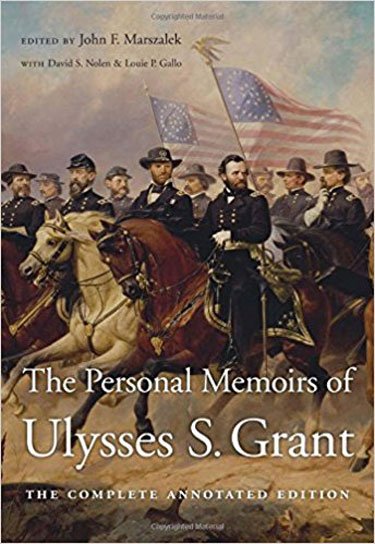
At this distance, it’s hard to see the appeal of McClellan’s self-regard and concocted grandeur, because he sounds like an ass. It’s easier to like Grant. In his memoirs, Grant expresses his “rigorous distaste†for “ceremony, theater and oratory†(in the words of the historian John Keegan) by describing two generals of the war with Mexico, in which he fought bravely as a young West Point graduate. He admires the unaffected Zachary Taylor, who “dressed himself entirely for comfort,†in civilian clothes. But Winfield Scott “always wore all the uniform . . . allowed by law,†Grant observes: “dress uniform, cocked hat, aiguillettes†— loops of braid at the shoulder — “saber, and spurs.†Grant respects Scott’s ability but not his language, noting he was “not averse to speaking of himself, often in the third person, and he could bestow praise upon the person he was talking about without the least embarrassment.â€
Photo
That’s funny — almost Calvin Trillin funny — but we hear the bite. As modest and decent as Grant was, he appears to have clutched in his pocket a little squirming snake of resentment. After the Mexican War, he failed in the Army because of his secret shame, alcoholism, at a time when temperance was a major cultural force; he scrabbled hard in the years that followed, trapped in a desert of poverty. He returned to duty in the Civil War and won victory after victory, rising so high that Congress resorted to creating new ranks for him. His enemies retaliated by making his shame public, charging him with drunkenness. He felt the scorn of patricians like Henry Adams, who concluded he was “pre-intellectual . . . and would have seemed so even to the cave-dwellers.†Here and there, Grant shows how much it hurt. In cutting Scott, he goes beyond a mere lack of affectation into positive derision, mocking the pretensions of the refined society that mocked him.
“Perhaps never has a book so objective in form seemed so personal in every line,†Edmund Wilson observed, and I agree. But I disagree that Grant’s voice is “aloof and dispassionate.†Pain flickers behind the stolid pillars of the memoirs. He reflects his internal state off external surfaces, as with Taylor and Scott. Early on, he describes how as a boy he botched a negotiation for a horse — a telling anecdote, as financial failures agonized him — and the ensuing ridicule. “Boys enjoy the misery of their companions, at least village boys in that day did; and in later life I have found that all adults are not free from the peculiarity.â€
He armored himself with simplicity. Grant’s style is strikingly modern in its economy. It stood out in that age of clambering, winding prose, with shameless sentences like lines of thieves in a marketplace, grabbing everything in reach and stuffing it all into their sacks. Indeed, Grant adhered to Adams’s own instructions to the staff of the North American Review: “Strike out all superfluous words, and especially all needless adjectives.†Wilson observed, “Every word that Grant writes has its purpose, yet everything seems understated.â€
Authenticity is not perfect honesty, of course. Grant cannot always escape the impulse to put things in a favorable light, and he remembers his detractors. “The most confident critics are generally those who know the least about the matter criticized,†he writes. That defensive tone is uncharacteristic, though it’s revealing.
The Civil War rages for most of his book, and Grant proves an exemplary military narrator. He provides context clearly, even after he becomes general in chief, operating on a national scale. He makes his strategy sound like common sense, not genius. We feel his strength of will, from the dreadful first day of Shiloh to the great risk of his Vicksburg operation and beyond. He knew, too, how to shape the reader’s experience. He opens Chapter 50 with these two sentences: “Soon after midnight, May 3d–4th, the Army of the Potomac moved out from its position north of the Rapidan, to start upon that memorable campaign, destined to result in the capture of the Confederate capital and the army defending it. This was not to be accomplished, however, without as desperate fighting as the world has ever witnessed; not to be consummated in a day, a week, a month or a single season.†He delivers so much dread and anticipation with those words, at just the right place.
Grant’s preface alludes to the fact that he wrote as he was dying cruelly of throat cancer, after a swindler had bankrupted and humiliated him. Remarkably, that’s irrelevant to the text, which any writer could count as a triumph.
The “notch†on the new iPhone X is not just strange, interesting, or even odd — it is bad. It is bad design, and as a result, bad for the user experience. The justification for the notch (the new Face ID tech, which lets you unlock the device just by looking at it) could have easily been accomplished with no visual break in the display. Yet here is this awkward blind spot cradled by two blobs of actual screenspace.
It is, put plainly, a visually disgusting element. One which undermines the core premise of the iPhone X’s design (“all screenâ€), and offers a feature as an excuse which is really an answer in search of a question. To wit: no one wanted or asked for Face ID, and the feature actually raises new concerns about security for users. From a performance standpoint, there is hardly a differentiating factor between the iPhone X and iPhone 8 Plus beyond display size and type — the former is a flagship only because Apple wants it to be one.
Plenty has been written about the mind-numbing, face-palming, irritating stupidity of the notch. And yet, I can’t stop thinking about it. I would love to say that this awful design compromise is an anomaly for Apple. But it would be more accurate to describe it as the norm.