Archive for May, 2018
14 May 2018


Luke “Milky” Moore
Esquire has a real life story out of Oz that could have been written by O. Henry.
The greatest adventures happen when you least expect them. And on July 15, 2010, Luke “Milky†Moore never thought one of the greatest in recent memory was about to start for him. …
Though he grew up comfortably—his father, Brett, was a bank executive, and his mother, Annette, a child-care supervisor—he’d been employed since thirteen, bagging groceries, mowing lawns, selling insurance. He was a bright student, but he opted to forgo college for work. “I always thought I’d be a millionaire one day,†he says in his thick Australian accent. While his mates were out drunkenly hunting wild boar, Milky was investing in hedge funds, and at nineteen he bought his own home, for himself and his high school sweetheart, Megan.
But then, in the fall of 2008, the life he’d worked so hard to achieve took a series of tragic turns. It started with the stock-market crash, which depleted his $50,000 life savings. With Goulburn’s economy in turmoil, he lost his job as a forklift driver. A few months later, he was driving in the early-morning darkness to paint happy birthday on a boulder near town to surprise Megan when he fell asleep at the wheel of his white Mitsubishi pickup—and drifted right into the path of an 18-wheeler, which plowed over his truck.
He awoke hanging out his shattered window covered in purple and black paint—but, miraculously, alive. “It was incredible that he survived,†recalls his father. Milky had a broken collarbone, arm, and ribs, and a ruptured spleen—but the scars ran deeper. He fell into a crippling depression, barely able to drag himself from bed or hold on to the job his father had helped him get as a teller at his bank. Adding to the pressure, his mother was suffering from a debilitating degenerative back disease, sometimes unable to get out of bed herself—leaving Milky to care for his year-old brother, Noah. It wasn’t long before his relationship with Megan ended under the strain, and Milky assumed the blame. By mid-2010, he was broke, alone, unemployed, and on the brink of foreclosure.
And that’s just when life suddenly gave him the equivalent of a royal flush on the pokies. It happened on July 15, the day his biweekly mortgage payment was due. With no money in the bank, Milky was bracing himself for the beginning of the end. But then something strange happened. The automatic debit—500 Australian dollars—went from his savings account at his bank, St. George, into his mortgage account. Two weeks later, it happened again. When he checked his balance, he could see that he had racked up the corresponding debt, and interest, under his name. Once he hit the limit, he assumed, the overdrafts would surely stop.
But they didn’t. Fortnight after fortnight, his mortgage got paid. Thinking this crazy, he put in a request for $5,000 to be transferred to his mortgage account. A couple days later, he called his bank to check on the transfer—figuring, at worst, he had reached his limit. “Did that go through?†he asked the teller, who told him casually, “Yes, that’s all paid.†A few days after that, on a lark, he called St. George and asked the bank to transfer $50,000 to his mortgage account. “I was literally thinking that I’ll just wing it and see if it works,†he recalls. And sure enough, it did. The $50,000 deficit was charged on his savings account, but the bank didn’t seem to notice, or, if it did, it didn’t care. It was like getting a free, unlimited loan. “I probably had a bit of a smile on my face then,†he says. “Not smiling because I was thinking I was scamming the bank, but smiling because I was like, ‘This is my fresh start.’â€
By the time he sold his home a year later, he’d paid down his mortgage so much from the overdrafts that he cleared $150,000 (US$115,000).
Though he’d been quiet about this so far, he finally confided in a friend. “What do you reckon I do?†Milky asked him. What do you do, in other words, when you’re single, twenty-four, and just got a pile of free money from the bank? No-brainer, his friend replied. “Let’s party!â€
Milky was going to Paradise. …
Milky’s rock-star lifestyle became routine. Sleep late, hit the gym, buy memorabilia online, slap the pokies, cocktails at the strip joint, then dancing all night in the clubs. On the nights he didn’t pick up, he sought the ready alternative: the many legal brothels in town. “Especially with girls,†he says bashfully, “you’ve got to make the most of every opportunity, because you might turn around and that’ll be gone.†One week, he threw down $40,000 and rented out an entire brothel to himself for four days. And so it was that, one day in November 2012, he barely registered what happened when he went to pay for repairs on his Alfa Romeo. He was standing there in the car shop, hungover and bronzed, when he saw a message he’d never seen before come up on the credit-card machine. “Call bank security,†it read.
Milky blinked a few times, trying to digest the moment he’d feared for the past two years. Fuck, he thought. Well, that’s done. He went back to his apartment in a daze. How could this just end? There was no old life. There was only this one, and the hole he had dug for himself. So he did the only thing he could think to do. He grabbed as many stacks of cash as he could find around his penthouse, drove to the airport, and booked the next flight to Phuket.
RTWT for the happy ending.
14 May 2018

Hallig Habel, a farm in northern Germany on the North Sea, an area of low flatlands and mudflats. This photo was taken during an extreme high tide. Photo by Hans Joachim Kürtz.
13 May 2018

Gateway Pundit:
Iran’s Foreign Ministry Spokesman Hossein Jaberi Ansari warned Western officials this week that if they do not put pressure on the Trump administration the Iranian regime will leak the names of all Western officials who were bribed to pass the weak deal.
———————————-

13 May 2018

David Harsani observes approvingly.
It’s strange that a president who had such a transformative effect on our national discourse will leave such a negligible policy legacy. But Barack Obama, whose imperial term changed the way Americans interact and in some ways paved the way for the Trump presidency, is now watching his much-celebrated and mythologized two-term legacy be systematically demolished.
This, in many ways, tells us that American governance still works.
When President Trump announced that the United States would withdraw from the Iran nuclear deal, he was able to do so without much difficulty because the agreement hinged on presidential fiat rather than national consensus. Obama’s appeasement of Iran was only one in a string of unilateral norm-busting projects that deserve to be dismantled.
You’ll remember the panic-stricken coverage we endured when the United States withdrew from the faux international Paris climate agreement last year. It’s true that the deal was oversold as a matter of policy, but it was symbolic of how the Obama administration concerned itself more with international consensus than domestic compromise.
We know because the president would never have won ratification for a deal remotely similar to the one he entered — nor did he attempt to. Obama had about as much interest in genuine concession as his political adversaries did.
The defense rested on the idea that the Republican-led Congress had failed to “do its job†and act on issues Democrats had deemed vital. But Congress, of course, “acted†all the time by checking the president’s ambitions. This was not only well within its purview but also in many ways the reason the electorate handed the GOP Congress in the first place.
Even if you substantively supported Obama’s actions, the reasoning that girded these supposedly temporary executive decisions was soon revealed to be abusive. In 2012, Obama told the nation that the Deferred Action for Childhood Arrivals program, a stand-in for legislation, was merely a “temporary stopgap measure.†By the time Trump overturned it, the measure represented “who we are as a people.†That’s because by “temporary†Obama always meant “until Democrats can make it permanent through the courts or electoral victories.â€
RTWT
13 May 2018

————————-

The Colt Model 1855 Sidehammer Pocket Revolver, made up until 1870, is also known as the Colt Root Revolver after its designer engineer Elisha K. Root (1808–1865). This presentation example is stocked with wood from the Connecticut Oak tree, in which legend has it, the Charter for the Colony of Connecticut was hidden from Governor Andros who intended to confiscate it, in 1687. The then 7-to-8-hundred-year-old tree was felled by a violent storm in 1856.
13 May 2018

白左 [Baizuo]

12 May 2018

Not in the best of taste, of course, but it does make an important point in recognizing that an awful lot of voting Americans really do like Donald Trump’s combativeness.
12 May 2018

Kurt Schlichter claims that Science proves that you need a modern semiautomatic, so-called Assault Rifle.
[Y]ou should own, at a minimum, a modern semiautomatic rifle like an AR-15 that is simple to operate, easily accessorized for the individual user, reliable, and rugged. Liberals call these “assault rifles,†though they are not. Insisting that liberals be accurate when describing what they seek to ban is “gunsplaining,†a heinous macroaggression that is right up there with assuming someone’s gender on the Big List O’ Liberal Sins.
If you don’t agree with me, you clearly hate science. Why do liberals hate science so much?
But it is science – the math is clear that chaos is in the cards, and you better be ready.
RTWT
Now, if only Kurt will get to work demonstrating the scientific basis for my need for a side-lever Stephen Grant hammergun…
12 May 2018

What matters to the paid Headquarters Leadership is images on coffee mugs and “inclusivity,” reports the Daily Mail.
When Andy Hibbs isn’t hauling lobster pots aboard his fishing boat Matauri Bay, he devotes himself to helping those who, as the hymn goes, find themselves in peril on the sea.
The son of a lifeboatman, he joined the Royal National Lifeboat Institution (RNLI) at the age of 21 and has spent his adult life serving at its station in his hometown St Helier, the capital of Jersey.
For doing this skilled, time-consuming, and often dangerous job, the 45-year-old father of one hasn’t earned a penny (like almost all RNLI crew members, he’s an unpaid volunteer). But it offers other rewards.
The entire crew of an RNLI station in Jersey has quit after coxswain Andy Hibbs, 50, left. Friends claim he was ‘bullied into resignation’ after he allegedly launched a lifeboat without permission from the RNLI
His crew have saved countless lives, becoming pillars of their seafaring community.
One morning in 1995, to cite perhaps their greatest triumph, Hibbs was part of a team which helped a catamaran carrying 300 passengers that had hit rocks off the coast of Jersey, and was sinking.
With disregard for their safety, they got alongside the vessel, which was listing dangerously, and plucked off men, women and children.
‘It was a real eye-opener,’ he recalls. ‘It brought home how serious the job was, and the responsibility in our hands.’
More recently, Hibbs was coxswain (the effective captain of a lifeboat) when his 25-strong crew featured in an ITV News item about the ‘brilliant’ and ‘capable’ RNLI teams in the Channel Islands.
Yet this summer, one aspect of their job will be different.
When they motor out of St Helier harbour to save lives, they won’t fly the RNLI flag. They are no longer associated with the famous charity.
It follows an extraordinarily bitter row, initially centring on an alleged breach of a health and safety procedure, which has placed the island’s lifeboatmen in conflict with the wealthy maritime charity’s headquarters in Poole.
The dispute — which led to allegations of bullying, intimidation and mendacity on both sides — rumbled on for more than a year. It has seen public demonstrations and rumours of corruption and cover-ups.
How Britain’s heroic lifeboat men are drowning in a sea of demeaning political correctness imposed by countless highly-paid pen pushers
Matters culminated before Christmas with the entire St Helier lifeboat crew resigning.
Hibbs and his team have relaunched as an independent operation, the Jersey Lifeboat Association, and will soon take delivery of their first vessel.
‘I’m sad that it has come to this, but the RNLI caused this mess,’ Hibbs says. ‘They have been unpleasant and confrontational, and treated us volunteers with contempt.’
We’ll explore this ugly business (in which no side seems blameless) later.
But first, an important point: the lifeboatmen of Jersey are not alone.
Two other crews are embroiled in public disputes with RNLI leadership.
One, in Whitby, North Yorkshire, revolves around jokey Christmas gifts exchanged by lifeboatmen, including a mug with a picture of a naked woman on it and one of the crew’s faces superimposed on to the model’s head.
One mug featured Joe Winspear’s head superimposed on a naked woman’s body (pictured, is a mock-up
A female superior found the mugs in a cupboard and the pair were sacked.
The offending items were either saucy or obscene, depending on your point of view. The RNLI insists they were ‘pornographic’.
Either way, an investigation talked of ‘safeguarding’ issues and found the images on the mugs ‘could have been seen by visiting schoolchildren’.
It also uncovered ‘conduct issues’ related to the crew’s social media use, which compromised the station’s status as a ‘safe and inclusive environment’.
In protest at the men’s sacking, four crew members resigned. Some 11,000 people have signed a petition demanding their reinstatement.
Down the coast in Scarborough, the Mail this week revealed that RNLI coxswain Tom Clark has been sacked, after 34 years of service, for allegedly breaking health and safety guidelines by going on a sea exercise with unauthorised passengers on his lifeboat.
He accused the RNLI of ‘bullying and intimidation’, saying that volunteer lifeboatmen were being ‘bombarded’ with ‘new rules, forms, acronyms and health and safety’.
A petition to reinstate him has 5,000 signatures.
Drowning sailors are, of course, unlikely to care whether their rescuer owns an inappropriate item of crockery, or once set sail with unauthorised passengers.
Yet the RNLI insists its actions are warranted, arguing that it’s duty-bound to protect staff from bullying and harassment, and must enforce its safety protocols.
This clash, between what one might call traditional lifeboat culture and the forces of political correctness, turns out to be the source of heated conflict in RNLI stations nationwide.
RTWT
11 May 2018
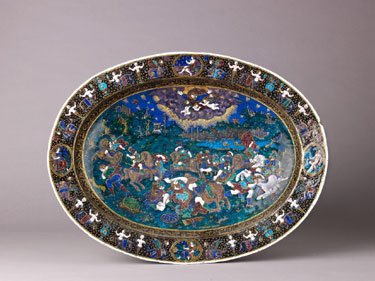
Suzanne de Court (active 1575-1625), Painted enamel on copper, partly gilt, Conversion St. Paul, Robert Lehman Collection, Metropolitan Museum of Art.
09 May 2018
via GIPHY
That’s Narges Bajoghli on the right.
This Foreign Policy editorial, written by Narges Bajoghli, an Iranian film-maker, obviously hostile to the United States and proud of the seizure of the US Embassy and the taking of US diplomats as hostages, currently a Postdoctoral Research Associate at the Watson Institute at Brown University, was actually reprinted by Business Insider.
Can you imagine an editorial denouncing the administration’s foreign policy adverse to Japan being editorialized against by some Japanese naval officer doing post-graduate work at Harvard in 1939, titled: “The Empire of the Rising Sun Will Never Trust America Again,” appearing in both Foreign Policy and Business Advisor?
We were naive to think the United States would keep its promises in a deal with us,†Hasan, a retired captain in Iran’s Islamic Revolutionary Guard Corps (IRGC) and a veteran of the Iran-Iraq war — now a prominent film director — said last week from his office in a major regime production studio in central Tehran. “I thought enough time had passed since the revolution that we could potentially engage with America again,†he continued, before he let out a resigned sigh. …
Ghassem was one of the leading filmmakers for state television in the country. He had made numerous documentaries that investigated the role of the Reagan administration in supplying weapons to Iraq’s Saddam Hussein in his fight against the newly established Iranian government. …
“I’m embarrassed to say I didn’t foresee this coming,†Hasan told me this past weekend. “Ghassem was right, we shouldn’t have trusted the Americans.â€
When I spoke with Ghassem, he did not boast that he had predicted the ill-fated trajectory of the deal. He wasn’t against Iran having good relations with any Western country, he had repeatedly told me during those debates in 2014. But he just did not think the United States would ever want anything but full capitulation from the Islamic Republic.
“What my friends didn’t see when they were rooting for the Iran deal,†he recently told me solemnly, “was that there’s a segment of the American political establishment that can never forgive us for kicking the United States out of Iran during the revolution in 1979. I mean, the United States was the shah’s biggest ally, and then we came to power and told them they couldn’t dictate how we governed anymore. And once we took their embassy and held their people hostage in 1980, that was a slap in their face. They can never forgive us for that. They want to see us broken at our knees, in complete surrender.â€
“It doesn’t matter if there are people in both of our countries who want to turn a new page,†he continued. “The Obamas and Rouhanis of our countries are just one segment of the political establishment.â€
Well, Narges, let me just advise you, that when a lame duck president ignores the US Constitution and makes an end-run around the Senate by making a treaty in the form of an executive order, hostile foreign adversaries of America ought to be aware that the next president may be of a different party and of a different mind and will be perfectly entitled to reverse his predecessor’s decision.
And, yes, personally, I do want to see the mullahs on their knees, in complete surrender, and you out of the United States.
09 May 2018

Steve Bodio linked this two-year-old Charles Schultz interview with the great Sporting author/painter Russell Chatham. Chatham has interesting things to say about money, art, and fly fishing.
[Money:]
Charles: You mention Monet in your “Advice for a Young Artist.†Most of his life he was miserably poor.
Russell: When I started painting as a kid, you have to remember there was no T.V., there were no diversions. Down on the ranch, we didn’t even have a radio. I just loved painting, and never thought of it as a profession. When I began to think, “This is what I am going to do,†I had to grit my teeth and accept that I was going to be dirt poor my whole life. “If that is not okay with you, you better not do this.â€
Charles: This idea that if you want to have integrity you have to prepare to be poor is lost, more so somehow as the economy declines. Arthur Miller said the Great Depression made everyone more voracious. The less there was, the more bitter the contest for it.
Russell: No, they’re not prepared to be poor. And, quite frankly, it was an absolute fluke in my case. I’m not a businessman. If any money crosses my path, it is gone faster than butter in an oven. I have no savings, no retirement. I have whatever’s in my wallet. To a lot of people that would be frightening. …
[Art:]
Charles: Tell me about Robert Hughes. He is sometimes regarded as an opponent of contemporary art, but he really wasn’t.
Russell: He was contemptuous of phonies. You know anyone can do anything they want, as long as they believe in it. That’s the key. Insincerity is the ultimate sin. The problem is the contemporary art world lends itself so much to insincerity.
Charles: Fairfield Porter writing for Art News back in the ’40s and ’50s made a point about art requiring two elements: that it communicate and that the artist have a moral commitment. I think back to what you said: “They have to believe it.â€
Russell: It’s your own personal code of ethics—your honesty with yourself. You don’t confront that very much in the mainstream art world/media complex. They don’t talk about that, especially about any artist who has been pumped up to the point that they are being sold for millions at auction, an auction that is supposed to reflect the value of that work of art. But at that point they aren’t interested in a critical assessment of artistic merit. Where there are hundreds of works by an artist, perhaps living or more probably dead, which are worth half a million dollars or more, there isn’t going to be a critical discussion. There is too much money involved.
Charles: Hughes said this created a “blinding effect†that prevented one from seeing the object because of its monetary value.
Russell: That’s a good way to put it. People are so impressed by money, the price of things, that they are blinded. Somebody wrote a check for that?! I saw something, oh, 15 to 20 years ago in Chicago, when they used to have a big show at the Navy Pier. Artists came from all over the world. I used to go to Michigan to hunt with Jim Harrison, but I always stopped in Chicago for this show. Well, for a couple of reasons: the Art Institute, and Midwesterners. You can’t sit down in a bar there for more than 30 seconds before one of these guys is talking to you and asking who you are. They are curious people, and there is great food and music. But the Navy Pier show would have plenty of good things, and some not so good. A mix.
Anyway, I’m walking down this hallway and this guy has got his booth. He’s got a gallery in Chicago I think, and he’s got this painting, maybe five or six feet square. It was just this completely nondescript abstraction, and not a known artist—not that I know everybody—but not a famous artist at all. There was a woman standing there, and the guy who had the booth is explaining why this was a great painting. I thought, “I gotta hear this.â€
I pretend to be looking at something else, while he goes on and on and on. And I am thinking, “You gotta hand it to this guy: this bullshit is really pretty convincing.†He is talking about its museum-quality status, and it is the dumbest painting I’ve ever seen. Well pretty soon, this lady is putting down her purse, taking out her checkbook, and she is writing a check. Oh my god! So they complete the transaction, and go off and sit down together at his desk. And I went up to the painting and looked at the sticker: $600,000.00. Boy, he had the gift, I tell ya.
Charles: Haha!
Russell: You could buy a Winslow Homer for less than that! …
[Fly Fishing:]
Charles: I have a friend in upstate New York who is a painter and a fisherman. When I asked him about you years ago, he immediately said that you were the first to write about fly fishing with libido. Not, “Oh nature is so beautiful, how peaceful I feel,†but a hard-partying bunch of guys fishing.
Russell: It is funny. There is a whole fly fishing world and a lot of people write about it. But it is a pretty dipshit thing when you take it apart. There are aspects to it that are nice, but it can really get touchy feely. You know, “Oh, I just like to be out there all day and listen to the birds and smell the roses in the air.†Fuck that! I’m out there to catch fish. If I’m gonna go bird watching, I’ll take my binoculars and go bird watching. I’m not gonna go fishing. When I’m fishing my mind is on one thing and one thing only, and that is where my fly is.
Charles: This same friend hated a film from the early ’90s, not on its merits necessarily, but that it caused a phenomenon. Every banker in New York City put a “Trout Bum†sticker on the back of his Lexus, drove north and invaded all of his streams.
Russell: It changed the face of fly fishing. It was called “A River Runs Through It.†It was based on a very good book by a guy called Norman McLean, who was from Montana. The movie was filmed in Livingston while I was there. It created a fly-fishing hysteria. Suddenly, this thing that was pretty personal—nobody went fly-fishing unless you were crazy—now, as you said, every stockbroker was a fly fisherman. It crowded things up pretty good. When I saw it, I couldn’t believe it. These people really don’t understand fishing. They aren’t naturals who started when they were 8 years old. They haven’t been crazed and insane about it their whole life.
On the Madison River, where I normally didn’t fish, didn’t need to, I drove over one day and couldn’t believe my eyes. I saw, on a stretch of maybe 20 miles, a thousand parked cars. The guys were fishing as close as from me to you, five, six feet apart. Not only that, but most of them had hired guides. So there are two guys—the guy and his guide! And the guide has a boat, which bounces down through the rocks, and then they stop and fish. That’s not fishing. Nobody’s catching anything, or when they do, it is tiny. Do they actually think this is fishing? Fishing is a solitary activity. It is a big deal. This ain’t it.
Charles: What about environmentalism? We accept industry and empire as given, and then weep over trivia.
Russell: They’re not environmentalists—they’re assholes. You could blame that criminal destruction of the oyster farm on this “environmentalism.†A lot of these people live in cities, and drive out to the country once in a while. They don’t know what is going on here. They look at nature out of the car window as they are driving by it. That’s just another form of watching T.V.
All this talk about the restoration of creeks and rivers, restoration of salmon: it is never going to happen. For example, the wine industry dried up the Russian River. Are we going to reverse the wine industry? They have too much money and are too big. The wells have dropped the whole water table. When you do that in a valley, you drop the water table up at elevation, too, which causes your tributary streams to dry up. And that is the end of your steelhead and salmon.
They had this problem on the Eel River. The dope growers dried up the whole river. Nobody could believe it. It is an “illegal†activity, but nobody is doing anything about it. There is no enforcement. Of course, they were also focused on how “bad†marijuana is. Nobody ever O.D.’ed on it.
RTWT
/div>

Feeds
|



