Category Archive 'Uncategorized'
25 Sep 2022


Judith Schiff 1937-2022, Chief Research Archivist, Sterling Library, Yale University.
OK.
The latest Yale Alumni Magazine arrived yesterday. Its key feature article this issue is a tribute to Judith Schiff who had contributed a popular “Old Yale” column to the alumni mag since 1987.
There is nothing wrong with the eulogy to the late archivist in itself. But there were all those little infuriating details that get the blood pressure of an elderly alumn seething.
In the midst of noting the admirable contribution those 219 “Old Yale” columns constituted over the long decades, Alumni Mag editor-in-chief Kathrin Day Lassila ’81 (the ever reliable source of left-wing self gratulation and cant) clocks in to gloat over persuading Ms. Schiff not to omit a pious condemnation of the Pro-Slavery views of John C. Calhoun, Class of 1804, in a column actually discussing Calhoun’s role in leading the House of Representatives in the direction of a Declaration of War against Britain in 1812.
Representatives of the Woke Left, like Ms. Lassila, never overlook any opportunity to point fingers in condemnation at, and to preen in moral superiority over, the errors of persons long dead. How can one possibly say enough about the spiritual magnificence and boundless generosity of members of today’s Community of Fashion in refraining from owning and trafficking in any slaves and their bravery in forthrightly denouncing an institution extinct for over a century and a half and absolutely lacking any current defenders?
Personal Tribute No. 1 comes from a member of the Class of 1971, a transfer who became one of the first female graduates of Yale College, and who “received the Yale Medal for projects highlighting Women and Minorities.” IMHO, there ought to be a much bigger medal for persuading whiny minority identity groups to go away and shut up for a change.
The Schiff article includes several warm personal tributes from Yale functionaries and factotums who were personally acquainted with the lady which are in themselves perfectly fine. However, the faithful reader discovers that Personal Tribute No. 2 is the product of the collaboration of one chap (M.A. 89) who is a “New Haven-based cultural organizer” (a term that inevitably tempts any right-thinking alumn to start reaching for his revolver) and another guy (’87, ’93MDiv) who is the Beinecke Library’s “director of community engagement.” What in hell is a Rare Book Library doing throwing away an annual full-time salary on paying somebody to “engage” the inner-city welfare/criminal class of New Haven? Are gang-bangers, coke dealers, hip-hoppers, and the ever-dwindling actual working class of a ruined rust-bucket small city supposed to have some sort of healthy and legitimate interest in the Gutenberg Bible, Shakespeare’s First Folio, or some really cool manuscripts in Carolingian Miniscule?
Tribute No. 5 is from a member of the Class of 1979, ’84MD, and an adjunct psychiatry prof at Yale, who (inevitably) wrote a book about Yale and the Jewish Question, who tells us Ms. Schiff was a terrific help in researching one whiny identity group issue after another after another. That, of course, is what research universities and research university libraries are really for.
And it goes on and on. “When Judy Schiff went to work at Yale there were no senior women teaching at Yale College and no women undergraduates. There were no women officers in the university.” begins Tribute No. 6.
In Woke University-land and Woke-Alumni-Magazine-land, the entire universe, the entire corpus of human learning, and the whole focus of history is centered upon the amour propre, the grievances, and the glories of the triumphant elite establishment representatives of the sacred ressentiment-based Identity Groups.
It’s not that most articles are bad in themselves. It’s the fact that the rancid, worm’s-eye-view perspective of leftist grievance politics permeates everything and is accompanied by an inevitable associated tone of orthodoxy and dogmatism.
The great minds running Yale these days, and editing its publications, obviously never read John Ruskin:
Of all the insolent, all the foolish persuasions that by any chance could enter and hold your empty little heart, this is the proudest and foolishest,–that you have been so much the darling of the Heavens, and favourite of the Fates, as to be born in the very nick of time, and in the punctual place, when and where pure Divine truth had been sifted from the errors of the Nations; and that your papa had been providentially disposed to buy a house in the convenient neighbourhood of the steeple under which that Immaculate and final verity would be beautifully proclaimed. Do not think it, child; it is not so.
Bang! All over America, you can hear the sound of one more issue of the Yale Alumni Mag flung from the hand of an older male alumn hitting the circular file.
22 Sep 2022

And, as Jeffrey Carter notes, everywhere you look you can see Ayn Rand’s fictional vision of the future coming visibly to life.
If you look at Minneapolis, Chicago, and San Francisco, it is a race to see who can be Detroit first. NYC is terrible right now when it comes to crime and daily living. So is Los Angeles. New Orleans is the murder capital of the country. Memphis, St. Louis, Louisville? Please spare me the Chamber of Commerce pitch. No doubt, tourists are balking at going to those places due to fear of crime.
Name an urban area that is a delightful place to live, has great public schools, doesn’t have rising crime, and you can build wealth right now. The only ones I can think of are in the Old Confederacy.
John Galt is shrugging. He is moving places. It’s not the weather.
RTWT
21 Sep 2022
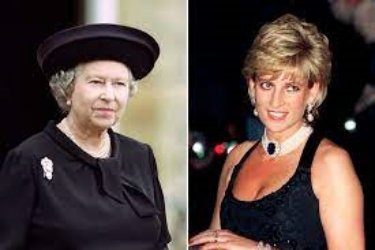
Capel Lofft fears that when Queen Elizabeth passed on, she took with her the traditional values and virtues that made Britain admired world-wide.
There has been much talk since the Queen’s death — and indeed during the Platinum Jubilee celebrations — about how the Queen embodied certain admirable, old-fashioned ideals: commitment to duty, stoicism, discretion and so forth. Underlying many of these (entirely correct) statements is an undertone of regret that such sterling qualities are in such short supply now. She stood out in such sharp relief because the background of our culture and society has become so clearly marked by the opposite qualities. Exhibitionism. Emotional incontinence. The elevation of outward appearances and tacky self-promotion over substance, character and service. Flakiness, fragility and self-pity. We have become a society of precious, whining narcissists talking at and past each other, all whilst congratulating ourselves on our “openness” and being so pleased at how “modern” we are.
That by and large is what most people have wanted, or at least it’s a culture they have acquiesced in and often enthusiastically embraced. The death of Diana gave many people an excuse for openly parading just those values. A profound cultural shift was taking place. It found its symbolic apotheosis and triumph in those days of September 1997, and in the cheap emotionalism that Tony Blair proved himself so fluent in when he reacted to her death with his “People’s Princess” speech. The Queen stood against them, and the majority of the public hated her for it.
I don’t wish to comment on the character of Diana — no doubt in many ways she was a kindly woman with good motivations. But a sort of caricature of the worst elements that could be extracted from her life, or perhaps more accurately her public image — making a spectacle of oneself, ostentatious virtue-signalling, a lack of emotional self-control — has become the model for our culture for 25 years now. One reason why the death of the Queen is so painful and seems to herald such uncertain and disquieting times is because, in our heart of hearts, we’ve all become sick of it. We saw in the Queen one last outpost of the old values that most of us endorse but struggle to emulate because they are counter-cultural and unpopular and difficult to stick to. We embraced a Diana culture whilst deep down we knew that the Elizabeth morality we were leaving behind was superior.
Here are a few phenomena we’re probably all familiar with: The dead look behind the eyes of the Instagram influencer as they parade the latest shiny, fake incarnation of their carefully crafted “personal brand”. The hollow ring of the LinkedIn drone as they post their latest screed on wellbeing or diversity, or how they manage their “executive schedule”. The grotesque voyeurism of the Reality TV show peopled by walking advertisements for brands of fake tan who demean themselves by participating in a series of staged emotional “dramas” and tawdry public sexual acts in order to kickstart a 15 minute career as a professional strumpet. The blue-haired Twitter progressive activist who claims to be “literally shaking” or traumatised by some opinion they don’t agree with.
All of these things and a million more besides are a product of the society that we have created in defiance of all those old-fashioned values the Queen stood for, values that our institutions and, sadly, most of the public have spent decades spitting on, sniggering at and ignoring. Our elites routinely smear a predilection for tradition as “fustiness”, a dedication to duty as being “uptight”, stoicism as being “uncaring”, and a desire for privacy as being “out of touch” or “stiff”. Too many of us have bought into this narrative.
It seems to me to be more than a coincidence that this cultural shift, which was so sharply symbolised by the reactions to the death of Diana, came at a time of accelerating globalisation and the consolidation of an intensified, deregulated form of capitalism. The guiding principle of that new economic settlement was that anything and anyone can be commodified, ranging from individuals’ appearance and sexuality to a country’s history and aesthetics: think of “cool Britannia” and the emergence of Britain as a sort of marketing brand in the eyes of Blair and his successors. Emotional “openness”, self-obsession and vanity, perpetual and self-conscious public assertions of one’s fragility, vulnerability and need for the appropriate forms of therapy in response, the temper tantrums and grievances of self-righteous progressive identity politics: all are new cultural fissures that can be mined for profit.
There isn’t money to be made out of restraint, quiet commitment to duty and self-control. A political economy that has become so heavily dependent on monetising our personal vanity, exhibitionism and the crises of self-perception and emotional insecurity that inevitably result, despises those who are private, self-contained and resilient. Other than tourist tat and Corgi soft toys, the monarchy is one thing that cannot be commodified, strip-mined for its cultural assets. It’s an institution that depends for its success on cultivating those qualities that have become radically counter-cultural in a world of hyper-capitalism built upon the commodification of the spectacle: those qualities which our late Queen personified with such dignity and common sense.
RTWT
21 Sep 2022

E. Donnall Thomas Jr. boasts of eating the mountain lions he hunts and speaks well of the experience. I find that surprising. I’ve eaten the meat of several carnivores at annual game dinners at the Yale Club of NYC, including African lion which I’d say tasted fishy mattress. None struck me as palatable at all. But he has tried moutain lion, and I have not.
Interestingly, he took Dave Quammen, a Yale classmate of mine whose made a prominent career as a Nature write, hunting. I read a terrific story by Quammen in the Yale Lit Freshman Year. He could write even back then.
[N]on-hunters—who make up around 80% of the general population—consistently show more favorable attitudes toward hunting when we eat what we shoot. One reason why lion hunting has proven such fertile ground for anti-hunting activists is the perception that cougars are hunted exclusively for their value as trophies. Unfortunately, there is some truth to this charge, and there shouldn’t be. In fact, as those who can overcome deep-seated but basically groundless cultural biases against eating cats are usually quick to discover, mountain lion meat is excellent.
When I prepared the backstraps from the first lion I shot and served them to family and friends, I did so out of a sense of obligation. I was raised to shoot what you eat and eat what you shoot. Since I wasn’t sure how deeply committed to that principle our dinner guests that night would be, I didn’t say much about the meat at the heart of the parmigiana until someone came right out and asked. By then it was too late for second thoughts, for everyone at the table had already declared it delicious.
Lion meat is lean, light, fine-grained and delicate, and can be prepared in any manner suitable for pork or veal. It has proven to be a consistent hit at our table, even when served to initially skeptical guests who knew full well what they were eating. It really is that good. Most states have specific meat salvage regulations on the books for big game, and a number of them, including my home states of Montana and Alaska, have expanded them to include non-traditional meat sources such as bear. There is no reason in the world not to extend these principles to include mountain lion. Doing so could well keep other states from following California’s unfortunate, biologically unjustified precedent.
Years ago, the nationally prominent writer David Quammen wrote a piece about mountain lions in the changing West for a wildlife publication to which we both occasionally contributed. The text included some mildly disparaging remarks about lion hunting which set me off even though they were neither totally unreasonable nor particularly vitriolic. I wrote a letter to the editor questioning the writer’s knowledge base and qualifications to write about the subject.
To his great credit, David contacted me, acknowledged that I had a point, and asked if I would take him mountain lion hunting. I replied that I would be delighted to do so and told him that if killing a cat would make him uncomfortable, I would be glad to provide a “catch-and-release” hunting experience, since I did a lot of that anyway. He bravely told me that if the goal was to inform him about lion hunting, that killing any cat we might tree should at least be an option.
He drove up from Bozeman one winter weekend, and we went hunting. The weather was brutal, but we covered a lot of ground by vehicle, skis, and foot. Even though we never cut a track, we learned that we had a remarkable amount in common. The high point of the experience for him was a mountain lion dinner prepared from a cat a friend had shot while hunting with me earlier in the month. We have remained good friends ever since, and he acknowledges that the experience changed his once skeptical attitude toward hunting.
So, if you are going to shoot a cougar, pack the meat off the mountain and eat it. You will enjoy the dining experience and be helping to secure the future of hunting with every bite.
RTWT
20 Sep 2022

Britons are proud of the performance of Queen Elizabeth’s Grenadier Guards pallbearers, and cries are going up that they should be awarded the British Empire Medal for their impeccable service, as were the members of the same regiment who carried Winston Churchill’s coffin in 1965. Daily Mail:
The steady-shouldered pallbearers who safely carried the Queen’s coffin during her state funeral have won the hearts of the nation amid growing calls for the soldiers to be honoured with medals.
With the eyes of the world on them, the eight soldiers from the 1st Battalion Grenadier Guards raised and put down the Queen’s 500lb lead-lined coffin no less than 10 times on her journey from Westminster Hall to St George’s Chapel in Windsor.
The team, each of whom is required to over 6ft tall, did not put a foot wrong all day as first they shouldered her coffin, with each soldier wearing rubber-soled boots to avoid slipping on the highly polished stone floors.
The unenviable task appeared more difficult as the Queen’s crown, orb and sceptre were balanced on top of her coffin.
But as the soldiers held the coffin’s brass handles, they walked in the knowledge that the lid had fittings to fix the jewels in place.
At one point, it appeared the flowers placed on the wreath atop the coffin began to wobble, but the pallbearers masterfully tilted it just enough to secure the foliage without drawing any attention.
Having faultlessly carried the coffin into Westminster Abbey as 2,000 esteemed guests from around the world watched, the eight soldiers were called upon again as Her Majesty was transported by State Hearse to Windsor Castle.
The task of lifting the coffin up the steep stairs of the 450-year-old St George’s Chapel was nerve-wracking enough alone, but their unblemished performance throughout the emotional day has earned the praise of the nation with admirers across Britain declaring: ‘They have done our nation and Her Majesty proud.’
RTWT
19 Sep 2022

Paul Kingsnorth wrote a very intelligent post reflecting on the symbolism and significance of Queen Elizabeth’s funeral.
What happened today was a rolling, dense mat of symbolism, replete with historical meaning, anchored in a very particular nation and time period. What did it symbolise? Above all, I think, it symbolised something that our culture has long stopped believing in, and as such can’t really process effectively, or even perhaps quite comprehend. This was brought home to me by one particular moment in the ceremony.
You can see that moment in the photograph above. It’s a view from the height of the tower of Westminster Abbey, looking down onto the Queen’s coffin below. The Abbey is, of course, laid out in the shape of the cross, and the coffin was set down at the meeting point of the nave and the transept, where the two arms of the cross meet. At one point in the proceedings, the camera showed us this view, and then focused in on the scene, and the impression was that of some energy flowing down from above and into the coffin, then out across the marble floor and into the gathered crowd.
It struck me then that this was an accurate visual image of the world which this Queen’s death marks the final end of, and it struck me too that this must be one of the reasons why her passing has had such a huge impact – one way beyond the person she actually was. What we were seeing as the camera panned down was a manifestation, through technological trickery, of the ancient notion of sacral kingship.
This notion was the rock which the political structure of all medieval societies was built, and in theory at least it is still the architecture which supports the matter of Britain, whose bishops still sit in parliament with the power to amend laws, and whose monarch’s crown is adorned with a cross. Authority, in this model of society, flows downward, from God, and into the monarch, who then faces outward with that given power and serves – and rules – his or her people.
Forget for a moment whether you’re a Christian, or a monarchist, or indeed whether you just think this is so much humbug designed to disguise the raw exercise of power. I’m not trying to make a case here: I am trying to understand something that I think at least partly explains how we have got here.
The point of the model of sacral kingship is that all true power resides in and emerges from the great, mysterious, unknowable, creative power at the heart of the universe – the power which we call, for want of a better word, ‘God.’ Any power that the monarch may exercise in this temporal realm is not ultimately his or hers. At the end of the funeral today, the orb and the sceptre, symbolising the Queen’s spiritual and temporal authority, were removed from the top of her coffin, along with the crown, and given over to the care of the church. At that point, Elizabeth became symbolically what she had always been in reality, and we all are – small, ordinary people, naked before God.
This notion – that any power exercised by a human ruler ultimately derives from the spiritual plane – is neither British nor European. It is universal. Pharaonic Egypt recognised it, and so did Native America. The Anglo-Saxons believed it and so did the Japanese Emperors. Cultures large and small, imperial and tribal, on all continents over many millennia, have shared some version of this understanding of what the world is. Power, it tells us – politics, it insists – is no mere human confection, because the world is no mere human confection. There is something – someone – else beyond it, and if we are silent, in these cathedrals or in these forests, we can hear it still. Those who take power in this world will answer to it at the end. It is best that they know this now.
What is meaningful about this royal death is that the late Queen really believed this. So, I think, does her son, the new King. But the society around him very much does not. The understanding now is that authority flows upward from below, from ‘the people’ and into the government, which supposedly governs on our behalf. In this model there is no sacred centre, and there is no higher authority to whom we answer. There is no heavenly grant of temporary office which will one day be returned, and a tally made. There is only raw power, rooted in materiality, which in itself has no meaning beyond what we ascribe to it. There is only efficiency. There is only management. There are only humans.
RTWT
17 Sep 2022
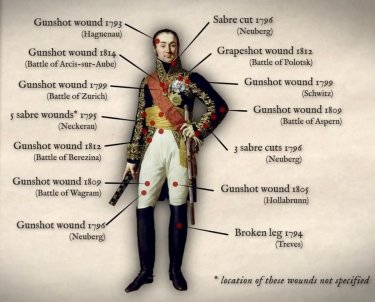
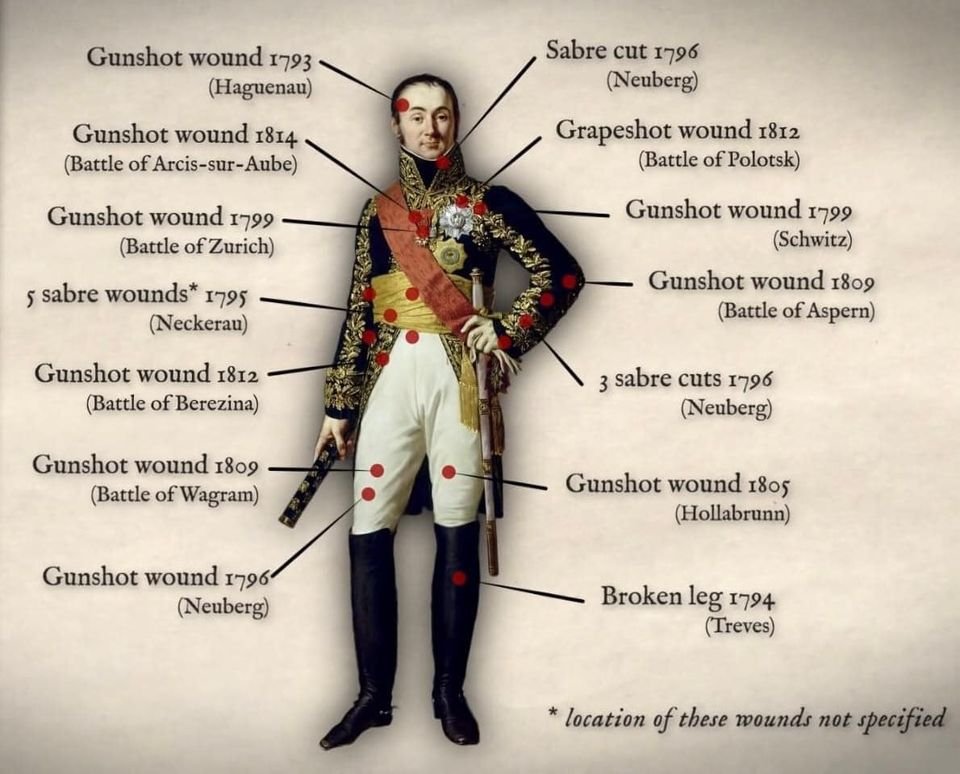
In 1847, Nicholas Charles Oudinot, Marshal of France, 1st Duke of Reggio, also Count Oudinot, died at the age of 80 at Paris. Present in many great battles of the French Revolution and Napoleonic Empire (he won especial distinction at Zurich and Genoa in 1799 and 1800 respectively, and later at Friedland (1807)). The battle of Wagram (1809) got him his Maréchal’s baton, and his Dukedom. His last active service was in the French intervention in Spain in 1823.
The Duke is known to have been wounded 34 times in battle, being cut by swords and sabres, hit by artillery shell fragments, and at least twelve bullets over the course of his military career.
His wounds never slowed him down, on the battlefield or in other respects (married twice, father of 11 children).
—————–
He reminded me of someone else.
17 Sep 2022
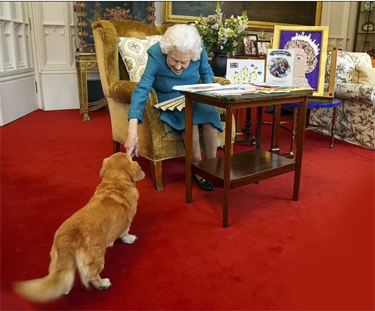
Queen Elizabeth with corgi earlier this year.
The Daily Mail has affectionate anecdotes about the Queen’s last Summer and last days at Balmoral.
Shortly before arriving in Scotland she asked to be taken down to the mews at Windsor Castle where her stud groom Terry Pendry had continued to look after the horses, even though she was no longer riding them. …
She just wanted to see them, although when she was invited to sit on a pony she agreed. She was helped up into the saddle and then a groom suggested walking the horse around the indoor riding school. The Queen did four laps and it must have been the first time she had been on a leading rein since she learned to ride as a child.
During July’s heatwave she asked for a sun-lounger to be put out for her in the garden at Windsor. At Balmoral, where the weather was less warm, she spent more time sleeping, often retiring for a nap after lunch.
Although frail, she remained alert and chatty almost until the end. The Moderator of the Church of Scotland, the Rt Rev Dr Iain Greenshields dined with her on Saturday and again on Sunday lunchtime. He spoke of her ‘good spirits’ and ‘engaging’ company. Dr Greenshields, who preached at Braemar and Crathie parish church where the Queen used to worship, said she was ‘absolutely on the ball’.
‘She was talking about her past, her love for Balmoral, her father, her mother, Prince Philip, horses, very much engaged with what was happening in the church and what was happening in the nation, too.’
He described how she took him to the window and she was ‘looking over her gardens with great pride and affection’.
The sidebar links tell us that David Beckham stood 13 hours in the queue to view the Queen’s casket, (like a true-born Englishman) declined a offer to jump to the head of the line from a Member of Parliament, and then was photographed wiping a tear from his eye at the coffin.
Your are browsing
the Archives of Never Yet Melted in the 'Uncategorized' Category.
/div>

Feeds
|