[T]he man in the photo is New York’s Zeddie Little, 25, who was taking part in the Cooper River Bridge 10k run, which was held on March 31, in Charleston, South Carolina.
Medical University of South Carolina (MUSC) systems analyst Will King, who was just taking a seemingly random photograph of runners in the middle of the race, snapped the photo and uploaded it to his Flickr account.
“One of my friends commented on the picture and said something along the lines of ‘I dub this guy Mr. Ridiculously Photogenic,'” King said. “I thought it was a pretty cool comment, so I posted it on Reddit. For some reason it just took off from there.”
Major Innes Randolph’s defiant “I’m a Good Old Rebel” song (1914) boasted of Northern casualties inflicted and expressed regret that Southern resistance had not piled up an even larger score.
I followed old Mars’ Robert
For four year, near about,
Got wounded in three places
And starved at Pint Lookout;
I cotched the rheumatism
A campin’ in the snow,
I killed a chance of Yankees,
I’d like to kill some mo’.
Three hundred thousand Yankees
Is stiff in Southern dust;
We got three hundred thousand
Before they conquered us;
They died of Southern fever
And Southern steel and shot,
I wish we got three million
Instead of what we got.
A new examination of Civil War enumerated losses, reported in the New York Times, contends that Major Randolph came closer to his expressed goal than was previously thought.
For 110 years, the numbers stood as gospel: 618,222 men died in the Civil War, 360,222 from the North and 258,000 from the South — by far the greatest toll of any war in American history.
But new research shows that the numbers were far too low.
By combing through newly digitized census data from the 19th century, J. David Hacker, a demographic historian from Binghamton University in New York, has recalculated the death toll and increased it by more than 20 percent — to 750,000.
The new figure is already winning acceptance from scholars.
A quaint, folkloristic animated history of Lithuania, from the Pre-Cambrian to today.
It probably won’t make much sense to the non-Lithuanians out there. The armored wolf you see at one point is a symbol of Lithuania. It seems that Grand Duke Gedymin took a nap while hunting and dreamed of an iron wolf. As the result of his dream, he founded the city of Vilnius. The transition from the Battle of Grunwald (1410) to the Third Partition (1795) is rather quick, but that is the linguistic nationalist perspective for you.
The depiction of the communists as crabs is, I think, some kind of linguistic pun.
Stuart Schneiderman mercilessly rubs in what has become increasingly obvious this week: the chosen representative of our nation’s establishment elite is really an ignoramus who’d flunk basic questions from a high school Civics course.
America’s thinking class saw Barack Obama as a light shining in the wilderness.
In deep despair over the coarsening of public discourse during the Dark Ages of the Bush administration, American intellectuals saw Barack Obama as one of their own, someone who could restore their exalted social status and raise the level of deliberative democratic debate.
Obama hadn’t accomplished anything of note; he wasn’t really qualified for the presidency; but he was superbly intelligent, had presided over the Harvard Law Review, had professed Constitutional Law at the University of Chicago Law School, and had authored two brilliant books. …
A few days ago the curtain was drawn and people could see that the Wizard of Oz was not what he claimed to be.
In an effort to get personally involved in Supreme Court deliberations over his signature piece of legislation—Obamacare—our president made it appear that he did not understand the most fundamental doctrine in American jurisprudence.
The former president of the Harvard Law Review, former professor at the University of Chicago Law review managed to mangle an explanation of “judicial review.†As every high school history student knows the doctrine was adumbrated in 1803 by Chief Justice John Jay in the case of Marbury v. Madison.
Obama asserted:
Ultimately, I’m confident that the Supreme Court will not take what would be an unprecedented, extraordinary step of overturning a law that was passed by a strong majority of a democratically elected Congress.
As everyone but Obama knows, Marbury v. Madison established the right of the Supreme Court to strike down Congressional legislation that it deemed unconstitutional.
The Court has done just that on hundreds of occasions.
Sphragistics, the study of heraldic and other seals, is of considerable interest historically and genealogically.
A very impressive collection of seals belonging to Michel Neugarten (can these possibly have belonged to the race car and film stunt driver?) will be sold by Christie’s, Sale 4889, at their South Kensington, London salesrooms on April 25th.
The collection seems to have some very interesting and luxurious 19th century examples, and a number of earlier Western European seals. Ecclesiastical specimens seem to be well represented in the collection.
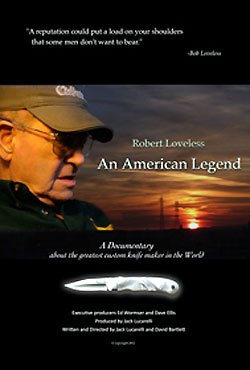
Robert Loveless, An America Legend Film Poster, top lines read: “A reputation can put a load on your shoulders that some men don’t want to bear.” –Jack London. Below: “A Documentary about the greatest custom knife maker in the World.”
Information and publicity are scarce. Hey! it’s twenty-odd days away. But we have that tiny (nearly unreadable) poster image above, and we know that there will be a pre-theater get-together at 4:00 p.m. at Mel’s Diner, 8585 Sunset Boulevard in West Hollywood.
The actual screening will be at the Clarity Theater, 100 North Crescent Drive, Beverly Hills. Red Carpet reception at 5:30 p.m. The film is scheduled to run from 6:00 – 7:20 p.m.
Intended viewers are instructed to RSVP to Producer Ed Wormser at edw11@aol.com. Repeat after me: M.I.C.K.E.Y. M.O.U.S.E.
Still, if I were on the lower left coast, I would definitely want to see it.
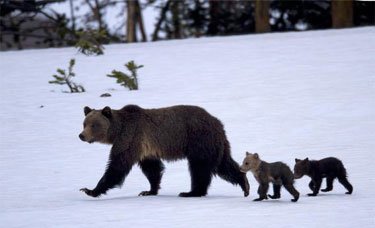
The female grizzly bear, referred to as the Wapiti sow, killed Brian Matayoshi on July 6, 2011 and then killed John Wallace on August 27, 2011, after officials declined to hunt the bear responsible. The Wapiti sow was finally trapped in late September and euthanized October 2nd after four days of forensic analysis and chin stroking.
Jessica Grose, in Slate, describes how the swift and hearty justice dealt out to man-killing grizzlies in simpler and less-grovelly-toward-Nature times has been replaced by a new intensely ethically conscientious regime that will only kill bears which are deemed to have behaved with “unnatural aggression” or which have been found to have eaten people.
In the bad old days, they knew what to do with man-killing bruins.
The first extensively documented death by grizzly within Yellowstone Park’s borders was the fatal mauling of 61-year-old government laborer Frank Welch in 1916. And the park’s first extensively documented judicial execution of a grizzly soon followed. Some historians suspect the bear that killed Welch was abnormally ill-tempered because his toes had been ripped off when he escaped from a trap in 1912. Whatever the bear’s motives, though, Welch’s fellow laborers decided that “Old Two Toes†deserved to die for his crimes. Men from the road camp where Welch had been working placed some edible garbage in front of a barrel filled with dynamite. When the bear began to eat, they blew it to smithereens.
That was how grizzlies were treated if they injured humans in the early days of Yellowstone: They were killed.
Not today. Today, when Ephraim or Ephraimina takes out a tax paying citizen, there is the equivalent of a judicial procedure. There are major exculpatory loopholes. And even totally guilty bears are put down reluctantly, as big, salty tears pour down the faces of the responsible officials.
Every bear is pwecious, you see.
The euthanization of the bear known as “the Wapiti sow†was the culmination of a series of horrifying events that had gripped Yellowstone for months, and alarmed rangers, visitors, and the conservation biologists tasked with keeping grizzly bears safe. In separate incidents in July and August, grizzlies had killed hikers in Yellowstone, prompting a months-long investigation replete with crime scene reconstructions and DNA analysis, and a furious race to capture the prime suspect. The execution of the Wapiti sow opens a window on a special criminal justice system designed to protect endangered bears and the humans who share their land. It also demonstrates the difficulty of judging animals for crimes against us. The government bear biologists who enforce grizzly law and order grapple with the impossibility of the task every day. In the most painful cases, the people who protect these sublime, endangered animals must also put them to death.
Whenever a grizzly bear commits a crime in the continental United States, Chris Servheen gets a call at his office at the University of Montana in Missoula. Servheen has been the Grizzly Bear Recovery Coordinator for the U.S. Fish and Wildlife Service for three decades. …
Before Servheen, Gunther, and their bear management colleagues could decide what to do, they’d need a lot more information. Was a grizzly bear in fact responsible for this second death? If so, which bear did the mauling? And what were the circumstances that led up to attack—was it provoked or had some hiker just been caught unaware? The answers to those questions would determine whether a precious animal would need to die. …
Wildlife biologists like Kerry Gunther help the park’s crime-scene investigators by speculating on a bear’s emotional state. Based on the evidence at hand, he tries to determine whether a given act of bear aggression might have been a natural behavior—the result of being startled while feeding on an elk carcass, for example, or seeing someone approaching her cubs. If a bear appears to have followed a hiker down the trail instead of backing off, or if it attacked campers while they were asleep, that would be more unusual—the result, perhaps of a deranged grizzly mind.
If you blunder into a bear that is thought to have attacked and killed you out of natural aggression (you violated that bear’s space, dude!) or via an impulse of self defense, that’s just too bad for you. The bear goes free, as long as he refrains from dining on your pitiable remains.
The authorities in question reluctantly draw the line at actual predation, simply because they are afraid of the public response to tolerating man-eaters in National Parks.
The zero-tolerance policy for man-eating bears invites an obvious question, though. Once a bear kills someone, whether it’s out of some wild-animal psychopathy or a natural inclination to defend her young, why wouldn’t she eat the corpse? Everyone agrees that it’s natural for grizzlies to eat carrion—they’re scavengers, after all. When I ask Servheen whether grizzlies can get “a taste for human blood”—whether a grizzly that starts eating people-meat will desire it endlessly—he dismisses the idea. “That’s for horror stories in movies,” he says. “Bears don’t get a taste for human blood. There’s no studies that show that.”
No studies show it, in part because every time a bear eats someone, they kill it. Not that it’s something that would ever be studied—biologists would never want to take the risk of keeping a bear that had eaten a person in the greater bear population. “We don’t want to test whether bears really get a taste for people,†Gunther explains. “The public wouldn’t appreciate us using them as subjects.” That’s for horror movies, but it seems like even the bear biologists think there might be some truth to the campfire legends.
Lee is wearing the sword in this famous picture. (click on each image for larger version)
The Museum of the Confederacy in Richmond is planning to re-locate a presentation sword made in Paris by Louis-Francois Devisme* as a gift to General Robert E. Lee to a new museum branch located at Appomattox, the site of Lee’s surrender in April of 1865.
Future museum branches are planned for Hampden Roads and the Fredericksburg area.
Lee naturally remained in possession of his sword after the surrender at Appomattox in accordance with General Grant’s generous terms which allowed Confederate officers to retain their sidearms.
The Lee family loaned the sword to the museum in 1918, and permanently bequeathed it in 1982.
—————————————-
*Louis-François Devisme, gunmaker and inventor, is recorded in Paris between 1843 and 1870, first at 12 rue de Helder and then (ca 1850) at 36 Boulevard des Italiens. He is remembered today principally for the highly decorated pieces produced for a succession of Paris Exhibitions, and for the Great Exhibition in London in 1851 at Crystal Palace, for which he was awarded numerous medals. He ranks as one of the most accomplished of the 19th-century Parisian arms makers.
Barack Obama made history of a kind in the course of his 2010 State of the Union address, when he openly criticized the Supreme Court for deciding in Citizens United that federal restrictions on political speech by corporations and unions was unconstitutional.
President Obama’s highly partisan statements actually provoked Justice Alito to murmur “Not true.”
———————
In a further triumph of jurisprudential diplomacy, Barack Obama yesterday “warned” the Surpreme Court not to overturn Obamacare.
President Obama, employing his strongest language to date on the Supreme Court review of the federal health care overhaul, cautioned the court Monday against overturning the law — while repeatedly saying he’s “confident” it will be upheld.
The president spoke at length about the case at a joint press conference with the leaders of Mexico and Canada. The president, adopting what he described as the language of conservatives who fret about judicial activism, questioned how an “unelected group of people” could overturn a law approved by Congress.
“I’m confident that the Supreme Court will not take what would be an unprecedented, extraordinary step of overturning a law that was passed by a strong majority of a democratically elected Congress,” Obama said.
(photo: Peter G. Allinson) click on photo for larger image
Fred Lapides posted this intriguing photo today without identification or comment, the wretch.
I searched and found that the photo dates back to 2010 and comers from an article about Andrew Armour, a dive operator on the island of Domenica, who developed a personal rapport with a young male sperm whale. Grind TV